The Complete U13 Soccer Development Guide: Position Specialization, Training Focus, and Parent Wisdom for the Critical Middle School Years
Ages 13-14 represent a pivotal moment in youth soccer development. This comprehensive guide addresses the four most important questions parents and players face: when to specialize by position, what to focus on technically, ideal training-to-game ratios, and hard-won wisdom from coaches who've guided hundreds of players through this crucial stage.
⚽ Why U13 Matters So Much
The U13-U14 age group sits at a critical crossroads in soccer development. Players are transitioning from the fundamentals-focused U12 age to the more tactical and physically demanding U15+ years. The decisions made during this window—about position, technical focus, training volume, and mindset—often determine whether players plateau or continue progressing toward their goals. This guide provides the roadmap parents need to navigate these crucial years successfully.
What You'll Learn in This Guide:
- When players should (and shouldn't) specialize by position
- The technical foundations U13 players must master now
- Ideal training-to-game ratios for sustained development
- The biggest mistakes parents make (and how to avoid them)
- What experienced coaches wish they'd known earlier
- How to balance player preferences with long-term development
- Warning signs your player needs more positional versatility
- The role of home training in accelerating growth
Position Specialization at U13: The Complete Timeline
One of the most common questions parents ask is: "When should my child specialize in a specific position?" The answer is more nuanced than most realize, and getting it wrong can limit a player's long-term potential.
The Short Answer: Not Yet (With Important Exceptions)
At U13-U14, players should still be experiencing multiple positions unless they're in an elite academy environment where tactical specialization becomes necessary for team systems. Here's why this matters:
| Age Group | Position Specialization Approach |
|---|---|
| U8-U10 | Everyone plays everywhere. Position rotation every game/half. Focus on touching the ball frequently. |
| U11-U12 | Begin identifying position preferences. Players spend 60-70% of time in 2-3 preferred positions but still experience all roles. |
| U13-U14 (Current) | Narrowing to 2-3 positions based on physical development and preferences, BUT still require cross-positional experience to build complete soccer IQ. |
| U15-U16 | Position specialization begins. Players spend 80% of time in 1-2 positions with occasional flexibility. Understanding of other positions enhances primary role. |
| U17-U19 | Full specialization. Players have defined positions but can adapt to tactical variations within their role. |
🎯 The Positional Versatility Principle
Why U13 players benefit from playing multiple positions:
- Defenders who've played midfield understand spacing and passing angles
- Forwards who've played defense appreciate defensive pressure and positioning
- Midfielders who've played all positions become the most complete players
- Physical development at 13 doesn't predict body type at 17-18
- Tactical understanding requires experiencing problems from different perspectives
- Players discover hidden strengths they didn't know they had
Understanding the complete U.S. youth soccer structure helps contextualize where U13 fits in the development pathway and what's expected at each competitive level.
When to Allow More Specialization
There are legitimate situations where a U13 player can begin focusing more heavily on one position:
| Scenario | Specialization Approach |
|---|---|
| Elite Academy/MLS NEXT | Positional specialization required earlier due to tactical systems. Players still train in multiple roles during practice. |
| Physical Outliers | Unusually tall/fast/strong players whose physical gifts clearly suit specific positions (e.g., 6'0" goalkeeper at age 13). |
| Elite Skill Level | Players significantly advanced technically may specialize earlier IF they've already accumulated diverse positional experience. |
| Strong Preference + Aptitude | Player shows both preference AND demonstrable success in a position. Allow 70% time there, 30% exploring others. |
If your player aspires to compete at MLS NEXT or ECNL levels, understanding position requirements and expectations at elite levels helps inform specialization timing.
Real-World Application: The Defense-Preferring Player
Let's address a specific scenario: a U13 player who prefers defense, has spent some time up top, but minimal time in midfield.
✅ Recommended Positional Distribution at U13
| Position Category | Time % | Rationale |
|---|---|---|
| Primary Position (Defense) | 60-70% | Build expertise and confidence in preferred role |
| Secondary Position (Midfield) | 20-30% | Critical for understanding game flow, transitions, passing lanes |
| Tertiary Position (Forward) | 10-15% | Occasional experience maintains attacking perspective |
Key insight: Midfield experience is especially valuable for defenders because it teaches spatial awareness, transition timing, and how attacking players receive the ball—all of which make better defenders.
Technical Priorities for U13 Players: Building the Foundation
At age 13, players face a critical technical development window. Physical changes from puberty affect coordination and ball control, making it essential to solidify technical foundations NOW before the U15+ competitive environment demands tactical sophistication.
The "Technically Sound" U13 Player: What to Maintain and What to Add
For players already strong technically with excellent first touch and passing, the question becomes: What's next?
| ✅ Continue Refining: Core Technical Skills | |
|---|---|
| Skill Category | Specific Focus at U13 |
| First Touch | Receiving under pressure, cushioning long passes, directing touch into space, aerial control |
| Passing | Driven passes, disguised passes, passing with both feet, varying power, through balls |
| Ball Mastery | Speed dribbling, close control at pace, shielding, quick direction changes |
| Weak Foot | All technical actions must be competent with weak foot (receives, passes, shots) |
| 🎯 Time to Add: Advanced Technical & Tactical Skills | |
|---|---|
| New Skill Category | Why It Matters at U13 |
| Scanning & Awareness | Checking shoulders before receiving, reading defensive pressure, identifying open teammates |
| 1v1 Defending | Body position, delay tactics, forcing weak foot, timing tackles, recovery runs |
| Combination Play | Give-and-go, overlaps, third-man runs, playing off teammates |
| Speed of Play | Decision-making speed, quick transitions, one-touch play when appropriate |
| Communication | Verbal commands to teammates, directing defensive shape, calling for ball |
| Game Intelligence | Reading game situations, anticipating opponent actions, understanding when to dribble vs. pass |
These advanced skills separate good U13 players from great ones. Structured home training provides the repetitions needed to master these technical elements outside of team practice.
The Scanning Revolution: Why It Changes Everything
If there's ONE skill that transforms U13 players, it's scanning—the habit of checking surroundings before receiving the ball.
🧠 How to Develop Scanning Habits
| Training Method | How to Practice |
|---|---|
| Rondo with Scanning Requirement | Players must look over shoulder twice before receiving. Coach calls them out if they don't scan. |
| Numbers Recognition Game | Coach holds up fingers behind player. Player must call out number before receiving pass. |
| Video Review | Watch own game footage. Count scans. Elite players scan 8-10 times per possession. |
| Pressure Drills | Receiving with defender immediately applying pressure forces scanning habit development. |
Parents can help: Ask after games, "How many times did you check your shoulder?" This keeps scanning conscious until it becomes automatic.
Explore communication drills for U14 players that complement technical development with tactical awareness.
Training-to-Game Ratio: Finding the Sweet Spot
The ideal training-to-game ratio varies by age, competitive level, and individual player needs. At U13, the balance becomes increasingly important as competition intensifies.
The 70/30 Estimate: Is It Right?
A 70% training / 30% games ratio is actually quite good for U13, though the ideal distribution depends on several factors:
| Competitive Level | Recommended Ratio | Reasoning |
|---|---|---|
| Recreational Soccer | 50/50 | Emphasis on games for fun and application. Training teaches basics. |
| Competitive Club (Regional) | 65-70% training / 30-35% games | Developing players need more training touches than game touches |
| Elite Club (ECNL/MLS NEXT) | 70-75% training / 25-30% games | Higher level requires more technical/tactical preparation |
| Academy (Full-Time) | 75-80% training / 20-25% games | Professional development model prioritizes training |
⚠️ The Tournament Trap
Many U13 players experience ratio inversion during tournament season:
- Spring/summer tournaments: 4-6 games per weekend
- Ratio flips to 30% training / 70% games
- Players accumulate fatigue without skill development
- Game-heavy periods actually slow long-term growth
Solution: Limit tournaments to 2-3 per year maximum at U13. Prioritize training volume over game volume. Understand the real costs of club soccer including excessive tournament travel.
What "Training" Should Actually Include
Not all training is created equal. Here's how to think about the 70% training component:
| Training Type | % of Total | Weekly Hours (Example) |
|---|---|---|
| Team Practice | 40-45% | 3-4 sessions x 90 min = 4.5-6 hours |
| Home Training | 15-20% | 3-4 sessions x 30 min = 1.5-2 hours |
| Small-Sided Games (Futsal/Pickup) | 10-15% | 1-2 sessions x 60 min = 1-2 hours |
| Games (Matches) | 30% | 2 games x 60-70 min = 2-2.5 hours |
Total Weekly Soccer: 9-12 hours at U13 competitive level
💡 Why Home Training Matters at U13
Team practice provides tactical learning and game situations, but home training delivers the repetitions that actually develop touch:
- Team practice: 20-50 touches per player per session (crowded fields)
- Home training: 500+ touches in 30 minutes (focused work)
- 3-4 home sessions per week = 1,500-2,000 additional quality touches
- Over a year: 75,000-100,000 extra touches vs. team-only players
Learn how to implement 10-minute ball mastery drills that fit any schedule.
Additionally, futsal provides exceptional development with high-touch frequency in game situations—ideal for U13 technical refinement.
Wisdom from the Journey: What Experienced Coaches Wish They'd Known
This section captures hard-won wisdom from coaches who've guided hundreds of players through the U13-U19 journey. These insights come from real experience—mistakes made, lessons learned, and patterns observed over years of youth development.
The Top 10 "Do-Over" Insights
| # | Insight | What It Means for U13 Parents |
|---|---|---|
| 1 | Enjoy the Process More | The journey goes faster than you think. Wins and losses from U13 won't matter in 5 years, but memories of car rides, celebrations, and growth will. Balance development with enjoyment. |
| 2 | Physical Development Isn't Linear | The smallest player at 13 might be the fastest at 16. The tallest player might stop growing. Don't make position or potential decisions based on current physical traits. |
| 3 | Technical Skills Beat Athleticism | Athletic advantages disappear when everyone hits puberty. Technical excellence remains forever. Prioritize touch over speed at this age. |
| 4 | Versatility Creates Options | Players who can play 3-4 positions have more team opportunities, scholarship options, and tactical understanding than specialists. |
| 5 | The Best Club Isn't Always The Biggest | Smaller clubs with better coaching ratios often develop players better than prestigious clubs with overcrowded practices. |
| 6 | Player Ownership Matters Most | By U13, success requires player investment. Parents who do all the pushing create dependent players. Help your player develop self-motivation. |
| 7 | Comparison Kills Confidence | Every player develops differently. Comparing to teammates creates anxiety. Focus on individual progress month-to-month. |
| 8 | Recovery Is Training Too | More isn't always better. Rest days, proper sleep, and mental breaks are when growth actually happens. Overtraining at 13 causes burnout at 15. |
| 9 | Communication Creates Leaders | Quiet players limit their potential. Encourage your player to be vocal on the field. Communication drills build leadership. |
| 10 | The Relationship Matters More Than Results | How you support your player matters more than which team they're on. Encouragement builds resilient athletes. Pressure builds anxious ones. |
The Encouraging vs. Serious Balance
You mentioned being "much more encouraging and less serious"—this is exactly the right approach at U13. Here's why:
🎯 Why Encouragement Beats Intensity at U13
| Encouraging Approach | Intense/Serious Approach |
|---|---|
| Result: Builds intrinsic motivation | Result: Creates external dependence |
| Players develop: Love of the game | Players develop: Fear of failure |
| Mistakes are: Learning opportunities | Mistakes are: Sources of anxiety |
| Long-term: Players stick with soccer through U19 | Long-term: Players burnout and quit by U15-U16 |
| Parent-child bond: Stays strong | Parent-child bond: Becomes strained around soccer |
Research shows: Players with encouraging parents stay in soccer 3-4 years longer than those with intense, critical parents. Your approach is scientifically validated.
Red Flags: Signs Your U13 Player Needs Course Correction
Here are warning signs that indicate adjustments are needed in training, positioning, or approach:
| Warning Sign | What It Indicates | Solution |
|---|---|---|
| Loss of Enthusiasm | Pressure, burnout, or wrong environment | Pull back intensity. Assess if club/coaching fit is right. Reintroduce fun. |
| Plateau in Skills | Insufficient training touches or poor practice quality | Add home training. Check if team practices are crowded. |
| Limited Tactical Understanding | Playing only one position without broader game exposure | Request more positional variety. Watch games together. Discuss tactics. |
| Physical Complaints | Overtraining, inadequate recovery, or growth-related stress | Reduce volume. Ensure 1-2 rest days weekly. See sports medicine if persists. |
| Avoids Weak Foot | Technical gaps that will limit future potential | Mandate weak foot practice. Make it a daily home training focus. |
| Doesn't Communicate | Passive playing style limits leadership and tactical impact | Encourage vocal play. Practice communication drills. |
Creating Your U13 Development Plan
Here's a practical framework for structuring your player's development during this critical year:
Sample Weekly Schedule for U13 Competitive Player
| Day | Activity | Duration | Primary Focus |
|---|---|---|---|
| Monday | Team Practice | 90 min | Tactical work, team cohesion |
| Tuesday | Home Training | 30 min | Ball mastery, weak foot, first touch |
| Wednesday | Team Practice | 90 min | Positional work, game preparation |
| Thursday | Home Training or Futsal | 30-60 min | Technical refinement or small-sided games |
| Friday | Light Activity or Rest | 20 min | Juggling, recovery, mental prep |
| Saturday | Game Day | 60-70 min | Competition, application of training |
| Sunday | Extended Training or Second Game | 60-90 min | Free play, pickup games, or match play |
Total Weekly Volume: 9-11 hours (ideal for U13 competitive level)
Monthly Goals Framework
| Development Area | Monthly Goal Example |
|---|---|
| Technical | Master outside-foot passes with weak foot (50 reps per session) |
| Tactical | Improve scanning habit (check shoulder 3+ times before each touch) |
| Physical | Increase sprint speed by completing 2 speed training sessions weekly |
| Mental | Communicate 10+ times per game (count and track) |
| Positional | Play midfield for 2 full games this month to understand transition timing |
📝 Implementation Tip
Have your player write down ONE goal per month in each category. Review progress weekly. Adjust as needed. This builds ownership and self-awareness—critical at U13 when players begin taking responsibility for their own development.
The Parent's Role at U13: Supporting Without Pressuring
Your role as a parent shifts dramatically during the U13 year. Here's what that looks like in practice:
| ✅ What Parents Should Do | ❌ What Parents Should Avoid |
|---|---|
| Ask: "Did you have fun today?" | Ask: "Why didn't you do [specific action]?" |
| Celebrate effort and attitude | Focus only on results and outcomes |
| Provide resources (equipment, training, opportunities) | Push when player shows resistance or burnout signs |
| Help player set their own goals | Set goals FOR the player |
| Support trying new positions | Insist on one position because "that's their strength" |
| Encourage communication with coaches | Talk to coaches about playing time without player present |
| Model balance (soccer is important, not everything) | Make every conversation about soccer |
| Accept bad games as part of growth | Critique performance immediately after games |
"The best thing parents can do at U13 is create an environment where their player feels safe to try, fail, learn, and try again—without fear of disappointing the people who matter most."
Resources to Support Your U13 Player's Journey
Beyond this guide, here are specific resources that address common U13 development needs:
For Technical Development
- Must-Have Guide for Serious Soccer Parents - Set up effective home training
- 10-Minute Ball Mastery Drills - Quick daily technical work
- Free Soccer Drills Library - Age-appropriate training activities
- Barefoot Soccer Training - Develop superior ball feel
For Tactical & Communication Growth
- U14 Communication Drills - Build vocal leadership
- Benefits of Futsal - Small-sided tactical learning
- Why My Son Plays Futsal - Real parent experience
For Understanding the System
- Complete U.S. Youth Soccer Structure Guide - Navigation map
- MLS NEXT vs ECNL Comparison - Elite pathways explained
- Is Soccer Really That Expensive? - Financial planning and cost analysis
For Parent Mindset
- How to Run a Full Individual Training Session - The approach that works
- The Hidden Problem with Overcrowded Practices - What to watch for
Additional Parent Resources
- Free 30-Day Training Plan - Get started with structured home training
- 100+ Free YouTube Training Videos by Age Group - Accessible training content
- The Most Important Skill in Youth Soccer - Priority focus areas
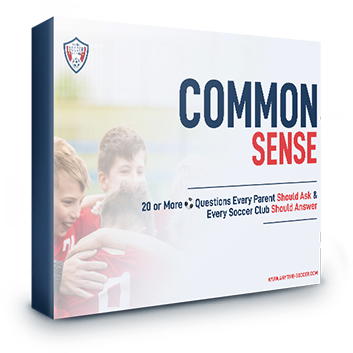
- 20 Questions Every Parent Should Ask - Navigate club selection and development
Final Thoughts: The U13 Sweet Spot
Age 13 represents a unique window in soccer development. Players are old enough to handle technical complexity and tactical concepts, but young enough that their playing style isn't yet fixed. Physical development varies wildly, but mental maturity begins emerging.
This is the age when encouraging parents see their investment pay off—not in trophies or scholarship offers (those come later), but in watching their player fall in love with the game, develop confidence, and build skills that will serve them for years to come.
🎯 Remember These Core Principles
- Positional versatility at 13 creates tactical intelligence at 17
- Technical excellence matters more than current athleticism
- 70/30 training-to-game ratio supports long-term development
- Encouragement builds resilient athletes who love the game
- Your player's goals matter more than your dreams
- The journey matters more than any single destination
You're asking the right questions at the right time. Keep supporting your player with the encouraging approach you've adopted. Trust the process. Enjoy these middle school years—they go faster than you think.
Support Your U13 Player's Development at Home
Team practice provides tactical learning, but home training delivers the 500+ touches per session that build technical excellence. U13 is the perfect age to establish consistent home training habits.
Anytime Soccer Training provides:
- 5,000+ follow-along training videos organized by skill and age
- Position-specific training (defense, midfield, forward, goalkeeper)
- Ball mastery, weak foot development, first touch, passing progressions
- Communication and tactical awareness drills
- Individual: $120/year | Team option: $6/player/year
Perfect for U13 players: structured enough to develop skills, flexible enough to fit busy schedules.
Start Free 7-Day Trial View Pricing OptionsAbout Anytime Soccer Training: We help parents navigate youth soccer development with practical, research-backed guidance and accessible training solutions. Our founder trained two sons at home—one now plays at Charlotte FC Academy, the other at NC FC ECNL—proving that thoughtful, encouraging support combined with structured training creates exceptional outcomes. We're here to support your family's soccer journey every step of the way.