
College Soccer ID Camps: What Every Player & Parent Should Know
February 10, 2025

It’s that time of year again! No, not the holidays—ID Camp Season. If you’re a soccer parent, you’re probably hearing a lot about showcases, ID camps, and college commitments. Soccer ID camps have become a big part of the recruiting process for many student-athletes. Like everything else, they come with pros and cons. Let’s break it down so you can navigate the process with confidence.
This article comes from Gloria Cid-Stitt, Founder of US Soccer Parent, a platform dedicated to helping parents navigate the ups and downs of youth soccer in the U.S. From the early days of rec leagues to the intense world of college recruiting, Gloria shares real talk, tips, and insights to help families make sense of it all. As a soccer mom herself, she knows the journey firsthand and is passionate about supporting parents every step of the way.
What Are Soccer ID Camps?
Soccer ID camps are run by college programs to evaluate potential recruits. These events, usually lasting 1-3 days, give coaches a chance to assess players’ skills, fitness, and overall fit for their program. While some independent camps feature multiple college coaches, we’ll focus on the ones hosted by specific schools.
Why Attend an ID Camp?
- ✅Direct Exposure to College
You get to showcase your skills directly in front of the decision-makers, such as college coaches. For older players, this could lead to direct contact and potential recruitment opportunities. - ✅In-Depth Evaluation
Unlike short showcase games, ID camps give coaches extended time to assess players in drills, scrimmages, and even tactical sessions. Plus, you might receive direct feedback from the coaches, which is invaluable. - ✅Campus Experience
Most ID camps take place on college campuses, giving players a taste of college life. This firsthand experience can help them envision whether a school is the right fit. - ✅Skill Development
Beyond evaluation, these camps push players out of their comfort zone with high-level training. The competition can challenge young athletes in ways their regular team environment may not.
Things to Consider Before Signing Up
❌ Cost
ID camps aren’t cheap. Between registration fees, travel, and accommodations, costs add up—especially if you attend multiple camps. However, some options can help:
- U.S. Soccer Talent ID Centers (IDCs): Free one-day events for top players.
- Soccer Stars Foundation: Offers financial aid for players who qualify.
- College-Specific Financial Aid: Some schools provide discounts or fee waivers.
❌ Time Commitment
Camps require several days of your time, which can be tough to balance with school and club soccer. Even if camps avoid school days, travel logistics can still be challenging.
❌ No Guarantees
Attending an ID camp does not mean automatic recruitment. With dozens (sometimes hundreds) of players in attendance, standing out takes more than just showing up.
Are ID Camps Right for Your Athlete?
This should be a family decision. If your player’s club or academy coach is experienced with college recruiting, ask for their honest feedback. Coaches see things from a different perspective and can help guide the process.
Making the Most of an ID Camp
If you’re going, make it count! ✔️ Do Your Homework – Research the camps, the schools, and the coaches attending. ✔️ Talk to Others – Ask parents and players who’ve attended before. ✔️ Prepare Mentally & Physically – Expect nerves, competition, and intensity. ✔️ Bring the Right Mindset – Coaches look at attitude and work ethic just as much as skill. ✔️ Seek Feedback – Take criticism constructively and apply what you learn. ✔️ Follow Up – Send thank-you emails to coaches and stay in touch if you’re serious about a program.More Tips for Parents
- Stay Positive – Your encouragement matters.
- Manage Expectations – ID camps are just one step in the process.
- Stay Organized – Track camp dates, emails, and follow-ups.
- Keep the Lines Open – Talk to your player about their goals and feelings.
- Encourage Balance – School, soccer, and downtime all matter.
Common Mistakes Parents Should Avoid
- 🚫Overemphasizing Results – Experience and development matter more than instant recruitment.
- 🚫Neglecting Academics – Coaches recruit student-athletes, not just athletes.
- 🚫Micromanaging – Let your player take ownership of their journey.
- 🚫Ignoring Feedback – Coaches’ advice is gold—listen and apply it.
- 🚫Skipping Research – Not all camps are worth the investment. Choose wisely.
- 🚫Overloading the Schedule – Too many camps can lead to burnout.
- 🚫Forgetting the Fun – If the process becomes too stressful, it can drain the joy out of the game.
Final Thoughts
Soccer ID camps can be a great tool in the college recruiting journey, but they require careful planning. Weigh the costs, time, and effort before committing. And remember—ID camps are just one part of the process.
The real key? Keep working hard, perform well in your club season, and maintain strong academics. If your player stays focused, they’ll maximize their chances of catching a coach’s eye.
How to Vet a Camp Before You Pay
Not every ID camp is built to identify players. Some are run by programs with a genuine roster need; others are a summer revenue line with a coach making an appearance on day one. The difference is rarely advertised, but it is usually visible if you ask. Before you book travel, email the program and ask:
- Which coaching staff will be on the field, and for how long? “Staff will be present” is not the same as the head coach watching your player’s group for two days.
- How many players are you expecting, and in which graduation years? A camp of 200 across four year groups is a clinic. A camp of 40 in your player’s year is an evaluation.
- Are you recruiting this position for my player’s graduation year? If the class is committed, the honest answer changes everything and costs you nothing to hear.
- How much of the time is games versus drills? Coaches learn most from live play; a camp that is mostly stations tells them less about your player.
- Will players receive individual feedback? Ask what form it takes and when.
A program with a real interest will answer these directly. Vague replies are an answer too.
Match the Camp to the Level
Families often aim only at the most familiar names and skip the levels where their player would actually be recruited — and play. Worth understanding before you choose where to spend:
| Level | What it usually means for a recruit |
|---|---|
| NCAA Division I | Smallest number of spots, earliest timelines, most competition for attention. Athletic scholarships exist but are often partial and shared across a roster. |
| NCAA Division II | Athletic aid available, frequently combined with academic money. Often a genuinely strong playing level with a more balanced schedule. |
| NCAA Division III | No athletic scholarships, but academic and need-based aid can make the total cost competitive. Wide range of playing standards — the top of D3 is very good. |
| NAIA | Athletic aid available, smaller schools, its own recruiting calendar. Frequently overlooked by families who only look at NCAA. |
| Junior college (NJCAA) | A route for players who need development time, academic repair, or a later start. Transferring on afterwards is a well-worn path. |
One camp at the right level will do more for a player than three at the wrong one.
Roughly When Things Happen
Recruiting rules and calendars change, so confirm specifics with each program rather than trusting a chart — including this one. As a shape, though:
- Younger high school years: the point is development and exposure to the environment, not commitments. Camps are for learning what college training feels like.
- Middle years: narrow the list. Start emailing programs, send film, attend camps where you have already had some contact.
- Later years: conversations get concrete, and the camps worth attending are the ones where a coach has invited your player specifically.
Across all of them, the club season is still the main stage. A camp is a supplement to it.
What to Send Before, and After
A coach who has never heard of your player has a much harder time noticing them in a group of a hundred. A short email a couple of weeks beforehand changes the odds — and it should come from the player, not the parent:
Before: who they are, graduation year, position, club and coach, a highlight link, current GPA and test scores if they have them, and one line on why that program. Say they are attending the camp and are looking forward to it. Six sentences is plenty.
After: thank them, name something specific from the weekend, restate the interest, and say what is next — the club schedule, upcoming showcases, when they visit campus again. Specific beats effusive.
Players who write their own emails tend to get better replies. Coaches notice who is driving the process.
Show Up Ready to Be Watched
A camp compresses months of evaluation into a couple of days, and the things that stand out are rarely the highlight-reel moments. Coaches are watching what a player does when they lose the ball, how they speak to a teammate who made a mistake, whether they sprint back, and whether their first touch holds up under pressure they are not used to.
Those are trainable, and they are trainable before the camp rather than during it. The players who look comfortable are usually the ones for whom the basics have stopped requiring thought — receiving on the back foot, striking with either side, changing direction at speed. That comfort comes from repetition in the weeks beforehand, not from a warm-up on the morning.
If your player has a camp on the calendar, the most useful thing they can do between now and then is train the fundamentals often enough that nothing at the camp feels new.
Gear we use for this
The kit our own players train with at home.

Adidas MLS Training Soccer Ball
View on Amazon →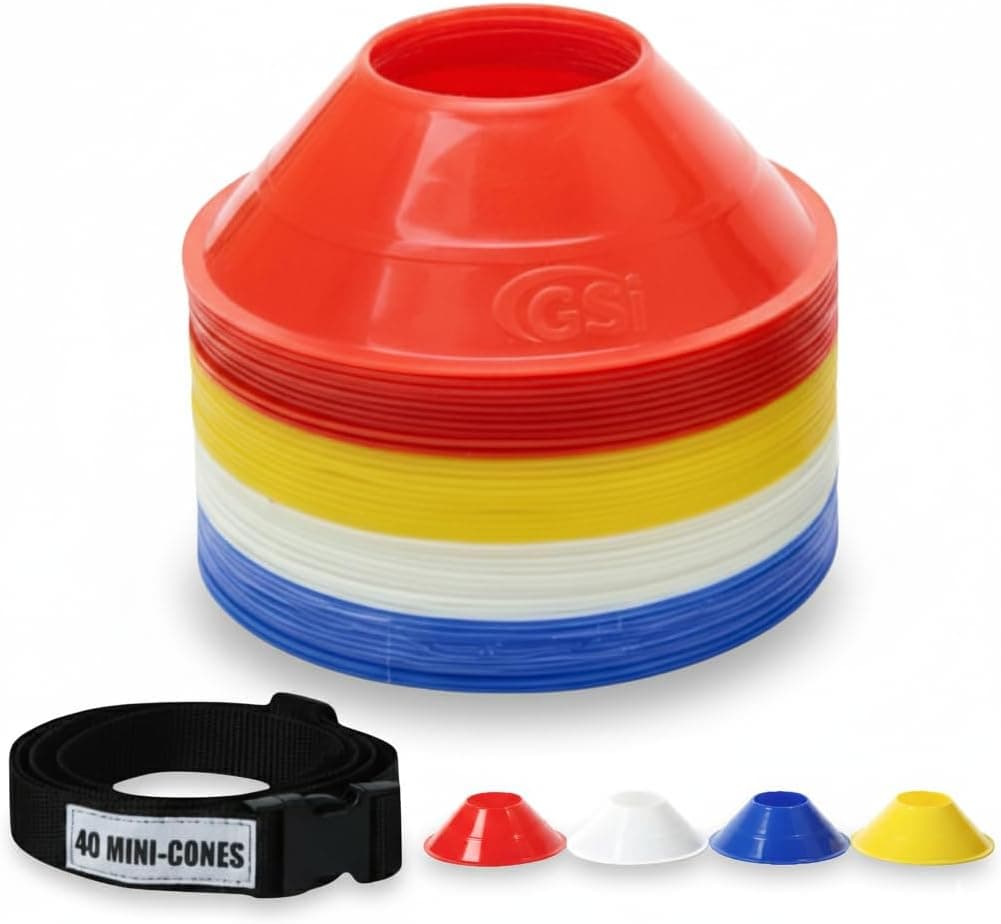
Disc Training Cones (Set of 40)
View on Amazon →
Soccer Rebounder
View on Amazon →As an Amazon Associate we earn from qualifying purchases, at no extra cost to you.