10 Great College Soccer Programs You've Probably Never Heard Of
🏆 Hidden Gem Programs That Could Be Your Perfect Fit
Everyone knows about Stanford, UCLA, and UNC. But some of the best college soccer experiences happen at small schools flying completely under the radar. These 10 programs combine competitive soccer, excellent academics, tight-knit communities, and realistic opportunities for playing time.
Introduction: Why Small Schools Might Be Your Best Option
When families start the college soccer recruiting process, they immediately think of the big names: Division I powerhouses with massive stadiums, ESPN coverage, and 30-player rosters where freshmen rarely see the field.
But here's what most families miss: some of the best college soccer experiences happen at schools with 2,000 students, not 20,000. Small college soccer programs offer advantages that large D1 schools simply can't match:
✨ Why Small College Soccer Programs Are Worth Considering
- More Playing Time: Smaller rosters mean freshmen actually play, not sit on the bench for two years
- Personal Relationships: You're not just a number—coaches know your name, your strengths, your goals
- Better Academics: Many small schools offer 10:1 student-to-faculty ratios vs. 25:1 at large universities
- Realistic Scholarship Opportunities: Less competition for scholarship money at D2/D3/NAIA levels
- Balanced College Experience: Time to study, play soccer, have internships, and enjoy college life
- Strong Programs: Many small schools compete at the highest levels of D2, D3, and NAIA
Understanding the complete U.S. soccer structure helps you realize that college soccer extends far beyond just Division I. In fact, some of the most competitive soccer and best overall experiences happen at smaller schools.
This guide highlights 10 small college soccer programs that consistently produce winning teams, send players to professional ranks, maintain strong academics, and create unforgettable college experiences—but somehow stay under the radar of most recruiting families.
Messiah University NCAA D3
Location: Mechanicsburg, PA (near Harrisburg)
Enrollment: ~3,400 students
Conference: Middle Atlantic Conference (MAC)
Programs: Men's & Women's Soccer
Why Messiah Is Special:
Messiah isn't just good at D3 soccer—they're historically dominant. The men's program has won 9 NCAA Division III National Championships (more than any other D3 men's program), and the women have won 3 national championships.
🏆 Program Highlights:
- Men's Championships: 2009, 2008, 2005, 2003, 2002, 2000, 1999, 1998, 1997
- Women's Championships: 2005, 2004, 2003
- Consistent Excellence: Regularly ranked in top 10 nationally
- Professional Pipeline: Multiple players to MLS, USL, NWSL
- World-Class Facilities: Messiah has arguably the best D3 soccer facilities in the country
Academics:
Messiah is a private Christian liberal arts university with strong programs in:
- Engineering (3-2 programs with Penn State)
- Business & Management
- Nursing & Health Sciences
- Education
- Exercise Science & Sports Medicine
The Messiah Soccer Culture:
What makes Messiah unique is the combination of championship-level soccer with a genuinely supportive community. Players consistently talk about how the program develops them as complete people, not just athletes. The Christian faith-based environment won't appeal to everyone, but for families seeking that combination, Messiah is unmatched.
💡 Best Fit For:
Players who want elite D3 soccer, strong academics, Christian community, and a proven championship program. If you can compete at high D3 level and want a smaller campus with big-time soccer success, Messiah should be on your list.
Website: messiah.edu
Williams College NCAA D3
Location: Williamstown, MA (Berkshire Mountains)
Enrollment: ~2,000 students
Conference: NESCAC (New England Small College Athletic Conference)
Programs: Men's & Women's Soccer
Why Williams Is Special:
Williams College is consistently ranked the #1 liberal arts college in America by U.S. News & World Report. It's academically on par with Ivy League schools, but competes in Division III so athletic scholarships aren't allowed—meaning you get a world-class education without athletic scholarship pressure.
🎓 Academic Excellence + Competitive Soccer:
- Acceptance Rate: ~8% (one of most selective in the nation)
- Average SAT: 1480-1560
- Student-to-Faculty Ratio: 6:1
- 100% Need-Based Financial Aid: If admitted, your family pays what they can afford
- Soccer Program: Both men's and women's consistently top 25 nationally in D3
The NESCAC Difference:
NESCAC is widely considered the most academically rigorous D3 conference. Schools include Williams, Amherst, Middlebury, Bowdoin, Tufts, and Wesleyan. Soccer is highly competitive, but academics come first—no spring season, limited out-of-season training.
Soccer + Academics Balance:
Williams soccer players major in everything from astrophysics to art history. The 4-1-4 calendar (4 months fall, 1 month January term, 4 months spring) allows for unique opportunities during January—many soccer players study abroad or do internships during this month.
💡 Best Fit For:
Exceptional students who want to play competitive soccer at an elite academic institution. If you have the grades/scores for Ivy League but want D3 flexibility, Williams offers the academics without athletic scholarship stress. Playing soccer here opens doors to any graduate school or career imaginable.
Website: ephsports.williams.edu
Lindsey Wilson College NAIA
Location: Columbia, KY (90 minutes south of Louisville)
Enrollment: ~2,500 students
Conference: Mid-South Conference
Programs: Men's & Women's Soccer
Why Lindsey Wilson Is Special:
Lindsey Wilson is arguably the most dominant NAIA soccer program in the country. The men's program has won 5 NAIA National Championships since 2013, and the women's program has won 3 national championships in the same period.
🏆 Championship Dominance:
- Men's Championships: 2013, 2015, 2016, 2017, 2022
- Women's Championships: 2014, 2016, 2018
- International Pipeline: Recruits heavily from Europe, South America, Africa—creating multicultural roster
- Professional Success: Dozens of players to USL Championship, MLS NEXT Pro, NWSL, international leagues
- Competitive Level: Lindsey Wilson would compete successfully against many D2 and mid-level D1 programs
The Lindsey Wilson Experience:
Don't let the NAIA label fool you—Lindsey Wilson soccer is ELITE. Games regularly draw 500-1,000+ fans. The facilities rival many D1 programs. Players take soccer very seriously here, with professional-level training and expectations.
Academics & Career Preparation:
Lindsey Wilson is a private college with strong programs in:
- Business Administration
- Criminal Justice
- Exercise Science & Sports Management
- Teacher Education
- Human Services
⚠️ Important to Know:
Lindsey Wilson soccer is HIGHLY competitive. Tryouts typically have 100+ players competing for 25-28 roster spots. The international recruiting means you're competing against players from professional academies in Europe and South America. If you're not playing at high club/academy level, Lindsey Wilson may be too competitive. That said, if you CAN compete at this level, it's an incredible experience.
💡 Best Fit For:
Players who want championship-level soccer in a small-school environment, don't mind rural Kentucky location, want international teammates/experience, and can compete at near-professional level. If you're considering lower-level D1 or strong D2 programs, Lindsey Wilson deserves serious consideration.
Website: lindsey.edu
Grand Valley State University NCAA D2
Location: Allendale, MI (15 minutes from Grand Rapids)
Enrollment: ~22,000 students
Conference: Great Lakes Intercollegiate Athletic Conference (GLIAC)
Programs: Men's & Women's Soccer
Why Grand Valley State Is Special:
Okay, Grand Valley is slightly larger than "small," but it's too good to leave off this list. GVSU is a D2 soccer powerhouse that consistently competes for national championships and has sent numerous players professional.
🏆 D2 Excellence:
- Women's National Championships: 2009, 2013, 2015
- Men's Program: Consistently ranked top 10 nationally, multiple Final Four appearances
- Professional Pipeline: Players to MLS, USL Championship, NWSL, international leagues
- GLIAC Dominance: One of strongest D2 conferences in the country
- Top-Tier Facilities: Better than many D1 programs
The Michigan Advantage:
Grand Rapids is one of the fastest-growing cities in the Midwest, with thriving business community, craft beer scene, and surprisingly vibrant culture for a mid-sized city. GVSU offers big-school resources with more personalized attention than massive D1 universities.
Academics & Value:
GVSU is a public university with in-state tuition around $14,000/year and out-of-state around $20,000/year—significantly cheaper than private schools. Strong programs in:
- Engineering (partnership with University of Michigan)
- Business (Seidman College of Business - AACSB accredited)
- Health Professions (Nursing, Physical Therapy, Physician Assistant)
- Education
- Exercise Science & Sports Management
💡 Best Fit For:
Players who want championship-level D2 soccer, strong academics at affordable price, Midwest location, and realistic path to professional soccer. GVSU competes at the highest level of D2—if you're looking at mid-major D1 programs, GVSU soccer is comparable quality with better playing time opportunities and lower cost.
Website: gvsulakers.com
University of Chicago NCAA D3
Location: Chicago, IL (Hyde Park neighborhood)
Enrollment: ~7,500 students (including graduate)
Conference: University Athletic Association (UAA)
Programs: Men's & Women's Soccer
Why UChicago Is Special:
The University of Chicago is one of the most prestigious universities in the world—ranked in the top 10 nationally, home to 94 Nobel Prize laureates, and known for rigorous academics. But most people don't know they also field competitive D3 soccer teams.
🎓 Elite Academics Meet Competitive Soccer:
- U.S. News Ranking: #6 National University
- Acceptance Rate: ~5% (extremely selective)
- Average SAT: 1520-1570
- Soccer Level: UAA is one of strongest D3 conferences—includes Carnegie Mellon, Emory, NYU, Wash U
- Chicago Location: Major city with internship/career opportunities in every field
The Academic Rigor:
UChicago is known for its intense "Core Curriculum" that all students complete. This isn't a school for students who want easy classes—it's challenging, intellectually demanding, and pushes you to think critically about everything.
Soccer + Career Opportunities:
Playing soccer at UChicago opens doors that few schools can match. Alumni include CEOs, Supreme Court justices, Pulitzer Prize winners, and leaders in every field. Soccer players at UChicago pursue careers in:
- Finance & Investment Banking (Chicago is major financial center)
- Law (UChicago Law School is top 5 nationally)
- Business & Consulting
- Medicine & Research
- Academia & Education
💡 Best Fit For:
Exceptional students who want world-class education, competitive D3 soccer, and major city location. If you're considering Ivy League schools and want to play soccer without athletic scholarship pressure, UChicago should absolutely be on your list. The academic intensity is real—but so are the opportunities after graduation.
Website: athletics.uchicago.edu
Wingate University NCAA D2
Location: Wingate, NC (30 minutes southeast of Charlotte)
Enrollment: ~3,500 students
Conference: South Atlantic Conference (SAC)
Programs: Men's & Women's Soccer
Why Wingate Is Special:
Wingate is one of the most consistently competitive D2 soccer programs in the Southeast. Both men's and women's programs regularly make NCAA tournament appearances, and the South Atlantic Conference is one of the strongest D2 conferences nationally.
🏆 Program Excellence:
- Men's Program: 10+ NCAA Tournament appearances, consistently ranked top 25 nationally
- Women's Program: Multiple SAC Championships, NCAA tournament regular
- Competitive Conference: SAC includes Limestone, Catawba, Lenoir-Rhyne—all strong programs
- Professional Pipeline: Regular players to USL League One, USL Championship, international leagues
- Charlotte Proximity: 30 minutes from major city = internship opportunities
The North Carolina Soccer Scene:
North Carolina is one of the best states for college soccer. Wingate benefits from being in a soccer-rich region with strong youth development, passionate fans, and easy recruiting access to top talent. Games regularly draw strong crowds from local soccer community.
Academics & Programs:
Wingate is a private university with strong programs in:
- Pharmacy (Doctor of Pharmacy program)
- Physical Therapy (highly regarded DPT program)
- Business & Accounting
- Exercise Science & Sports Management
- Education
Financial Value:
As a private D2 school, Wingate can stack academic and athletic scholarships. Many soccer players receive 50-75% total scholarship coverage combining both types.
💡 Best Fit For:
Players who want strong D2 soccer in the Southeast, proximity to Charlotte, smaller campus feel with competitive athletics, and health sciences/business programs. If you're considering lower-tier D1 programs in the Carolinas, Wingate D2 soccer is highly competitive and offers better financial aid opportunities.
Website: wingatebulldogs.com
Calvin University NCAA D3
Location: Grand Rapids, MI
Enrollment: ~3,500 students
Conference: Michigan Intercollegiate Athletic Association (MIAA)
Programs: Men's & Women's Soccer
Why Calvin Is Special:
Calvin is consistently ranked as one of the top Christian universities in the country and fields highly competitive D3 soccer programs. The women's program has been particularly dominant, winning multiple NCAA Division III National Championships.
🏆 Championship Success:
- Women's National Championships: 2010, 2012, 2015, 2016
- Men's Program: Consistently competitive in MIAA, regular NCAA tournament appearances
- Grand Rapids Location: Growing city with strong economy, culture, and opportunities
- Christian Reformed Tradition: Faith-integrated education for students seeking that environment
- Strong Alumni Network: Particularly in Midwest business, education, healthcare
Academics & Engineering Focus:
Calvin is particularly strong in STEM fields. Programs include:
- Engineering (Mechanical, Civil, Electrical, Chemical - ABET accredited)
- Computer Science & Data Science
- Nursing & Health Professions
- Business & Accounting
- Education (strong teacher preparation program)
The Calvin Soccer Culture:
Calvin soccer combines competitive athletics with Christian community. Chapel and team devotionals are part of program culture. Players develop strong bonds through shared faith and athletic goals.
💡 Best Fit For:
Players who want strong D3 soccer, Christian community, STEM/engineering programs, and Midwest location. If you're looking at schools like Messiah, Wheaton, or Hope College, Calvin should be on your list. The women's program especially has championship pedigree and excellent coaching.
Website: calvinsports.com
Embry-Riddle Aeronautical University NAIA
Location: Daytona Beach, FL
Enrollment: ~6,500 students (Daytona campus)
Conference: The Sun Conference
Programs: Men's & Women's Soccer
Why Embry-Riddle Is Special:
Embry-Riddle is the world's largest aerospace university, and most people have no idea they have competitive NAIA soccer programs. This is the ultimate combination of specialized STEM education with solid soccer in Florida.
✈️ Unique Academic + Soccer Combination:
- Aerospace Engineering: Top-ranked program globally for aerospace/aviation
- Soccer Level: Competitive NAIA, The Sun Conference includes strong programs
- Daytona Beach Location: Year-round soccer weather, beautiful campus near beach
- Career Opportunities: Boeing, SpaceX, NASA, airlines recruit heavily from Embry-Riddle
- International Diversity: Students from 100+ countries, international teammates common
Academic Programs (Aviation & Engineering Focus):
If you want to work in aviation, aerospace, or engineering, Embry-Riddle is elite. Programs include:
- Aerospace Engineering
- Aeronautical Science (Professional Pilot)
- Mechanical Engineering
- Electrical Engineering
- Computer Science & Cyber Security
- Aviation Business Administration
The Reality of Engineering + Soccer:
Engineering programs are demanding, and Embry-Riddle is no exception. Soccer players here need strong time management skills. However, the NAIA schedule is slightly less demanding than D1, making the balance more achievable.
⚠️ Not Your Typical College Experience:
Embry-Riddle is highly specialized—about 80% of students are in aviation/aerospace/engineering. If you want broad liberal arts education, this isn't the right fit. But if you want to be a pilot, work at SpaceX, or design aircraft while playing college soccer, there's no better option.
💡 Best Fit For:
Players passionate about aviation/aerospace/engineering who want to play soccer in Florida. This is a niche fit, but for the right student-athlete, it's perfect. If you're seriously considering careers in aviation or aerospace engineering and want to play college soccer, Embry-Riddle should absolutely be on your list.
Website: eraueagles.com
Tufts University NCAA D3
Location: Medford, MA (5 miles from Boston)
Enrollment: ~6,800 students (including graduate)
Conference: NESCAC
Programs: Men's & Women's Soccer
Why Tufts Is Special:
Tufts is often called a "Little Ivy"—academically on par with Ivy League schools but competing in D3. It offers elite academics, Boston location, and competitive NESCAC soccer without athletic scholarship pressure.
🎓 Academic Excellence + Soccer:
- U.S. News Ranking: #40 National University (often ranked higher than some Ivies)
- Acceptance Rate: ~10% (highly selective)
- Average SAT: 1460-1550
- Boston Location: Access to major city internships, culture, career opportunities
- NESCAC Soccer: Highly competitive D3 conference
- Need-Based Aid: Meets 100% of demonstrated financial need
Academic Strengths:
Tufts is particularly strong in:
- International Relations (Fletcher School - top-ranked graduate program)
- Engineering (strong undergrad program)
- Pre-Med (excellent medical school acceptance rates)
- Computer Science
- Economics & Business
Soccer + Career Opportunities:
Boston is a major hub for biotechnology, finance, consulting, technology, and healthcare. Tufts students have access to internships and connections throughout the city. Soccer players at Tufts pursue careers in:
- Medicine (many go to top medical schools)
- Consulting (McKinsey, Bain, BCG recruit heavily)
- Technology & Startups
- International Relations & Diplomacy
- Finance & Investment Banking
💡 Best Fit For:
Exceptional students who want Ivy-level academics, NESCAC soccer, and Boston location. If you're considering Ivies like Brown, Dartmouth, or Penn but want D3 flexibility, Tufts is an excellent option. The academic rigor is similar, but D3 allows for better balance of soccer, academics, and college experience.
Website: tufts.edu
Charleston (WV) NCAA D2
Location: Charleston, WV (state capital)
Enrollment: ~2,500 students
Conference: Mountain East Conference (MEC)
Programs: Men's & Women's Soccer
Why Charleston Is Special:
Charleston (formerly University of Charleston) is a D2 soccer powerhouse that consistently competes for national championships. The men's program has won 2 NCAA Division II National Championships, and both programs regularly make deep tournament runs.
🏆 Championship Pedigree:
- Men's National Championships: 2014, 2021
- Women's Program: Multiple MEC Championships, consistent NCAA tournament appearances
- Professional Pipeline: Dozens of players to USL Championship, MLS NEXT Pro, international leagues
- Competitive Conference: MEC is one of strongest D2 conferences
- State Capital Location: Internship opportunities in government, healthcare, business
The Charleston Soccer Culture:
Charleston soccer is taken very seriously. Games draw strong crowds from local soccer community. The coaching staff has deep connections to professional soccer—many assistants have played professionally and maintain relationships with pro clubs.
Academics & Programs:
Charleston is a private university with particularly strong programs in:
- Pharmacy (Doctor of Pharmacy program)
- Physician Assistant Studies
- Athletic Training
- Business Administration
- Exercise Science & Sports Medicine
Financial Value & Scholarships:
As a private D2 school, Charleston can stack academic and athletic scholarships. Strong soccer players with solid academics (3.2+ GPA) often receive 50-80% total scholarship coverage.
💡 Best Fit For:
Players who want championship-level D2 soccer, health sciences programs (especially pharmacy/physician assistant), smaller campus feel, and realistic path to professional soccer. If you're considering mid-major D1 programs in the Southeast/Mid-Atlantic, Charleston's soccer program is just as competitive with better scholarship opportunities and playing time for underclassmen.
Website: ucgoldeneagles.com
How to Evaluate Small College Soccer Programs
Now that you've seen 10 examples, here's how to evaluate ANY small college soccer program to determine if it's right for you:
| Factor | What to Look For |
|---|---|
| Competitive Level | Check recent results, conference standings, NCAA tournament appearances |
| How: Visit team website, look at roster (where do players come from?), watch game film on YouTube. Small programs with competitive rosters recruit regionally/nationally, not just locally. | |
| Coaching Stability | How long has head coach been there? What's their record? |
| Why: Coaches who stay 5+ years build programs. High turnover = instability. Check coach bio for playing/coaching background. | |
| Roster Size | How many players on roster? How many freshmen play? |
| Ideal: 22-28 player rosters = more playing time. Look at game stats to see if freshmen actually play or just practice. | |
| Academic Fit | Does the school offer your intended major? What's student-to-faculty ratio? |
| Critical: Don't sacrifice academics for soccer. You'll spend 40 hours/week in class/studying vs. 20 hours in soccer. Major matters more. | |
| Location & Culture | Can you see yourself living there for 4 years? Visit campus! |
| Reality: Small schools feel VERY different from large universities. If you need big-city energy, rural Vermont won't work. If you want tight-knit community, 40,000-student campus might feel overwhelming. | |
| Financial Reality | What's the actual cost after scholarships? Can your family afford it? |
| Important: Private D3 schools cost $60K+ but offer need-based aid. D2/NAIA can stack athletic + academic scholarships. Use net price calculators on school websites to estimate real cost. | |
The Small School Advantage: Why You Should Consider It
🎯 Small College Soccer Benefits Most Families Don't Consider:
1. You'll Actually Play
At D1 power programs, 50% of freshmen never see the field in meaningful games. At small schools, talented freshmen play regularly. Four years of playing time > four years watching from bench.
2. Professors Know Your Name
At Williams, your economics professor has dinner at your house. At Michigan, you're student #47 in a 300-person lecture hall. Small schools offer mentorship that large universities can't match.
3. You Can Have a Life Outside Soccer
D1 soccer is often 30+ hours/week year-round. D2/D3/NAIA is typically 20-25 hours in-season, less out-of-season. This allows time for internships, study abroad, campus involvement—experiences that matter for life after soccer.
4. Better Scholarship Opportunities
D1 programs split 9.9 scholarships (men) or 14 (women) among 30+ players. Many D2/NAIA programs can offer MORE total aid by stacking academic + athletic scholarships. D3 schools offer generous need-based aid if you qualify.
5. Realistic Path to Professional Soccer
D2/D3/NAIA programs send players professional every year. USL Championship, MLS NEXT Pro, and overseas leagues scout all levels. If you're good enough, scouts will find you regardless of division.
6. Graduate School Advantages
Top graduate schools (medical, law, business) care about GPA, test scores, and quality of undergraduate institution—not whether you played D1, D2, or D3 soccer. A 3.7 GPA from Williams or UChicago opens every door.
Common Concerns About Small College Soccer (Addressed)
❓ "But won't D1 look better on my resume?"
Reality: Employers care about your school's academic reputation and your GPA, not your division. A 3.5 GPA from Tufts D3 beats a 2.8 from a mid-major D1 school. Exception: if pursuing professional soccer, D1 provides slightly more exposure—but D2/NAIA programs like Lindsey Wilson and Charleston send just as many players pro.
❓ "Will I regret not playing at the 'highest level'?"
Reality: Most athletes regret choosing schools where they never played, not schools where they started all four years. Playing 80% of minutes at strong D2 program is more fulfilling than riding bench at D1 program. Plus, top D2/D3/NAIA programs compete at D1 level—Messiah would beat half of D1 men's programs.
❓ "Are small schools boring?"
Reality: Depends on what you want. If you need Division I football Saturdays and 40,000 students, small schools won't work. But if you value close friendships, knowing professors personally, and tight-knit community, small schools offer experiences large universities can't match. Many small schools are near major cities (Tufts in Boston, UChicago in Chicago) offering both small campus and big city access.
How to Research Small College Programs
✅ Research Checklist for Small College Soccer:
- Use NCSA or College Soccer News to identify programs at your level
- Watch game film on YouTube—see actual level of play
- Check team roster: Where do players come from? Are freshmen playing?
- Review conference standings and NCAA tournament history
- Research academic programs—does school offer your intended major?
- Use net price calculator to estimate actual cost after aid
- Visit campus if possible—small school fit is crucial
- Reach out to current players on Instagram/Twitter—ask about experience
- Email coaches with highlight video following recruiting best practices
- Apply to 5-7 schools across divisions (spread risk)
When to Start Researching Small Programs:
Many families focus exclusively on D1 schools until junior year, then panic when they realize D1 rosters are full. Start researching D2/D3/NAIA programs as a sophomore. Understanding the complete college recruiting timeline helps you target the right level at the right time.
Attend regional showcases and ID camps at schools you're genuinely interested in—not just the big-name D1 programs everyone attends.
Final Thoughts: The Best School Is the One Where You Thrive
The 10 programs highlighted here represent just a fraction of excellent small college soccer options. There are hundreds more across D2, D3, and NAIA offering competitive soccer, strong academics, and life-changing experiences.
The "best" college soccer program isn't the highest-ranked one—it's the one where you:
- Actually play meaningful minutes all four years
- Get a strong education in your chosen field
- Develop as a person, not just an athlete
- Build lifelong friendships and connections
- Graduate with minimal debt and maximum opportunities
Don't let the D1 hype machine convince you that bigger is always better. Some of the best college soccer experiences—and most successful post-soccer careers—come from small schools most people have never heard of.
💡 Remember This:
Playing at Messiah, Williams, Lindsey Wilson, or Grand Valley State won't make you less of a player. It might actually give you MORE playing time, BETTER education, STRONGER relationships, and GREATER opportunities after graduation than sitting on the bench at a big-name D1 program.
Choose the school where you'll thrive, not the one that impresses people who don't matter.
Skills Development: Your Ticket to Any Program
Whether you're targeting Messiah, Stanford, or anywhere in between, one truth remains: technical skill matters most. Small programs want players who can contribute immediately. Build college-ready skills BEFORE recruiting begins.
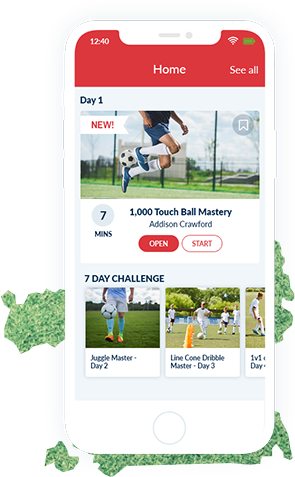
Anytime Soccer Training provides:
- 5,000+ follow-along videos building college-level technical ability
- Position-specific training matching what college coaches evaluate
- Systematic development preparing you for any level of college soccer
- Affordable options: Team ($6/player/year) or Individual ($120/year)
Coaches at these small programs recruit players with college-ready skills. Build that foundation at home, then showcase it strategically through recruiting.
View Pricing & Start Free Trial Get Free Training ResourcesRelated Resources
📚 More College Soccer Recruiting Guides
- The College Soccer Recruiting Process: Complete 2026 Guide - Start-to-finish recruiting roadmap
- Complete Guide to College Soccer Showcases - Top 10 showcases for boys & girls by region
- Complete Guide to College Soccer ID Camps - Top ID camps for boys & girls by region
- Complete Guide to HBCU Soccer Programs - All 38 HBCU programs by region
- Complete Guide to U.S. Youth Soccer Structure - Understand the entire soccer system
- College Soccer Tips & Resources - All college recruiting content
- 10 Ball Mastery Drills Your Child Can Do in 10 Minutes - Build college-ready skills
- Free Soccer Drills for Kids - Start training today
About the Author: Neil Crawford is the founder of Anytime Soccer Training and host of The Inside Scoop podcast. Having navigated both elite academy and college recruiting pathways, he understands that the "best" program isn't always the most famous one. He helps families identify colleges where student-athletes will actually play, get strong educations, and thrive—regardless of division.