You want your player to improve. You’ve driven to countless practices, signed up for camps, and maybe even hired a private trainer.
But somewhere between the carpool and the chaos, you’re wondering: Is this actually working?
You’re not alone. Parents, coaches, and club directors all face the same frustrating reality—players aren’t developing as fast as they should, and the old “more is better” approach isn’t cutting it.
Here’s the good news: The science is clear on what actually works. And it’s not what most people think.
The Problem Nobody Talks About
Most players get two or three hours of team training per week. That sounds like a lot—until you break it down.
Take away water breaks, coach instructions, waiting in lines, and scrimmage time where only one player has the ball… and the average player gets fewer than 50 quality touches per practice.
That’s not enough to build skill. Not even close.
Meanwhile, attention spans are working against us.
Related:
Ultimate In-Home Training Guide
Research shows young players have roughly a 4-minute attention span per year of age. A 7-year-old maxes out around 28 minutes—and that’s in ideal conditions.
So we’re asking kids to focus for 90-minute practices while giving them barely any meaningful repetition.
No wonder development stalls.
What the Science Actually Says
The research on skill acquisition is clear. Here’s what builds better players:
1. Distributed Practice Beats Massed Practice
A study published in Psychological Science found that spreading practice into shorter, frequent sessions produces better long-term retention than cramming into longer blocks.
Translation: Four 10-minute sessions beat one 40-minute session—every time.
2. High Repetition in Short Bursts
Research from the Journal of Sports Sciences shows that players can achieve 500+ quality touches in just 5-10 minutes of focused ball work. Over a season, that adds up to thousands of extra repetitions.
Related:
Try the 30-Day Plan
The players who improve fastest aren’t always the most talented. They’re the ones accumulating touches outside of team practice.
3. Autonomy Increases Motivation
Studies in sports psychology consistently show that players who feel ownership over their training are more motivated and more likely to stick with it.
When kids follow along instead of being constantly corrected, they engage more deeply. Independence builds intrinsic motivation.
4. Fun Is Not Optional
According to the Aspen Institute’s Project Play research, the #1 reason kids play sports is to have fun. When it stops being fun, they quit.
Short, game-like challenges keep training feeling like play—which is exactly how it should feel.
5. Consistency Compounds
Dr. K. Anders Ericsson’s research on deliberate practice confirms that consistent, focused repetition over time is the single greatest predictor of skill development.
Not expensive camps. Not more practices. Just consistent, quality touches—day after day.
What This Looks Like in Real Life
I’m a soccer dad. I’ve been in your shoes.
When my boys were six, I made the classic mistake: I set up cones in the driveway and tried to run a “real” training session.
Thirty minutes? Never happened.
What did happen: five minutes of soccer, three squirrel sightings, one snack emergency, a meltdown over cone colors, and me standing there questioning my life choices.
But when I shortened the sessions, added challenges, and stopped over-coaching—everything changed. They stopped resisting. They started asking to train.
That’s when I realized: the problem wasn’t my kids. It was the format.
Recommended Gear for Home Training
You don’t need much to start. Here’s what I recommend based on what actually gets used (not what collects dust in the garage):
Rebounder Net
A rebounder lets players train passing, first touch, and volleys without needing a partner. It’s the single best investment for home training.
👉 Franklin Sports Soccer Rebounder
Cones
Simple, cheap, and essential for dribbling work. Get the disc-style cones—they don’t tip over.
Training Ball (Size Appropriate)
A good ball makes a difference. Match the size to your player’s age group.
👉 Select Numero 10 Training Ball
Agility Ladder
Great for footwork and coordination. Use it as a quick warm-up before ball work.
Portable Goal
For shooting practice or small-sided games in the backyard.
Ball Bag or Cart
Sounds minor, but having balls easily accessible removes friction from training.
👉 Crown Sporting Goods Ball Bag
How to Put This Into Practice
Based on the research, here’s what I recommend:
For Parents:
- Start with one 5-10 minute session per day
- Let your player follow along instead of coaching every touch
- Add a challenge or game element to keep it fun
- Stay consistent—frequency beats duration
For Coaches:
- Break practice into shorter, high-repetition blocks
- Use station rotations to maximize touches
- Send families home with simple training they can do between sessions
- Emphasize fun—players who enjoy training do more of it
For Club Directors:
- Provide home training resources as part of your club’s value
- Educate parents on the science of skill development
- Create a culture where individual training is expected, not optional
- Track player development beyond just team performance
The Solution: Training That Fits Real Life
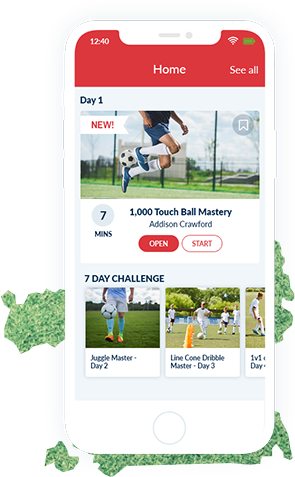
Everything I learned from the research—and from failing in my own driveway—became the foundation for Anytime Soccer Training.
The program is designed around how players actually learn:
✅ Short sessions (5-10 minutes) that match attention spans
✅ Follow-along format so kids train independently
✅ One skill at a time to build confidence without overwhelm
✅ Challenges and games that make training feel like play
✅ Structured progressions so players know exactly what to do next
It’s built for parents who want their kids to improve without fighting them.
For coaches who want players to get quality touches between practices. For club directors who want a development tool that extends beyond the field.
One five-minute session before each practice and game adds up to thousands of extra touches, hours of meaningful repetition, and a more confident player by the end of the season.
Small sessions compound. That’s how real development happens.
👉 Ready to see it in action? Try the free 7-day plan—short, structured sessions your player will actually finish.