
Complete Guide to U.S. Youth Soccer Structure (2026)
January 6, 2026
✅ Navigate U.S. Youth Soccer with Confidence
The complete guide to understanding governing bodies, leagues, levels of competition, and costs—helping you make informed decisions for your player's journey.
Introduction: Understanding the U.S. Youth Soccer Landscape
If you're new to competitive youth soccer in the United States, you've likely felt overwhelmed by the alphabet soup of acronyms: ECNL, MLS NEXT, GA, DPL, USYS, NPL, USL, and more. Parents often ask: "Which league is best?" "How much will this cost?" "When should my child start playing competitively?"
The truth is that U.S. youth soccer is not a single, unified system—it's a complex landscape of governing bodies, leagues, and competition levels that can vary dramatically by region, age group, and gender. Understanding this structure is essential to making informed decisions about your child's soccer journey.
This comprehensive guide breaks down everything you need to know: from recreational AYSO to elite professional academies, from $200/year programs to $10K+ commitments, and from local leagues to national showcases. Whether your child is just starting out or already competing at a high level, this guide will help you navigate the system with confidence.
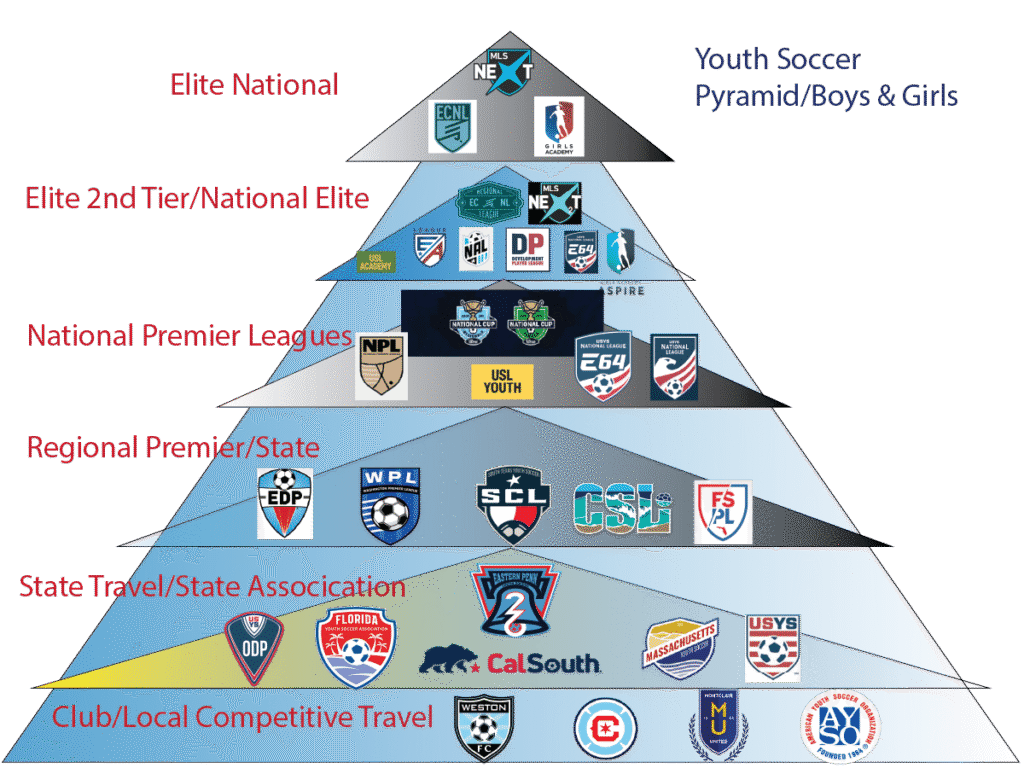
The U.S. Youth Soccer Pyramid: How It Works
Youth soccer in the United States operates on a pyramid structure, with recreational soccer at the base and professional academies at the peak. Here's how players typically progress:
| Level | Description | Age Range |
|---|---|---|
| Recreational | Entry-level, community-based programs focused on fun and participation (AYSO, local rec leagues) | U4-U12 |
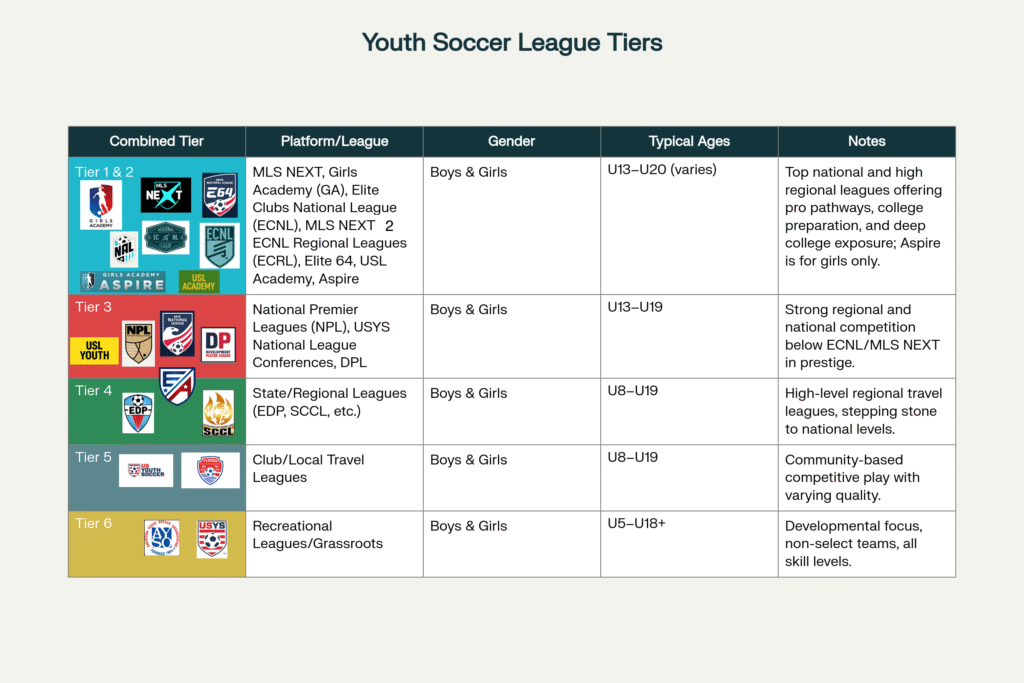
| Competitive/Travel | Club teams that travel locally/regionally for games (NPL, state leagues) | U8-U19 |
| Elite National | Top-tier leagues with national exposure (ECNL, MLS NEXT, Girls Academy, DPL) | U13-U19 |
| Professional Academies | Direct pathway to pro contracts (MLS Academies, USL Academies) | U13-U20 |
| Level | Typical Cost (Annual) | Time Commitment |
|---|---|---|
| Recreational | $100-$500 | 1 practice, 1 game/week |
| Competitive/Travel | $1.5K-$4K | 2-3 practices, 1-2 games/week |
| Elite National | $4K-$8K | 3-4 practices, 1-2 games/week + showcases |
| Professional Academies | $0-$5K (often free or subsidized) | 4-5 practices, 1 game/week + pro team exposure |
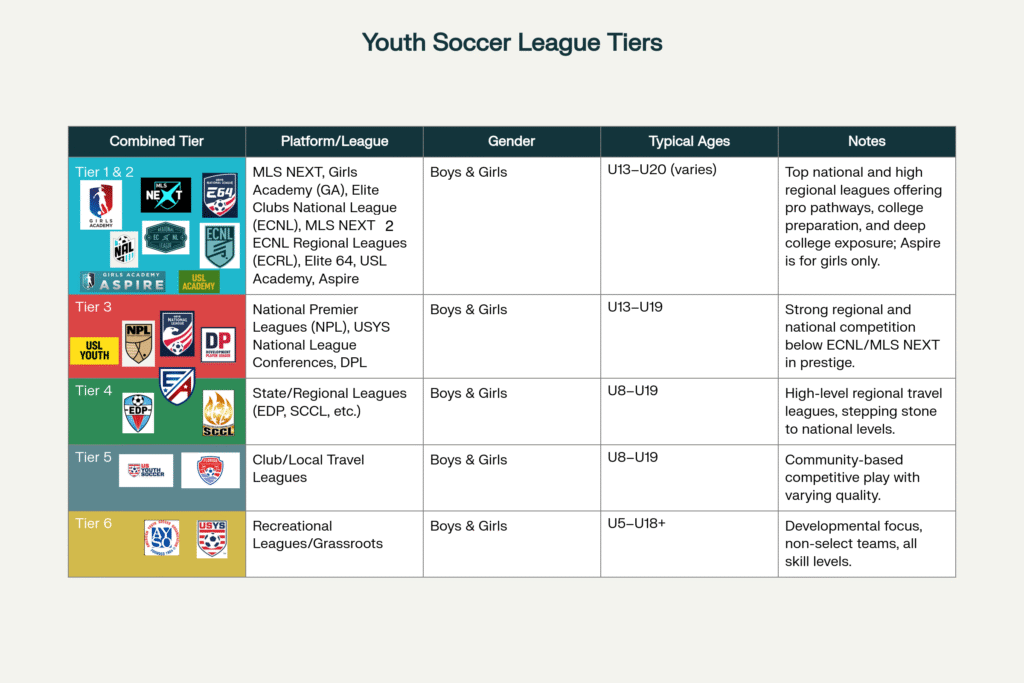
Governing Bodies: Who Runs Youth Soccer in the U.S.?
Unlike many countries with a single soccer federation, the United States has multiple governing bodies that oversee youth soccer. Understanding who they are and what they control is crucial:
1. U.S. Soccer Federation (USSF)
The official governing body of soccer in the United States. U.S. Soccer oversees the national teams, sets coaching education standards, and sanctions youth development programs. They previously ran the Development Academy (2007-2020) which has since been replaced by league-specific academies.
2. US Youth Soccer (USYS)
The largest youth sports organization in the United States, operating through 55 state associations. USYS oversees:
- State Cup competitions - Annual tournaments determining state champions
- Regional Championships - Pathways to national competitions
- Olympic Development Program (ODP) - Talent identification and development
- National League - Competitive league structure across regions
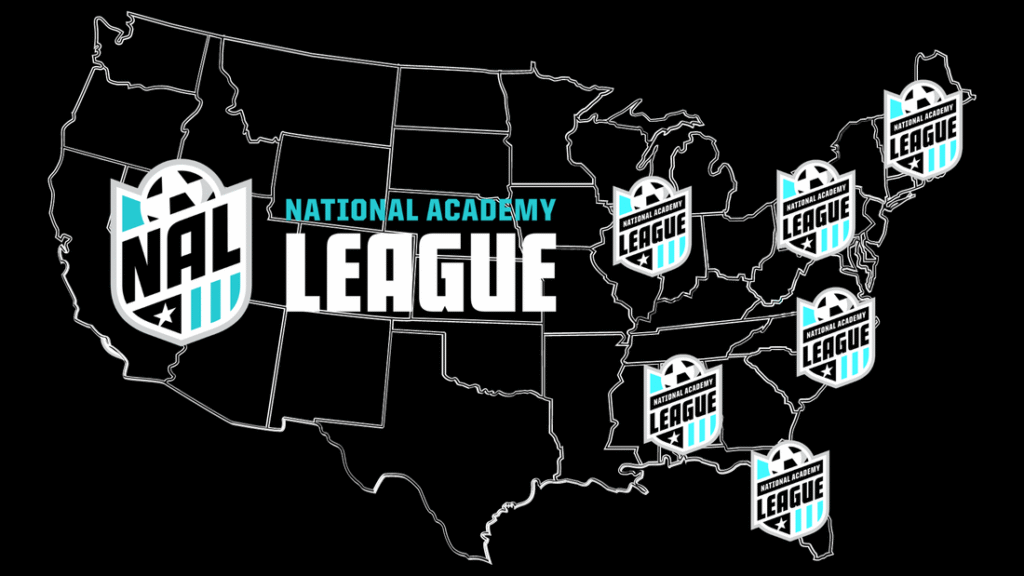
3. US Club Soccer
Founded in 2001 as an alternative to USYS, US Club Soccer sanctions many of the country's elite leagues including:
- Elite Clubs National League (ECNL) - Premier girls' and boys' competition
- National Premier Leagues (NPL) - Regional and national pathway
- Player Development Programs (PDP) - Talent identification
- id2 National Selection Program - Elite player camps and national team pathway
4. American Youth Soccer Organization (AYSO)
The largest recreational youth soccer organization in the U.S., serving over 400,000 players annually. AYSO emphasizes:
- Everyone Plays - Every registered player must play at least half of every game
- Balanced Teams - Equal distribution of talent across teams
- Positive Coaching - Certified volunteer coaches focused on development
- Good Sportsmanship - Creating a fun, safe environment
5. Soccer Association for Youth (SAY)
Another recreational organization similar to AYSO, operating primarily in certain regions. SAY focuses on affordable, community-based soccer for children ages 4-18.
Elite National Leagues: The Top Tier Explained
For players aiming for college soccer or professional pathways, understanding the elite national leagues is essential. These leagues offer the highest level of youth competition, extensive college recruiting exposure, and professional scouting opportunities.
MLS NEXT (Boys)
Created in 2020 after the dissolution of the Development Academy, MLS NEXT is Major League Soccer's elite youth development platform serving boys U13-U19.
| Feature | Details |
|---|---|
| Clubs | 273 clubs (including 28 official MLS Academies) |
| Teams | 2,189 teams across Homegrown and Academy divisions |
| Players | 43,000+ players nationwide |
| Divisions | Homegrown Division (top tier, MLS academies + elite non-MLS clubs) Academy Division (second tier, regional competition) |
| High School Soccer | ❌ Not allowed in Homegrown Division ✅ Allowed in Academy Division |
| Cost | $0 (MLS Academies) to $6,000+ (non-MLS clubs) |
| Pathway | Direct to MLS/USL pro contracts, D1 college recruiting |
✨ 2025-26 MLS NEXT Updates
- Playing Time Rules: U13 teams now play three 25-minute periods with guaranteed playing time for all rostered players
- Scholarship Initiative: Every member club must provide at least one fully funded opportunity per season
- Age Group Shift: Coming in 2026-27, new age group structure for Academy Division
- Expanded National Events: MLS NEXT Fest now serves 1,000+ teams annually
Pros: Direct MLS pathway, professional coaching standards, high-level competition, national exposure, often free/subsidized at MLS academies
Cons: No high school soccer (Homegrown), heavy travel commitments, high costs at non-MLS clubs, restrictive tournament participation rules
Elite Clubs National League (ECNL) - Boys & Girls
Founded in 2009 for girls and expanded to boys in 2017, ECNL is widely regarded as the premier platform for college recruiting exposure.
| Category | Girls | Boys |
|---|---|---|
| Clubs | 113 clubs | 131 clubs |
| Conferences | 9 regional conferences | 10 regional conferences |
| Age Range | U13-U19 | U13-U19 |
| High School Soccer | ✅ Allowed | ✅ Allowed |
| Cost | $4,000-$8,000/year | $4,000-$8,000/year |
| College Exposure | ⭐⭐⭐⭐⭐ Best in nation | ⭐⭐⭐⭐⭐ Best in nation |
🎓 ECNL College Recruiting Dominance
ECNL National Events are considered the premier college recruiting showcases in the country. Over 90% of ECNL girls go on to play college soccer. Hundreds of college coaches attend each event, making it the must-attend opportunity for serious college prospects.
ECNL Regional League (ECRL): A second tier within ECNL offering high-level competition with more regional travel and lower costs ($2,500-$5,000). Serves as a development pathway to full ECNL teams.
Pros: Unmatched college recruiting exposure, allows high school soccer, established reputation, quality competition, well-organized showcases
Cons: Expensive, heavy travel commitments, very competitive team selection, limited spots available
Girls Academy (GA) & ASPIRE
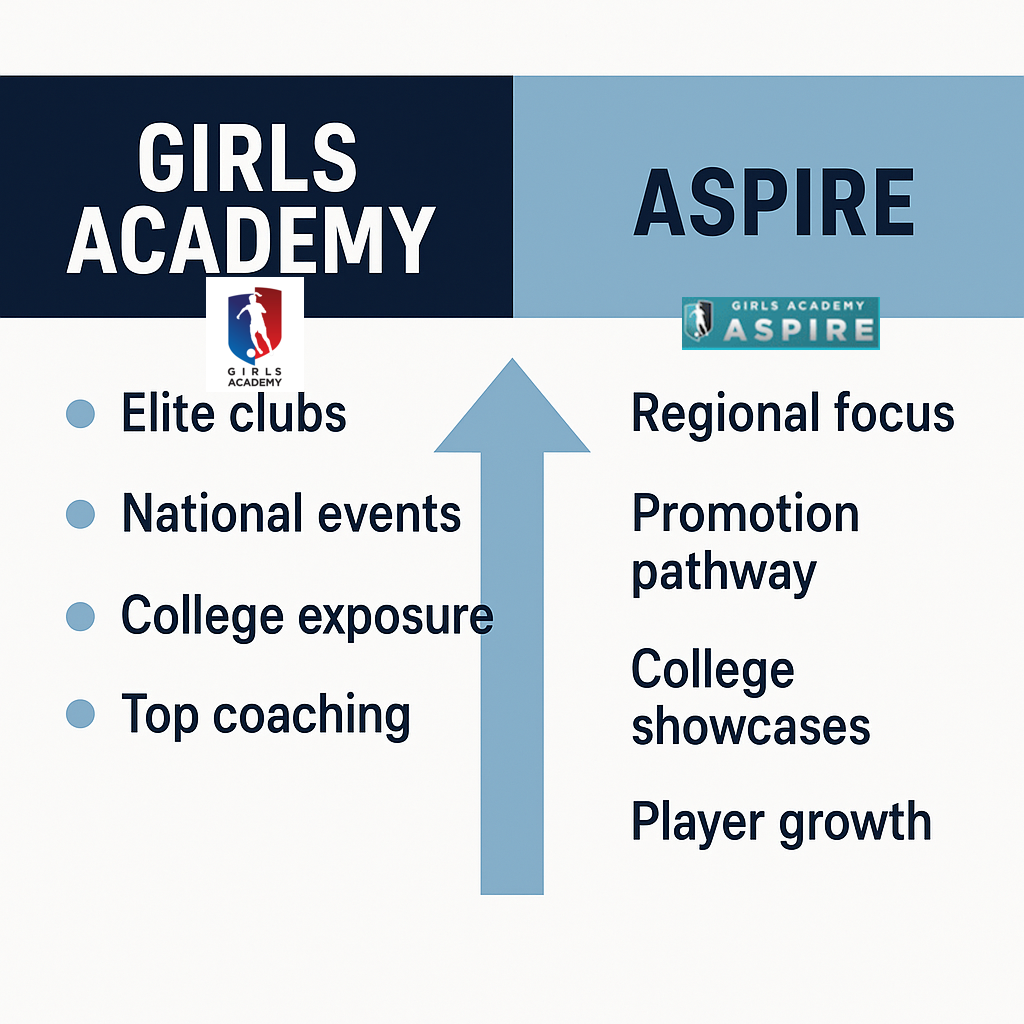
Created in 2020 as a rival to ECNL, the Girls Academy partnered with MLS NEXT and US Youth Soccer to become the "official" top tier for elite girls' development.
| Feature | Girls Academy (GA) | ASPIRE (2nd Tier) |
|---|---|---|
| Clubs | 69 clubs | Managed by DPL |
| Conferences | 7 regional conferences | Regional structure |
| Age Range | U13-U19 | U13-U19 |
| High School Soccer | ✅ Allowed | ✅ Allowed |
| Cost | $4,000-$7,000 | $3,000-$5,500 |
| Pathway | College recruiting, NWSL pathway | Clear advancement to GA |

Pros: Professional pathway focus, allows high school soccer, player-centric culture (Player Advisory Panel), growing college recruiting presence, flexible substitution rules
Cons: Newer league (less established than ECNL for recruiting), expensive, limited clubs in some regions, still building reputation
Development Player League (DPL) - Girls
A national elite girls' league (U13-U19) positioned just below Girls Academy, functioning as a second tier or proving ground for players aspiring to reach GA.
| Feature | Details |
|---|---|
| Clubs | 70+ clubs nationwide |
| Mission | "Develop the player and empower the person" |
| High School Soccer | ✅ Allowed |
| Cost | $3,000-$5,500 |
| College Exposure | Strong college showcase events (NCAA, NAIA, JUCO coaches attend) |
| Advancement | Top DPL players can join their club's GA teams |
Pros: Development-focused culture, college exposure, allows high school soccer, empowerment emphasis, clear pathway to GA, less expensive than top tier
Cons: Not quite top tier for national exposure, varies by region, requires club to have GA connection for advancement
Professional Academy Pathways
The most direct route to professional soccer in the United States comes through professional club academies. These programs are fundamentally different from typical youth clubs—they're run by professional teams as part of their player development systems.
MLS Academies
Each of the 29 MLS teams operates youth academies serving boys U13-U19 (some also have younger age groups). These are the crown jewel of American youth development:
| Feature | Details |
|---|---|
| Cost | $0 (100% free - no club fees, travel costs covered) |
| Competition | MLS NEXT Homegrown Division (top tier) |
| Training | 4-5 days/week with MLS-level coaching staff |
| Facilities | Professional-grade training grounds |
| Homegrown Territory | Each MLS club has exclusive rights to sign players from their geographic region |
| Pro Pathway | Direct contracts to MLS first team (Homegrown Player rule) |
| Scholarship Support | Development grants provided when players sign pro contracts |
| High School Soccer | ❌ Generally not allowed |
⚠️ Selection Reality Check
MLS Academies are extremely selective. Only the top 1-2% of players in a region will be invited to join. Most players will need to excel in other competitive environments (ECNL, MLS NEXT non-MLS clubs, NPL) to even be considered for academy trials.
Homegrown Player List: MLS clubs can claim up to 45 registered academy players (U15, U17, U19) and an additional 9 non-registered players from their territory. These players cannot be recruited by other MLS clubs.
Pros: Completely free, professional coaching, elite facilities, direct pathway to MLS, best player development resources, exposure to first-team environment
Cons: Extremely difficult selection process, no high school soccer, requires geographic proximity, high-pressure environment, limited spots
USL Academies
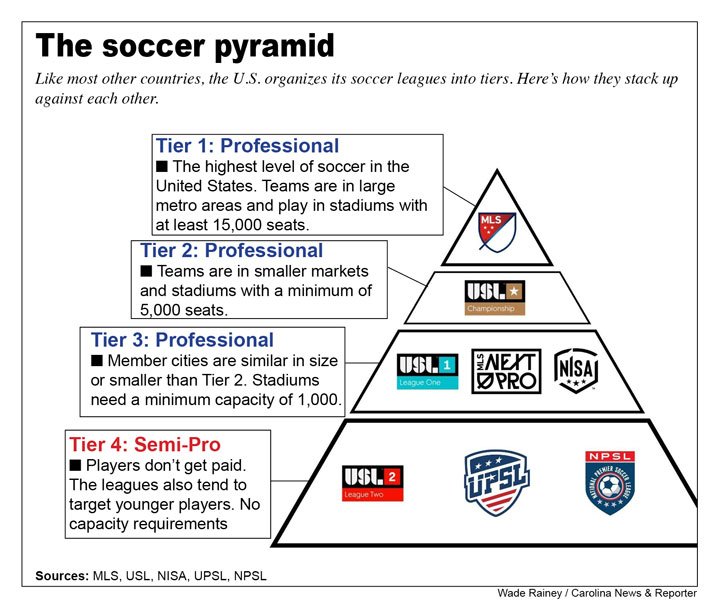
The United Soccer League operates youth development programs at two levels: USL Youth (broader participation) and USL Academy (elite pre-professional pathway).
| Program | USL Youth | USL Academy |
|---|---|---|
| Focus | National competition platform | Pre-professional development |
| Teams | ~600 teams, 10,000+ players | Single elite team per club (U15-U20) |
| Age Range | U12-U19 | U20 and below (must include U17 and under) |
| Season | Summer (complementary to main club season) | Aligns with professional USL calendar |
| Cost | Varies by club ($1,500-$4,000) | $0-$5,000 (often subsidized) |
| Pro Pathway | Exposure to USL scouts | Direct link to USL Championship, League One, League Two, W League |
| NCAA Eligibility | ✅ Maintained | ✅ USL Academy contracts preserve NCAA eligibility |
| Other Teams | ✅ Can play for other clubs | ✅ Can also play club/high school soccer |
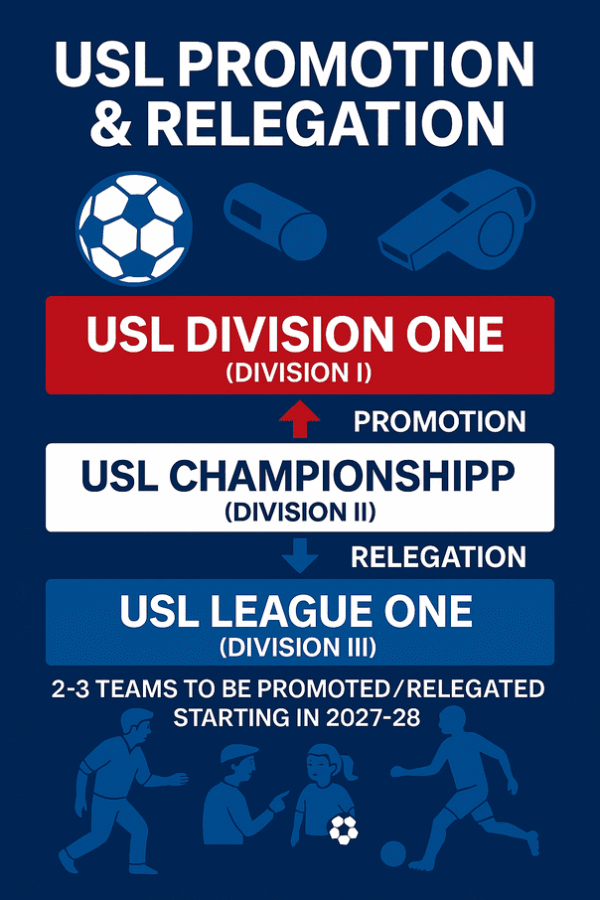
🚀 USL Innovation: Promotion & Relegation
The USL is rolling out promotion and relegation at the professional level (Championship, League One) starting 2026-27—the first meaningful implementation in U.S. professional sports. While not directly applied to youth levels, this creates a meritocratic culture throughout the organization.
Pros: Flexible pathway (can play for other teams), preserves NCAA eligibility, USL Academy contracts allow first-team training, growing professional pathway, more accessible than MLS academies
Cons: Less established than MLS academies, fewer professional roster spots, varies significantly by USL club quality, may still have costs
Cost Comparison: What to Expect at Each Level
One of the biggest shocks for parents entering competitive youth soccer is the cost. Here's a comprehensive breakdown of what you can expect to spend annually at each level:
| Level | Club Fees | Uniforms/Gear |
|---|---|---|
| Recreational (AYSO) | $100-$300 | $50-$100 |
| Local Competitive | $800-$1,500 | $200-$400 |
| Regional Premier (NPL) | $1,500-$3,000 | $300-$500 |
| ECNL/ECRL | $2,500-$5,000 | $400-$700 |
| MLS NEXT (non-MLS) | $3,000-$5,000 | $400-$700 |
| Girls Academy/DPL | $2,500-$4,500 | $400-$600 |
| MLS Academy | $0 | $0 (provided) |
| USL Academy | $0-$3,000 | $0-$400 |
| Level | Travel | Tournaments | Cost |
|---|---|---|---|
| Recreational (AYSO) | $0 | $0 | $150-$400 |
| Local Competitive | $300-$800 | $200-$500 | $1.5K-$3.2K |
| Regional Premier (NPL) | $800-$2K | $400-$1K | $3K-$6.5K |
| ECNL/ECRL | $1.5K-$4K | $500-$1.5K | $4.9K-$11.2K |
| MLS NEXT (non-MLS) | $1.5K-$4K | $500-$1.2K | $5.4K-$10.9K |
| Girls Academy/DPL | $1.2K-$3.5K | $500-$1.2K | $4.6K-$9.8K |
| MLS Academy | $0 (covered) | $0 (covered) | $0 |
| USL Academy | $0-$2K | $0-$800 | $0-$6.2K |
💰 Hidden Costs Parents Often Miss
- Private Training: $50-$150/session (many families add 1-2 sessions/week = $2.6K-$15.6K/year)
- Showcase Events: $300-$800 per event for registration, travel, lodging
- Equipment Replacement: $200-$500/year (cleats, shin guards, balls, bags)
- Medical/PT: $500-$2K/year for sports medicine, physical therapy, injury treatment
- Lost Wages: Parents missing work for travel tournaments and showcases
- Second Child: Many families have multiple kids playing—multiply all costs accordingly
Reality Check: The "average" elite youth soccer family spends $8K-$15K per year when all costs are factored in. Some spend $20K+.
League Comparison: Making the Right Choice
With so many options, how do you choose? Here's a comprehensive comparison of the major elite leagues:
Boys Leagues Comparison
| Feature | MLS NEXT | ECNL |
|---|---|---|
| Gender | Boys only | Boys & Girls |
| High School Soccer | ❌ (Homegrown) ✅ (Academy Div) |
✅ |
| Pro Pathway | ⭐⭐⭐⭐⭐ | ⭐⭐⭐ |
| College Recruiting | ⭐⭐⭐⭐ | ⭐⭐⭐⭐⭐ |
| Cost (Annual) | $0-$6K+ | $4K-$8K+ |
Girls Leagues Comparison
| Feature | Girls Academy | DPL |
|---|---|---|
| Gender | Girls only | Girls only |
| High School Soccer | ✅ | ✅ |
| Pro Pathway | ⭐⭐⭐⭐ | ⭐⭐ |
| College Recruiting | ⭐⭐⭐⭐ | ⭐⭐⭐⭐ |
| Cost (Annual) | $4K-$7K+ | $3K-$5.5K+ |
Training & Development: Boys Leagues
| Feature | MLS NEXT | ECNL |
|---|---|---|
| Regional Travel | Heavy | Very Heavy |
| National Events | MLS NEXT Fest, Cup | National Events, Finals |
| Coaching Standards | Very High | Very High |
| Training Frequency | 4-5 days/week | 3-4 days/week |
| Player Development Focus | Pro pathway emphasis | College pathway emphasis |
Training & Development: Girls Leagues
| Feature | Girls Academy | DPL |
|---|---|---|
| Regional Travel | Heavy | Moderate-Heavy |
| National Events | GA Showcases, Finals | DPL Showcases |
| Coaching Standards | Very High | High |
| Training Frequency | 3-4 days/week | 3-4 days/week |
| Player Development Focus | Balanced pro/college | Development over results |
Questions to Ask Before Joining Any Club or League
Before committing to a club or league, parents should ask these critical questions:
📋 Essential Questions Checklist
About Development:
- What is the club's coaching philosophy and training curriculum?
- What coaching licenses do your staff hold?
- What is your player-to-coach ratio at training?
- Do you provide individualized development plans for players?
- How many training sessions vs. games per week?
About Pathway:
- How many players from your club have gone to college/professional soccer in the last 3 years?
- Do players from your academy teams get promoted to your elite teams?
- What is your club's relationship with college coaches?
- Do you provide recruiting support (video editing, coach contacts, showcase attendance)?
About Costs:
- What is the total annual cost including all fees, travel, and tournaments?
- Are there any hidden fees or surprise costs?
- Do you offer scholarships or payment plans?
- What happens if my child gets injured—do we still pay full fees?
About Culture:
- What is your player retention rate year-over-year?
- How do you handle playing time decisions?
- What is your policy on multi-sport athletes?
- How do you support player mental health and wellbeing?
- Can we speak to current parents about their experience?
The Reality of College Soccer Recruiting
Many families invest heavily in elite youth leagues primarily for college recruiting exposure. Here's what you need to know:
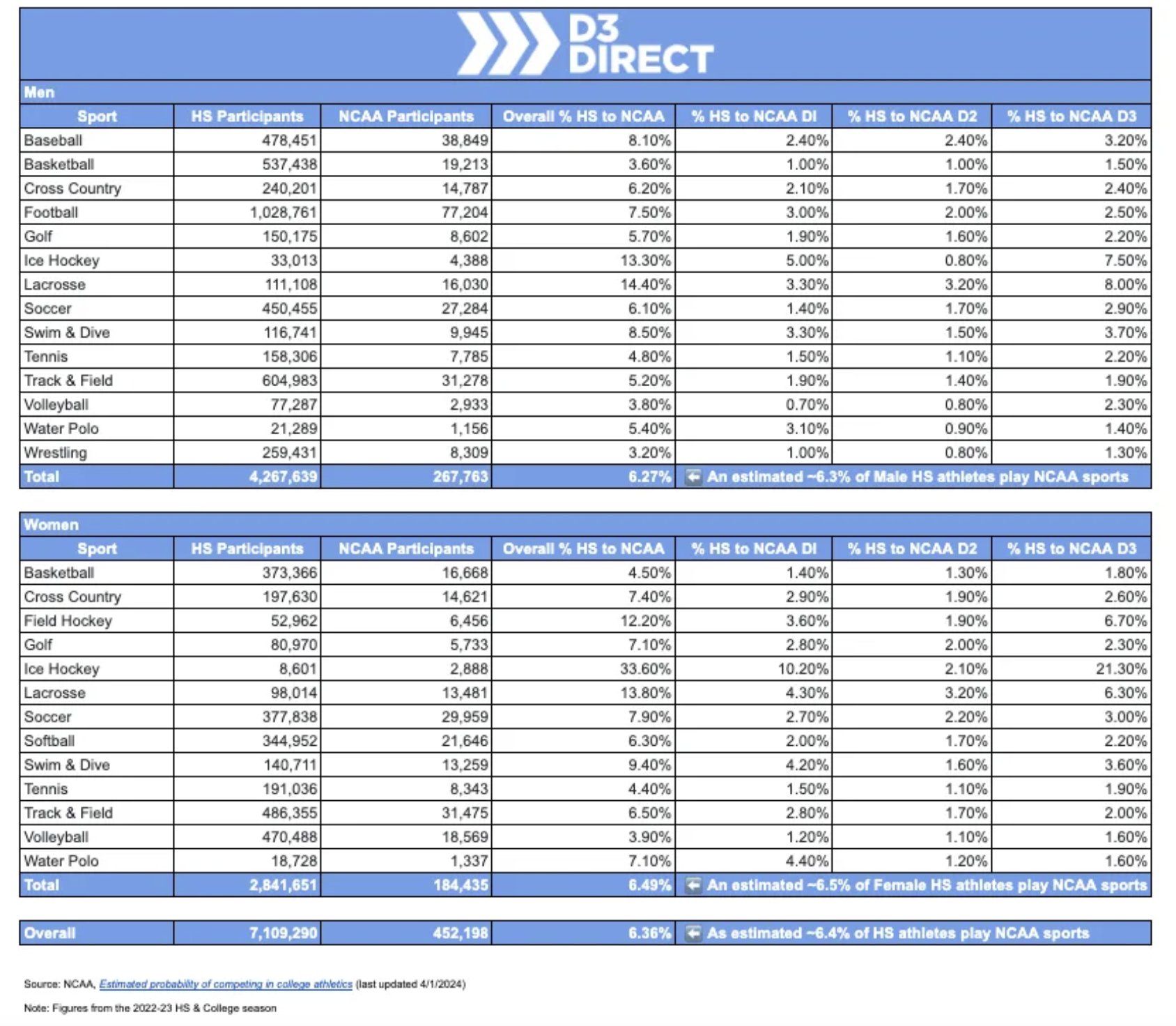
Understanding the College Soccer Numbers: The data above reveals a sobering reality that many families overlook when investing thousands of dollars annually in elite youth soccer. Of the 450,445 boys playing high school soccer, only 27,294 (6.1%) will go on to play NCAA soccer at any level—and that includes Division I, II, and III combined. For girls, the numbers are slightly better but still challenging: 29,958 out of 377,838 high school players (7.9%) continue to the NCAA level.
Breaking it down further, only 1.4% of boys and 2.7% of girls make it to Division I programs—the ones most families are aiming for when they spend $8K-$15K per year on elite clubs. Even more critical: these percentages represent making a roster, not receiving scholarship money. The vast majority of college soccer players receive partial scholarships or none at all, making the return on investment for most families significantly lower than expected.
This reality check doesn't mean you shouldn't pursue competitive soccer, but it does mean you should be strategic about how much you invest and realistic about the probable outcomes.
🎓 College Soccer Facts
- 1,700+ NCAA programs across Division I, II, and III
- Only 2-3% of high school players receive ANY athletic scholarship money
- Average scholarship: 30-40% of costs for men, 40-50% for women
- D3 offers NO athletic scholarships—but may have academic/merit aid
- NAIA and JUCO offer additional opportunities outside NCAA
Playing in a top league like ECNL or Girls Academy significantly increases exposure but doesn't guarantee anything. Strong players in lower-tier leagues who train properly and market themselves effectively can also earn college opportunities.
When to Start Competitive Soccer
Parents often ask: "When should my child move from recreational to competitive soccer?" Here's a realistic timeline:
| Age | Recommended Level | Focus |
|---|---|---|
| U4-U8 | Recreational (AYSO, local rec) | Fun, basic skills, love of the game |
| U9-U10 | Recreational or entry-level competitive | Skill development, introduce more structured training |
| U11-U12 | Local competitive/travel teams | Technical foundation, tactical awareness, consistent training |
| U13-U14 | Consider elite leagues if showing talent | First age group for ECNL/MLS NEXT/GA—evaluate readiness |
| U15-U19 | Match level to player's ability and goals | College recruiting exposure, professional pathway consideration |
⚠️ The Early Specialization Trap
Research shows that early single-sport specialization (before age 12) increases injury risk and burnout without improving long-term outcomes. Most professional players played multiple sports in their youth. Don't rush into expensive elite programs too early—focus on skill development and keeping the game fun.
The Youth Soccer Player Development Continuum
Regional Variations: Why Location Matters
Youth soccer quality and opportunity vary dramatically by geography. Consider these factors:
Major Soccer Markets (CA, TX, FL, NY, NC, GA)
- Multiple elite clubs and league options
- Strong professional academy presence
- Year-round outdoor training
- Higher competition levels
- More college coach attention
- BUT: Also more expensive, more competitive for roster spots
Emerging Markets (AZ, CO, WA, MD, VA)
- Growing club infrastructure
- Some elite league representation
- Lower costs than major markets
- Good development opportunities
- BUT: May require more travel for top competition
Smaller Markets (Rural States, Smaller Cities)
- Limited elite league access
- Fewer high-level clubs
- May need to relocate or travel extensively for top competition
- ODP becomes more important for talent identification
- BUT: Lower costs, less pressure, can still develop skills through home training
My Recommendations: A Better Future for U.S. Youth Soccer
After years of navigating this fragmented system and seeing the challenges families face, I've developed some strong opinions about how U.S. youth soccer could be dramatically improved. While the current landscape remains broken, here's what I believe would create a fairer, more accessible, and merit-based system:
Vision: One National Pyramid, Merit-Based Advancement
Imagine a youth soccer ecosystem where geography and finances are no longer barriers, where clubs earn their place through merit, and every talented player can find a pathway to the top. My proposed model would unify the current "alphabet soup" of American youth leagues into one cohesive pyramid.
Key Features of My Proposed Model:
- Single National Pyramid: All clubs from U13-U19 compete in one structure with clear promotion/relegation between tiers (Premier, Championship, Regional 1, Regional 2, etc.)
- Six Regional Conferences: Games played regionally (Northeast, Southeast, Midwest, Central, Southwest, West) to minimize travel costs and time
- Three Competitive Seasons: Fall, Winter, and Spring (12 games each) allowing rapid advancement and multiple evaluation cycles per year
- Quarterly National Cup Championships: Top teams from each region compete nationally 3x per year for talent ID and college recruiting exposure
- No Franchise Fees: Clubs earn their place through results, not by paying expensive entry fees or having the right connections
- Merit-Based Advancement: Promotion and relegation based solely on performance—no politics, no pay-to-play gatekeeping
How My Model Solves Current Problems
| Current Problem | My Proposed Solution |
|---|---|
| Excessive Travel Costs | Regional play keeps most games within driving distance; national exposure happens only 3x per year at Cup events |
| Confusing League Options | One unified pyramid—no more choosing between ECNL, MLS NEXT, GA, DPL, NPL, etc. |
| Pay-to-Play Gatekeeping | No franchise fees; clubs advance by winning, not by paying or knowing the right people |
| Geographic Inequality | Every region has a pathway; rural clubs can compete locally and advance through merit |
| Missed Talent | Unified scouting system ensures players from any region can be identified and advanced |
| High Costs | Eliminate redundant league fees; travel subsidies for National Cup qualifiers; bulk deals on insurance/equipment |
| Political Club Selection | Neutral regional coordinators appointed by U.S. Soccer—no club directors controlling league access |
📚 Want to Learn More?
I explore these recommendations in much greater detail in my book "Monopoly: Addressing Issues Facing US Youth Soccer." The book breaks down the current system's flaws, proposes comprehensive solutions including promotion/relegation, Development Merit Points, regional structures, and how we can build a truly equitable youth soccer system in America.
Read "Monopoly" eBookWhy This Matters for Your Family
While we wait for systemic change, understanding these issues helps you make better decisions for your player today. You don't have to buy into the current broken system. There are alternative pathways—like the skills-first approach I've developed—that can produce better results without the astronomical costs and endless travel.
The Anytime Soccer Training Solution: A Smarter Pathway
💡 There's a Better Way: Skills-First Development at Home
After spending years navigating the expensive, time-consuming world of competitive youth soccer, I discovered something that changed everything for my family: structured home training combined with smart club selection produces better results at a fraction of the cost.
My son made it to Charlotte FC Academy—not by spending $10K/year on elite clubs and showcases, but by training consistently at home using our systematic video program while playing at a more affordable competitive level.
The Math That Most Families Miss
| Expense | Traditional Elite | Skills-First Path |
|---|---|---|
| Club fees | $5K | $2.5K |
| Private training | $7.8K | $120/year |
| Showcase travel | $3K | $800 |
| Family time | Priceless | Priceless |
| TOTAL | $15.8K+ | $3.4K |
Traditional Elite = ECNL/MLS NEXT + private training 2x/week + 4-6 showcases
Skills-First = NPL/local premier + Anytime Soccer Training unlimited + selective showcases
What Makes Home Training Work
The secret isn't just training at home—it's systematic, progressive training that builds technical mastery through deliberate practice. Here's what we've proven works:
- Daily 10-30 minute sessions focusing on ball mastery, first touch, and technical skills
- 5,000+ follow-along video drills organized by skill level and position
- Progressive skill building from beginner to advanced
- Consistency over intensity—small daily practice beats weekend heroics
- Supplement club training rather than replace it entirely
The Touches Reality
Consider this: A player in an elite club gets roughly 15,000-20,000 ball touches per year in organized practice (3-4 sessions x 90 minutes x 40 weeks). A player doing our home training program gets an additional 50,000+ touches per year at home.
Total touches = better player. It's not magic, it's math.
Real Results from Real Families
Success Stories:
- My son: Charlotte FC Academy (trained exclusively with our platform)
- 100,000+ members in our soccer training communities
- 5,000+ follow-along training videos
- Players advancing from local competitive → ECNL/MLS NEXT through skill development
- Families saving $8K-$12K/year while seeing better results
Team Subscriptions: Making It Even More Affordable
We recently launched team subscriptions at $6 per player annually. This allows entire teams to access our complete video library, giving every player professional-level training resources regardless of their family's budget.
Imagine: For less than the cost of a single private training session, your entire team gets unlimited access to 5,000+ drills for a full year.
The Philosophy: Skills First, Exposure Second
Most families do it backward—they chase expensive leagues for "exposure" before their player has the skills to capitalize on it. We flip that:
- Build elite technical skills at home (ages 8-14 especially critical)
- Play at an affordable competitive level that provides quality games without breaking the bank
- Move to elite leagues when ready (usually U15-U17) and when the player can actually compete
- Use targeted showcase attendance rather than year-round expensive travel
Who This Works For
- ✅ Families who can't afford $8K-$15K/year for elite clubs
- ✅ Players in smaller markets without elite league access
- ✅ Athletes who want to play multiple sports (home training works year-round)
- ✅ Committed players willing to train consistently at home
- ✅ Families who value time together over endless weekend travel
- ✅ Coaches looking to elevate their entire team's technical ability
Who This Doesn't Replace
Home training is not a substitute for:
- ❌ Team training and tactical development
- ❌ Game experience and competition
- ❌ Professional coaching feedback
- ❌ Building relationships with teammates
It's a supplement that makes everything else work better. Players who train at home perform better in team practices, dominate in games, and develop faster than peers who only train with their club.
Ready to Try a Different Path?
Start with our free 30-day training plan and see what systematic home training can do for your player.
View Team Pricing ($6/player/year) Get Free 30-Day Training PlanFinal Thoughts: Focus on Development, Not Just Leagues
The U.S. youth soccer landscape is complex, expensive, and often overwhelming. But here's what I've learned after years in this system:
The league name on your kid's jersey matters far less than:
- The quality and consistency of their technical training
- Their love for the game and intrinsic motivation
- Access to good coaching and meaningful competition
- Their physical and mental health
- Your family's financial stability and quality time together
Elite leagues can be valuable—but they're not the only path, and they're not necessary for every player at every age. Focus on developing a technically excellent, tactically intelligent, mentally tough player who loves soccer. The opportunities will follow.
Don't let anyone tell you there's only one "right" way. There are multiple pathways to success, and the best one is the one that fits your player's goals, your family's budget, and your values.
Featured Podcast Episodes: Expert Insights on Youth Soccer
For deeper insights into youth soccer development and league structures, check out these episodes from "The Inside Scoop" podcast:
🎙️ Listen & Learn: Youth Soccer Deep Dives
Episode: Youth Soccer League Structures Explained
Episode: Making Smart Choices in Competitive Soccer
About the Author
Neil Crawford is the founder of Anytime Soccer Training and author of "The Parent Trainer's Playbook: Unconventional Tips for Raising Competitive Soccer Players." Despite having no soccer background himself, Neil developed expertise in youth soccer development and created a comprehensive training platform with over 5,000 follow-along videos. His son trained exclusively with the Anytime Soccer Training program and now plays at Charlotte FC Academy. Neil hosts "The Inside Scoop" podcast and has built soccer communities with over 100,000 members.