Complete Ranking of All 29 MLS Academies + MLS NEXT vs ECNL: The Ultimate Guide (2026)
⚽ The Professional Pathway: What You Need to Know
MLS academies represent the highest level of youth soccer development in the United States. This comprehensive guide ranks all 29 MLS academies, explains the MLS NEXT pathway, compares it to ECNL, and gives you the honest truth about what it takes to get there and succeed.
Introduction: Understanding the MLS Academy System
The MLS academy system is the professional pathway in American soccer. Every MLS club operates an academy focused on developing players for professional soccer—either within MLS or by selling talented players to international clubs for transfer fees.
Understanding the complete U.S. youth soccer structure helps you see where MLS academies fit in the pyramid. They sit at the apex—the highest level of youth development available domestically.
⚠️ Important Terminology Clarification
"MLS Academy" vs "MLS NEXT Academy Division" - These Are Different:
- MLS Academies (what this article ranks): The 29 professional club academies operated by MLS teams (FC Dallas, Philadelphia Union, Seattle Sounders, etc.). These are fully funded, pro pathway programs.
- MLS NEXT Academy Division: A competitive tier within the broader MLS NEXT league structure for non-MLS clubs. These clubs charge fees and have different rules.
- MLS NEXT (the league): The overall competition platform where both MLS academies and non-MLS clubs compete.
When we say "MLS academy" in this article, we mean the actual professional club academies. When we say "MLS NEXT," we mean the competition league. These distinctions matter for understanding costs, commitments, and pathways.
📊 MLS Academy Quick Facts (2026):
- Total MLS Clubs: 29 teams (all with academies)
- Age Groups: Typically U13-U19 (some start younger)
- Cost to Families: $0 (MLS academies are fully funded)
- Players in System: ~2,000 academy players across all clubs
- Success Rate to MLS: Approximately 10-15% of U19 academy players sign professional contracts
- Competition Platform: MLS NEXT (MLS's youth competition league)
- Training Frequency: 4-6 days per week, year-round commitment
What Makes MLS Academies Different?
Unlike club soccer where families pay thousands annually, MLS academies are fully funded by the clubs. There are no participation fees. Instead, families commit to:
- Year-round training (no multi-sport flexibility)
- Travel for away games (families cover travel costs)
- Relocation (some families move to be near the academy)
- Academic flexibility (online school or academy partnerships common)
- Understanding that the club controls the player's development and future
MLS academies function like professional clubs' youth systems worldwide. The goal isn't recreational development—it's identifying and producing professional players.
Ranking Methodology: How We Evaluated All 29 MLS Academies
This ranking considers six key factors:
| Factor | Why It Matters |
|---|---|
| 1. Homegrown Signings | How many academy players have signed MLS contracts? This is the ultimate measure of success. |
| 2. International Transfers | Have academy players been sold to European clubs? Shows highest level of development. |
| 3. MLS NEXT Pro Integration | Does the club have MLS NEXT Pro team? Provides clear pathway for U19-U23 players. |
| 4. Facilities & Resources | Training facilities, coaching staff quality, sports science support. |
| 5. Historical Success | Track record over time producing professionals, not just recent success. |
| 6. Youth National Team Players | How many players from academy get called into U.S. Youth National Teams? |
⚠️ Important Context
This ranking reflects academies as of 2026. MLS academy quality changes as clubs invest more resources, hire better coaches, and develop infrastructure. Rankings from 2020 would look different than today, and 2030 will look different again.
Also understand: even "lower-ranked" MLS academies are still elite-level youth development. Being in ANY MLS academy puts a player in the top 1% of youth soccer in America.
The Complete Ranking: All 29 MLS Academies
Tier 1: Elite Academies (Consistent Professional Production)
FC Dallas Academy ELITE
Location: Frisco, TX
Founded: 1998 (one of oldest MLS academies)
Notable Homegrown Players: Weston McKennie (Juventus), Ricardo Pepi (PSV Eindhoven), Chris Richards (Crystal Palace), Reggie Cannon, Tanner Tessmann, Jesus Ferreira
Why FC Dallas Ranks #1:
FC Dallas has the best track record of any MLS academy for developing players who succeed professionally, both in MLS and internationally.
- 70+ Homegrown Signings: More than any other MLS club
- International Transfers: McKennie to Schalke (€5.5M), Pepi to Augsburg (€18M), Richards to Bayern Munich (€1.5M)
- U.S. National Team Pipeline: Consistent contributor to full USMNT
- System & Philosophy: Clear playing style, pathway from U13 to first team
- Facilities: Training at Toyota Soccer Center, one of best in MLS
What Makes Them Special: FC Dallas prioritizes development over win-now tactics. They've sold young players to Europe rather than holding them in MLS, proving their commitment to player development above team success.
Philadelphia Union Academy ELITE
Location: Chester, PA
Founded: 2009
Notable Homegrown Players: Brenden Aaronson (Leeds United), Mark McKenzie (Genk), Paxten Aaronson (Eintracht Frankfurt), Quinn Sullivan, Jack McGlynn
Why Philadelphia Ranks #2:
- 30+ Homegrown Signings in relatively short time (academy founded 2009)
- European Success: Aaronson to Red Bull Salzburg (€6M), McKenzie to Genk (€6M)
- Sell-On Model: Philadelphia develops players, sells them young to Europe, reinvests in academy
- YSC Academy Partnership: Works with YSC Academy for player development and education
- Clear Pathway: Union II (MLS NEXT Pro) provides bridge to first team
What Makes Them Special: Philadelphia has perfected the "selling club" model—develop young talent, give them first-team minutes early, sell to Europe for profit, repeat. This benefits players by accelerating their development timelines.
New York Red Bulls Academy ELITE
Location: Harrison, NJ & Whippany, NJ
Founded: 2007
Notable Homegrown Players: Tyler Adams (Bournemouth), Matt Miazga (numerous clubs), Sean Davis, John Tolkin, Caden Clark
Why Red Bulls Rank #3:
- Red Bull Global Network: Connection to RB Leipzig, Salzburg creates international pathway
- 50+ Homegrown Signings
- Tyler Adams Success: Academy to MLS to Leipzig to USMNT captain to Premier League
- Consistent Production: Multiple homegrown players on first team every year
- Philosophy: High-press, possession-based style consistent from academy to first team
What Makes Them Special: Being part of the Red Bull global network provides unique opportunities. Players can move within the Red Bull system (New York → Leipzig → Salzburg) without traditional transfer complications.
More Elite Tier Academies:
| Rank | Academy | Key Strengths | Notable Players |
|---|---|---|---|
| 4 | Seattle Sounders | DeAndre Yedlin pathway, strong development culture, excellent facilities | Yedlin, Jordan Morris, Obed Vargas, Alfonso Ocampo-Chavez |
| 5 | LA Galaxy | Historic success, SoCal talent pool, professional environment | Efrain Alvarez, Julián Araujo, Jonathan Pérez |
| 6 | Atlanta United | Rapid rise, aggressive investment, strong technical development | Andrew Carleton, George Bello (sold to Arminia Bielefeld), Caleb Wiley |
| 7 | Vancouver Whitecaps | Alphonso Davies pipeline, Canadian youth talent, strong development record | Alphonso Davies (Bayern Munich €13.5M), Sam Adekugbe, Russell Teibert |
Tier 2: Strong Development Academies
| Rank | Academy | Strengths & Notable Players |
|---|---|---|
| 8 | Columbus Crew | Strengths: Strong Midwest pipeline, good facilities Players: Aiden Morris, Isaiah Parente, Patrick Schulte |
| 9 | Portland Timbers | Strengths: Pacific Northwest talent, T2 integration Players: Darlington Nagbe (early), George Fochive, Eryk Williamson |
| 10 | Real Salt Lake | Strengths: Strong technical development, RSL has academy focus Players: Luis Gil, Justen Glad, Brooks Lennon |
| 11 | Sporting Kansas City | Strengths: Longest-running academy (1999), excellent facilities Players: Matt Besler, Gianluca Busio (sold to Venezia), Erik Palmer-Brown |
| 12 | New England Revolution | Strengths: Northeast talent pool, improving rapidly Players: DeJuan Jones, Damian Rivera, Diego Fagundez (early homegrown) |
| 13 | Toronto FC | Strengths: Canadian pipeline, strong youth system Players: Jonathan Osorio, Jayden Nelson, Jahkeele Marshall-Rutty |
| 14 | Orlando City | Strengths: Florida talent pool, growing investment Players: Chris Mueller, Jack Lynn, Wilfredo Rivera |
| 15 | D.C. United | Strengths: DMV talent-rich area, improving facilities Players: Bill Hamid, Andy Najar (early), Moses Nyeman |
Tier 3: Developing Academies (Newer or Rebuilding)
| Rank | Academy | Status & Notes |
|---|---|---|
| 16 | LAFC | Status: New club (2018) but investing heavily Note: Too early for full evaluation, strong SoCal talent access |
| 17 | Minnesota United | Status: Joined MLS 2017, building academy infrastructure Note: Strong youth soccer state, potential for growth |
| 18 | CF Montreal | Status: Improved academy recently, Quebec talent pool Players: Ballou Tabla (early), Ismaël Koné |
| 19 | Houston Dynamo | Status: Texas talent pool, rebuilding academy after years of decline Players: Teenage Hadebe, Tyler Pasher |
| 20 | San Jose Earthquakes | Status: Historic club, academy has had ups and downs Players: Nick Lima, Tommy Thompson, JT Marcinkowski |
| 21 | Charlotte FC | Status: Expansion team (2022), building from scratch Note: Strong Carolinas talent pool, early but promising signs |
| 22 | Colorado Rapids | Status: Inconsistent investment historically, improving Players: Cole Bassett, Sam Vines (sold to Belgium) |
| 23 | Nashville SC | Status: Expansion team (2020), very early in academy development Note: Building youth infrastructure, Tennessee talent pool moderate |
| 24 | Inter Miami | Status: New club (2020), South Florida talent access Note: Too new to judge, strong amateur/youth soccer in area |
| 25 | Austin FC | Status: Expansion (2021), Texas talent, very early Note: Building academy, benefits from strong Texas youth soccer |
| 26 | FC Cincinnati | Status: Joined MLS 2019, developing academy Note: Ohio/Kentucky talent pool, establishing identity |
| 27 | St. Louis City SC | Status: Expansion (2023), brand new academy Note: Strong St. Louis youth soccer history, very early to evaluate |
| 28 | Chicago Fire | Status: Historic club but academy has struggled Note: Chicago talent pool underutilized, needs restructuring |
| 29 | New York City FC | Status: Joined 2015, City Football Group resources, building Note: NYC talent pool, CFG global network should help but slow start |
⚠️ Rankings Change Over Time
This ranking reflects current status (2026). Several "developing" academies have massive potential:
- Charlotte FC: Carolinas have huge youth soccer participation, academy could become elite within 5 years
- Austin FC: Texas has proven it produces talent (see FC Dallas), Austin's investment could pay off quickly
- LAFC: Already showing promise despite being new, SoCal talent pool is massive
- Inter Miami: South Florida talent + potential international recruitment could rise fast
Geographic Distribution: Where Are the Best Academies?
| Region | Elite Academies | Advantage |
|---|---|---|
| Texas | FC Dallas (#1), Houston (#19), Austin (#25) | Massive youth soccer participation, year-round weather, soccer culture |
| Northeast Corridor | Philadelphia (#2), New York Red Bulls (#3), New England (#12), D.C. United (#15), NYCFC (#29) | Dense population, strong club soccer tradition, proximity to international markets |
| Pacific Northwest | Seattle (#4), Vancouver (#7), Portland (#9) | Soccer-first culture, strong community support, good youth development |
| California | LA Galaxy (#5), LAFC (#16), San Jose (#20) | Largest talent pool in U.S., Latino soccer culture, weather |
| Southeast | Atlanta (#6), Orlando (#14), Charlotte (#21), Nashville (#23), Inter Miami (#24) | Growing region for soccer, improving youth infrastructure |
Geography Matters: Players in Texas, California, or the Northeast corridor have access to multiple MLS academies within driving distance. Players in Montana, Wyoming, or rural areas face relocation decisions to access MLS academies.
MLS NEXT: The Competition Platform for Elite Youth Soccer
MLS NEXT is the youth soccer competition platform that replaced U.S. Soccer Development Academy in 2020. It's where MLS academies compete, along with top non-MLS clubs.
📊 MLS NEXT Fast Facts:
- Founded: 2020 (replaced Development Academy)
- Number of Clubs: ~600 clubs with 2,000+ teams
- Age Groups: U13, U14, U15, U16, U17, U19
- Gender: Boys and girls pathways (girls via GA partnership)
- Season: Year-round (fall and spring)
- Cost Range: $0 (MLS academies) to $5,000+ (non-MLS clubs)
- Geographic Reach: National, with regional conferences
💡 Girls Pathway Clarification
MLS NEXT Girls Development: MLS NEXT partners with Girls Academy (GA) for girls' player development. GA is a separate organization that operates the girls' competition structure, similar to how MLS NEXT Academy Division operates for non-MLS clubs.
What this means: While MLS NEXT boys compete directly in MLS NEXT, girls compete through the GA league system. Both pathways provide elite development, but they operate through different organizational structures.
ECNL Girls: ECNL has been operating a direct girls pathway since 2009 and is generally considered more established for girls' development and college recruiting exposure.
MLS NEXT Structure:
| Component | Description |
|---|---|
| Tier 1: MLS Academies | All 29 MLS academies compete in MLS NEXT. Fully funded by clubs. |
| Tier 2: MLS NEXT Pro Clubs | High-level non-MLS clubs (St. Louis Scott Gallagher, Weston FC, Solar SC, etc.) |
| Tier 3: Regional Elite Clubs | Strong regional clubs aspiring to MLS NEXT Pro level |
| Playoffs | Top teams from each age group compete for MLS NEXT Cup |
| Showcase Events | MLS NEXT Flex events bring scouts, college coaches, international scouts |
How MLS NEXT Differs from Old Development Academy:
| Factor | Development Academy (defunct) | MLS NEXT |
|---|---|---|
| High School Soccer | ❌ Banned (couldn't play HS soccer) | ✅ League allows it (club/academy-dependent) |
| Flexibility | Strict year-round commitment | More flexibility, club-dependent |
| Girls Pathway | Limited girls' pathway | Robust girls' pathway (via GA partnership) |
| Number of Clubs | ~200 clubs | ~600 clubs (more access) |
| MLS Involvement | Secondary | MLS-operated and branded |
⚠️ High School Soccer Reality Check
MLS NEXT league policy vs actual practice:
- MLS NEXT League Policy: Players are allowed to play high school soccer (unlike old Development Academy)
- MLS Academy Reality (29 pro clubs): Most players on the homegrown pathway do NOT play high school soccer due to year-round training demands (4-6 days/week)
- MLS NEXT Non-Academy Clubs: Most allow high school soccer participation; policies vary by club
- MLS NEXT Academy Division (2nd tier): Generally allows high school soccer
Bottom line: While MLS NEXT permits high school soccer, actual MLS academy players (the pro pathway) rarely play due to time commitments. Non-MLS NEXT clubs typically do allow it.
✅ Should Your Child Play MLS NEXT?
MLS NEXT is right if:
- Your child wants to pursue professional soccer seriously
- They're already playing at high club level (ECNL, top regional leagues)
- You live near an MLS NEXT club (or willing to travel extensively)
- Your family can handle year-round commitment and travel costs
- Your child is advanced enough technically to compete at this level
MLS NEXT might NOT be right if:
- Your child wants to play multiple sports
- Your family can't afford $3,000-$5,000/year for non-MLS academy clubs
- No MLS NEXT clubs within reasonable driving distance
- College soccer (not pro) is the realistic goal
- Your child isn't ready for this level of competition yet
MLS NEXT vs ECNL: The Honest Comparison
This is the question every competitive soccer family asks: MLS NEXT or ECNL?
The truth is more nuanced than "one is better." They serve slightly different purposes and attract different types of players.
The Complete Comparison:
| Factor | MLS NEXT | ECNL (Elite Clubs National League) |
|---|---|---|
| Primary Focus | Professional player development | College recruiting pathway |
| Founded | 2020 | 2009 (Boys: 2017) |
| Number of Clubs | ~600 clubs | ~150 member clubs (more selective) |
| Cost (Non-Academy) | $3,000-$5,000/year | $3,500-$6,000/year |
| Competition Level | Elite (MLS academies set ceiling) | Elite (top college-focused talent) |
| College Exposure | Good (showcases attract coaches) | Excellent (specifically designed for college recruiting) |
| Pro Scouting | Excellent (MLS scouts present) | Moderate (pro scouts less common) |
| High School Soccer | League allows; MLS academies rarely permit due to training demands | Allowed |
| Schedule Intensity | High (year-round, extensive travel) | High (year-round, extensive travel) |
| Geographic Coverage | National (some regions sparse) | National (more concentrated in certain areas) |
| Girls Pathway | Growing rapidly (via GA partnership) | Well-established (ECNL started with girls in 2009) |
| Boys Pathway | Well-established (MLS academies) | Newer (Boys ECNL started 2017) |
Who Chooses MLS NEXT vs ECNL?
| Player Profile | Better Fit |
|---|---|
| Elite talent pursuing pro contract | MLS NEXT (especially if in MLS academy) |
| Why: MLS scouts present at every game, direct pathway to professional ranks | |
| Top player focused on D1 college scholarship | ECNL |
| Why: ECNL showcases specifically designed for college coaches, better college exposure | |
| Very high level but lives far from MLS academy | Depends on local club quality in each league |
| Why: Choose the stronger LOCAL club, not the league. A strong ECNL club beats weak MLS NEXT club and vice versa. | |
| Girls player (current landscape) | Slight edge to ECNL (more established girls pathway) |
| Why: ECNL has longer history with girls' development, but MLS NEXT girls is growing fast | |
⚠️ The Biggest Mistake Families Make
Choosing the league over the club.
Here's the truth: A top-tier ECNL club is better than a bottom-tier MLS NEXT club, and vice versa. The league doesn't matter as much as the quality of coaching, player development, and team culture at your specific club.
Better approach:
- Identify the strongest clubs in your area (regardless of league)
- Attend tryouts at multiple clubs
- Evaluate coaching quality, team culture, player development track record
- Choose the club where your child will develop best
- Don't get caught up in league politics or brand names
Can Players Switch Between MLS NEXT and ECNL?
Yes, but it's complicated. Some clubs offer both MLS NEXT and ECNL teams. Players can switch between leagues by changing clubs. However:
- Switching clubs mid-season is difficult (registration windows, team chemistry)
- MLS academies won't let players "dual roster" with ECNL clubs
- Top clubs in either league have tryouts once/year—you can't just join anytime
- Switching leagues repeatedly can hurt development (inconsistent coaching, systems)
Alternative Scouting Pathways: ID2 and ODP
While attending MLS academy tryouts is the most direct path, many players get discovered through alternative scouting events. Two of the most important are US Club Soccer's id2 Program and US Youth Soccer's Olympic Development Program (ODP).
These programs serve as major identification pipelines for MLS academies, youth national teams, and college programs. MLS scouts regularly attend these events specifically to find talent they might have missed in their local markets.
US Club Soccer id2 Program: Where MLS Scouts Go to Find Talent
The id2 (Identification and Development) Program is one of the most prestigious youth soccer identification programs in the United States. Established in 2004, it's an Olympic Development Program approved by both the United States Olympic Committee and U.S. Soccer Federation.
🏆 What Makes id2 Special:
- Completely Free: No cost to participate—lodging, meals, training gear provided by US Club Soccer and Nike
- Open to All Players: Regardless of U.S. Soccer affiliation or club membership
- MLS Scout Attendance: MLS academy scouts attend every id2 event looking for talent
- National Team Pathway: Top performers scouted for U.S. Youth National Teams
- International Tours: Selected players travel internationally (recent tours to Scotland, Portugal, England, Belgium, France, Spain)
- Club-Friendly: Minimal calendar disruption—players scouted in their club environment first
✅ Real Story: How id2 Led to MLS Academy Recruitment
My son was recruited to Charlotte FC Academy after being spotted at an id2 event. This is exactly how the program is designed to work.
He wasn't on Charlotte FC's radar before the event. But MLS scouts from multiple clubs attended the id2 camp, watched players in game situations, and identified talent they wanted to track. Within weeks of the event, Charlotte FC reached out about joining their academy.
The lesson: You don't NEED to be at MLS academy tryouts to get discovered. Performing well at id2 events puts you directly in front of MLS scouts from multiple clubs simultaneously.
How the id2 Program Works:
| Stage | Process |
|---|---|
| Player Recommendation | Club coaches recommend players, or players can be nominated by anyone in soccer community |
| Initial Scouting | US Club Soccer scouts evaluate players in their club training/competition environment |
| id2 Training Camps | Selected players invited to regional training camps (all expenses paid) |
| Evaluation | Coaches and scouts evaluate technique, tactics, athleticism, mentality |
| National Selection | Top performers selected for National Selection programming and international tours |
| MLS/National Team Tracking | MLS scouts and U.S. Soccer staff track top performers for academy/YNT inclusion |
id2 All-Time Best XI: Proof of Elite Talent Pipeline
The id2 program has produced some of the best American soccer talent of the last two decades. Here's the id2 All-Time Best XI (2025 update), showing the caliber of players who come through this program:
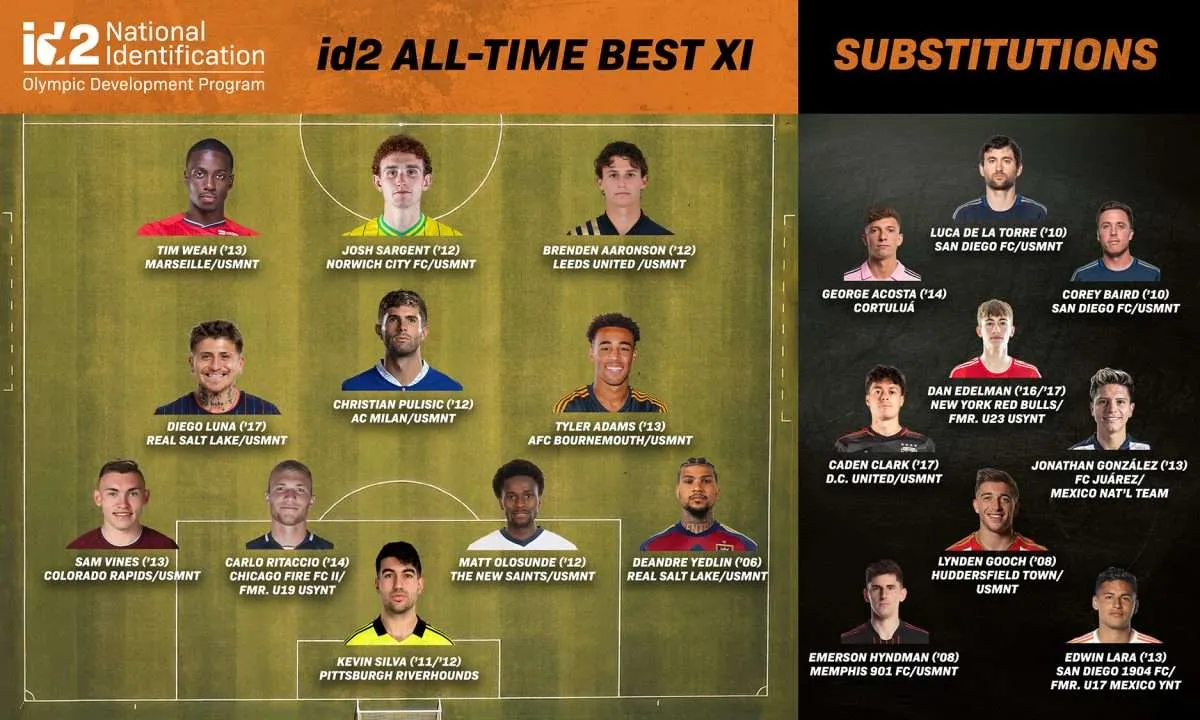
This roster includes players now competing in MLS, European leagues, and the U.S. National Team—all identified through the id2 system.
💡 How to Get Into id2:
Getting nominated/recommended is the first step:
- Ask your club coach to recommend you through the id2 system
- Anyone in the soccer community can recommend a player at usclubsoccer.org/id2
- US Club Soccer scouts attend top tournaments and showcases looking for talent
- Excel at MLS NEXT or ECNL competition—scouts watch these leagues closely
- Standout performances get noticed—you don't need connections, just ability
Important: There's no cost to participate in id2 if selected. All expenses are covered. Don't let anyone charge you for "id2 access" or "guaranteed selection"—it doesn't work that way.
US Youth Soccer Olympic Development Program (ODP)
The US Youth Soccer Olympic Development Program (ODP) is another major talent identification pathway. Like id2, it's designed to identify, train, and develop elite young players (U-13 to U-17) for potential U.S. National Teams.
MLS academies also recruit heavily from ODP. While ODP isn't as directly connected to professional clubs as id2, MLS scouts attend ODP regional and national events looking for talent.
✅ Real Story: Small Club Player Recruited Through ODP
My son's teammate was recruited to an MLS academy after performing at an ODP event—and he was playing for a tiny, development-focused club at the time.
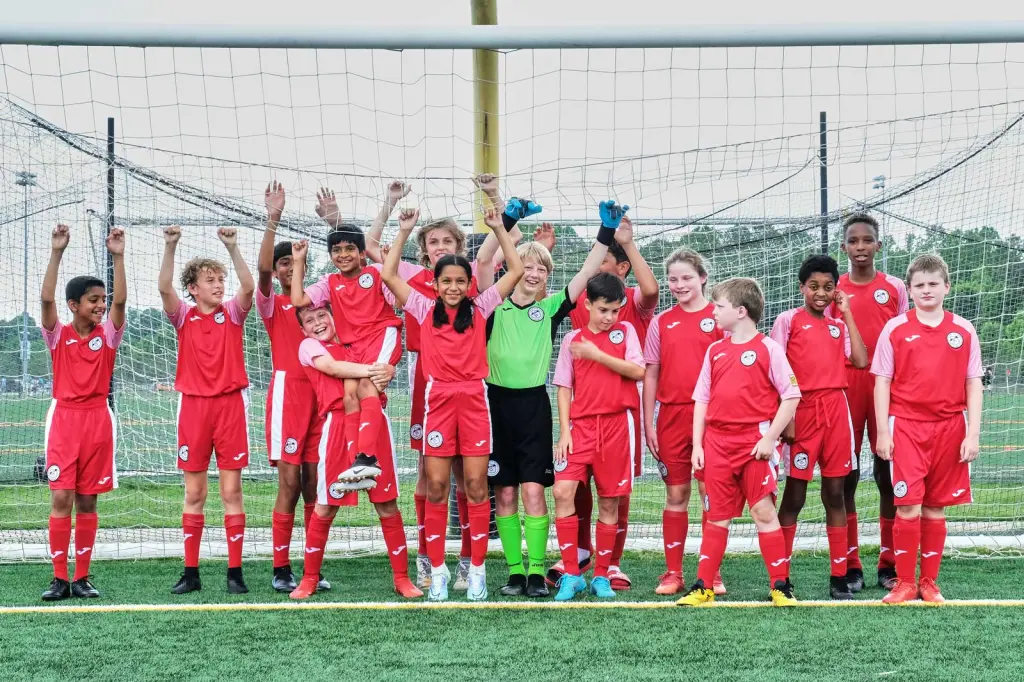
Both my son and his teammate played for Inter Development Fútbol (IDF), a small club in North Carolina founded by two coaches—Coach Bakela and Coach André—who met in 2011 at the WRAL Soccer Complex in Raleigh. What started as Coach Bakela watching André and his sons train, noticing "the precision, quality of touches, and intensity of their drills were unlike anything he had seen before," turned into a shared vision to create a development-focused club.
IDF wasn't a big-name club. They didn't have fancy facilities or travel teams with massive budgets. But what they DID have was exceptional coaching focused on technical development. That's what matters.
The lesson: You don't need to play for a famous club to get recruited through ODP. What you need is:
- Quality coaching that develops your technical ability
- Performance at ODP tryouts/events that showcases your skill
- MLS scouts at regional/national ODP events who see your potential
My son's teammate wasn't on any MLS academy's radar before ODP. He was just a well-coached player from a small club who performed exceptionally well when given the opportunity. That's exactly what ODP is designed to do—find talent regardless of club size or reputation.
Over a decade later, IDF players have gone on to become professional footballers, excel at the collegiate level, and represent their senior national teams, including in FIFA youth World Cup qualifiers and finals. This proves that small, development-focused clubs can produce elite talent when they prioritize quality over politics.
🎯 ODP Key Features:
- State-to-National Pathway: Progress from district → state → regional → national pool
- Advanced Coaching: High-level, licensed coaches provide elite training
- U.S. National Team Pipeline: Primary goal is identifying players for Youth National Teams
- College Exposure: Significant exposure to college coaches at regional/national events
- MLS Scout Presence: MLS academies scout ODP events for players outside their local markets
- Four-Pillar Evaluation: Technique, Tactics, Fitness, Psychological/Attitude
- Open to All: Any player can try out regardless of club size or reputation
How ODP Works:
| Level | Process |
|---|---|
| 1. State Tryouts | Each state holds annual tryouts for U-13 to U-17 age groups. Open to all players in the state. |
| 2. District Training | Initial training sessions at district level with licensed coaches. |
| 3. State Teams | Selected players form state teams for training camps and inter-state competition. |
| 4. Regional Events | State teams compete at regional events (4 regions: East, South, Midwest, West). MLS scouts attend. |
| 5. National Pool | Top regional performers selected for national pool consideration and potential U.S. Youth National Team camps. |
ODP Evaluation Criteria (Four Pillars):
| Pillar | What Coaches Evaluate |
|---|---|
| 1. Technique | Ball control, passing accuracy, shooting, dribbling, first touch quality |
| 2. Tactics | Game sense, positioning, decision-making, understanding of team shape and strategy |
| 3. Fitness | Athletic ability, speed, endurance, strength, agility, recovery between efforts |
| 4. Psychological | Attitude, work ethic, coachability, mental toughness, leadership, competitive spirit |
id2 vs ODP: Which Should You Pursue?
| Factor | id2 Program | ODP |
|---|---|---|
| Cost | $0 (all expenses covered) | Varies by state ($200-$1,500/year) |
| Selection Process | Recommendation-based + scouting | Open tryouts in each state |
| MLS Scout Presence | Very High (MLS scouts at every event) | Moderate (scouts at regional/national events) |
| Time Commitment | Minimal (few events per year) | Moderate (state training + regional events) |
| Professional Focus | High (US Club Soccer partners with MLS) | Moderate (more National Team focused) |
| College Exposure | Good | Excellent (especially at regional events) |
✅ Should You Do Both?
Yes, if possible. id2 and ODP serve slightly different purposes and provide different exposure opportunities:
- id2 is free and provides more direct MLS exposure—pursue this if you can get nominated
- ODP has open tryouts in every state—accessible pathway if you're not yet on id2 radar
- Success in ODP can lead to id2 recommendations (scouts cross-pollinate)
- Both provide exposure to college coaches (important backup plan)
- Neither requires giving up club soccer—they complement your club development
⚠️ Important Reality Check:
id2 and ODP are not substitutes for strong club soccer. They're additional exposure opportunities.
The truth: Most MLS academy players come from elite club soccer (MLS NEXT, ECNL). id2 and ODP help scouts find players outside their normal geographic radius, but your primary development still happens at your club.
Proper approach:
- Focus on daily skill development (home training + club practice)
- Play for the strongest club team you can
- Pursue id2/ODP as ADDITIONAL exposure opportunities
- Don't skip club commitments to chase id2/ODP—clubs develop you, these programs scout you
The Reality of Getting Into an MLS Academy
Every family wants to know: How do you get into an MLS academy?
The process is more challenging and selective than most families realize.
📊 MLS Academy Selection Stats:
- Typical Tryout: 200-400 players attend open tryouts for U13 age group
- Roster Size: MLS academies carry 18-24 players per age group
- Acceptance Rate: Roughly 5-10% of tryout participants get offers
- Geographic Radius: Most MLS academies recruit within 60-90 minute drive
- Prior Experience Required: 95%+ of academy players come from elite club soccer (ECNL, top regional leagues)
The Path to MLS Academy Selection:
| Age Range | What to Do |
|---|---|
| Ages 6-10 | Build technical foundation through consistent home training |
| Why: MLS academies don't recruit this young. Focus on skill development, not exposure. | |
| Ages 11-12 | Play for strongest local club team, attend MLS academy ID camps/events |
| Why: U13 is often first year of academy selection. Get on radar through camps. | |
| Age 13 (U13 Tryouts) | Attend open tryouts, bring highlight video, demonstrate high technical ability |
| Why: This is the PRIMARY recruitment age. Largest intake happens at U13. | |
| Ages 14-16 | Continue with strong club, excel in MLS NEXT/ECNL, get noticed at showcases |
| Why: Academies fill roster gaps with standout players. Harder to break in but possible. | |
| Ages 17-19 | Extremely difficult to break into academy. Focus on college or international opportunities. |
| Why: Rosters mostly set by this age. Occasional late bloomers get noticed, but rare. | |
What MLS Academy Scouts Look For:
✅ Technical Requirements (Non-Negotiable):
- Both-footed ability: Can't be one-footed at academy level
- First touch under pressure: Must control ball instantly in tight spaces
- 1v1 capability: Can beat defenders AND defend 1v1 situations
- Passing range: Short, medium, long passing with accuracy
- Soccer IQ: Tactical awareness, positioning, decision-making
- Physical readiness: Speed, strength, endurance appropriate for age
✅ Intangibles That Matter:
- Coachability: Takes feedback, applies corrections immediately
- Work rate: Competes every minute, even in small-sided drills
- Confidence without arrogance: Plays boldly but respects teammates
- Consistency: Performs at high level repeatedly, not just occasionally
- Passion for the game: Loves soccer, wants extra training, studies the game
❌ Common Reasons Players Get Cut:
- One-footed play: Biggest technical red flag for academy scouts
- Poor first touch: Can't succeed at academy level if first touch inconsistent
- Lack of speed/athleticism: Technical skill alone isn't enough—need physical tools
- Poor attitude: Arguing with coaches, blaming teammates, showing up late
- Inconsistency: Great one day, disappears the next—academies need reliability
- Not willing to sacrifice: Academy requires giving up other sports, social activities
The Cost of Non-MLS Academy MLS NEXT Clubs
While MLS academies are fully funded, most MLS NEXT clubs charge families. Here's the real cost breakdown:
| Cost Category | Annual Amount |
|---|---|
| Club Fees | $2,500-$4,500 |
| Travel (hotels, gas, flights) | $2,000-$5,000 |
| Tournaments | $500-$1,500 |
| Uniforms & Equipment | $300-$600 |
| Private Training (optional) | $1,000-$3,000 |
| Showcases/ID Camps | $500-$1,500 |
Total Annual Cost: $7,000-$16,000 for elite non-MLS academy club
💡 Cost-Saving Strategies:
- Carpooling: Share travel costs with other families
- Hotel Splitting: Book multi-room suites, split cost among families
- Home Training: Use affordable training platforms ($120/year) instead of $100/hour private coaching
- Fundraising: Team fundraisers can offset tournament/travel costs
- Scholarships: Many clubs offer financial aid—always ask
The Professional Pathway: What Happens After Academy?
Understanding the pathway from academy to professional is crucial for setting realistic expectations.
The Numbers (Realistic Reality Check):
| Stage | Approximate Numbers |
|---|---|
| U13 Academy Players (All MLS Clubs) | ~500 players |
| U19 Academy Players (All MLS Clubs) | ~400 players (some drop out/cut) |
| Sign MLS Homegrown Contract | ~40-60 per year |
| Become MLS Regulars (Starters) | ~15-25 per year |
| Transfer to Major European League | ~3-8 per year |
Success Rate: Of all U13 academy players, roughly 10-15% sign professional contracts, and only 3-5% become professional starters.
Alternative Pathways When Academy Doesn't Work Out:
✅ If You Don't Make/Stay in MLS Academy:
- College Soccer: Use club experience to get D1/D2 scholarship (see college recruiting guide)
- USL Academy Contracts: USL Championship and League One clubs also sign academy players
- International Opportunities: Some players get trials with clubs in Mexico, Europe, South America
- MLS SuperDraft: Excel in college, enter MLS Draft
- Semi-Pro/PDL: Gain experience in lower divisions, work way up
- Different Sport/Career: Use soccer discipline/work ethic in other fields
Remember: The goal isn't just to make an academy—it's to develop as a player and person. Many players who don't "make it" professionally still have incredible experiences, earn college scholarships, and develop skills (discipline, teamwork, resilience) that serve them their entire lives.
Final Thoughts: Is MLS Academy/MLS NEXT Right for Your Family?
The MLS academy system and MLS NEXT platform offer the highest level of youth soccer development in the United States. But they're not right for every player or family.
✅ MLS Academy/MLS NEXT Is Great If:
- Your child genuinely dreams of playing professionally (not just you dreaming for them)
- They're already excelling at top club level (best player on strong team)
- Your family can handle year-round commitment, extensive travel
- You live within reasonable distance of MLS academy or strong MLS NEXT club
- Your child has technical ability, physical tools, and mental toughness for this level
- You understand the long odds and won't be devastated if pro career doesn't happen
⚠️ Consider Alternatives If:
- College soccer (not pro) is the realistic goal—ECNL might be better fit
- Your child wants to play multiple sports—academy commitment prevents this
- Financial burden of non-MLS academy club ($7K-$16K/year) strains your family
- Nearest MLS academy is 3+ hours away and relocation isn't realistic
- Your child's current technical level isn't close to academy standard yet
- You value balanced childhood over single-sport focus
The Bottom Line: MLS academies produce the best American players. But success in soccer—and in life—doesn't require an MLS academy. Thousands of players have meaningful soccer careers, earn college scholarships, and develop into successful adults without ever touching an MLS academy.
Focus on consistent skill development, finding the right level for your child's current ability, and enjoying the journey. If MLS academy happens, great. If not, there are many paths to success.
Build Academy-Level Skills at Home
Whether your child is targeting MLS academies, MLS NEXT, ECNL, or college soccer, one truth remains: technical skill is the foundation. You can't fake first touch, weak foot ability, or 1v1 skill.
Anytime Soccer Training provides:
- 5,000+ follow-along videos building academy-level technical ability
- Position-specific training matching what MLS scouts evaluate
- Systematic weak foot development (critical for academy selection)
- Affordable: Team ($6/player/year) or Individual ($120/year)
Academy scouts evaluate technical skill first. Build that foundation at home before tryouts, not after.
View Pricing & Start Free Trial Get Free Training ResourcesRelated Resources
📚 More Elite Soccer Pathway Guides
- Complete Guide to U.S. Youth Soccer Structure - Understand the entire pyramid
- The College Soccer Recruiting Process: Complete Guide - Alternative to pro pathway
- Complete Guide to College Soccer Showcases - ECNL/MLS NEXT showcase events
- Complete Guide to College Soccer ID Camps - Getting noticed by colleges
- 10 Great Small College Soccer Programs - D2/D3/NAIA alternatives
- 10 Ball Mastery Drills - Build academy-level skills at home
- Free Soccer Drills for Kids - Start training today
About the Author: Neil Crawford is the founder of Anytime Soccer Training and host of The Inside Scoop podcast. Having navigated both MLS academy and college recruiting pathways with his sons (one now at Charlotte FC Academy), he understands the realities—both opportunities and challenges—of elite youth soccer development. He helps families make informed decisions about academy soccer, club soccer, and finding the right level for their child.