The Most and Least Expensive Cities for Youth Club Soccer in America (2026)
💰 The Geography of Youth Soccer Costs
Youth club soccer costs vary dramatically by location. While some families pay $2,000-3,000 annually, others face bills exceeding $10,000 for a single player. Geography matters more than most families realize—not just for talent development, but for affordability. This comprehensive guide breaks down the most and least expensive markets for club soccer across the United States in 2026.
Introduction: Why Location Determines What You Pay
The cost of youth club soccer isn't standardized across America. A family in New York City might pay 5-10 times more than a family in Oklahoma City for similar levels of coaching and competition.
Understanding your local market helps you make informed decisions about which clubs offer real value versus which clubs are simply charging premium prices because they can. Geography affects facility costs, travel expenses, coach salaries, and market competition—all of which directly impact what you pay.
⚠️ Important Caveats Before We Begin
These rankings are generalizations based on typical club fees, travel costs, and market conditions as of 2026. Actual costs vary significantly based on:
- Specific club you choose
- Age group and competitive level
- Team tier (top ECNL/MLS NEXT team vs second team)
- League affiliation (ECNL, MLS NEXT, regional leagues)
- Tournament travel decisions you make
Within any city, you'll find both affordable community programs and expensive elite academies. Use this as a starting point for understanding your local market, not as definitive pricing for every club in each city.
💡 How to Actually Compare Club Costs: The Metrics That Matter
Don't just look at total annual cost in isolation. Families often compare programs with vastly different training frequencies and travel requirements, making direct cost comparisons misleading. Instead, evaluate these two critical metrics:
1. Cost Per Soccer Hour
Formula: Total Annual Cost ÷ Total Training Hours per Year
Why it matters: A $6,000 club with 3 practices per week (150 hours/year) = $40/hour. A $3,000 club with 2 practices per week (100 hours/year) = $30/hour. The "cheaper" club might actually cost more per hour of development.
2. Travel Hours Per Soccer Hour
Formula: Total Annual Travel Hours ÷ Total Training/Game Hours
Why it matters: A club requiring 200 hours of driving for 150 hours of soccer (1.33:1 ratio) demands massive family time investment. A club requiring 50 hours of driving for 150 hours of soccer (0.33:1 ratio) is far more sustainable—even if club fees are higher.
📊 Example Comparison Using These Metrics:
| Metric | Elite ECNL Club (Expensive Market) | Regional Club (Affordable Market) |
|---|---|---|
| Annual Cost | $7,000 | $2,500 |
| Training Hours/Year | 200 hours (3x/week + games) | 150 hours (2x/week + games) |
| Cost Per Soccer Hour | $35/hour | $16.67/hour |
| Travel Hours/Year | 180 hours (regional travel) | 60 hours (local travel) |
| Travel Per Soccer Hour | 0.90:1 (54 min driving per hour soccer) | 0.40:1 (24 min driving per hour soccer) |
The Insight: The expensive club costs 2.1x more per soccer hour AND requires 2.25x more family travel time. The regional club delivers better value on both metrics—even though the elite club provides more total training hours.
Use these ratios when evaluating clubs in your area. Total cost alone doesn't tell the full story—cost per hour and travel burden reveal the true family investment required.
📢 My Proposal: Mandate Transparency in Youth Soccer
I believe US Soccer should require clubs of a certain size to publicly publish these two statistics:
- Cost Per Soccer Hour (total annual cost ÷ total training hours)
- Travel Hours Per Soccer Hour (annual travel time ÷ soccer hours)
Why this would change everything: Transparency would create market pressure for clubs to reduce unnecessary travel and improve value. When families can easily compare these metrics across clubs, it would incentivize clubs to schedule more games locally rather than driving 3-4 hours for regional matchups that offer minimal competitive benefit.
The result? Clubs would compete on actual value (development per dollar, sustainability per hour) rather than just prestige. Families would make better-informed decisions. And youth soccer would become more accessible and less burdensome on family time.
This simple transparency requirement could reshape youth soccer economics—encouraging local play, reducing travel burden, and forcing clubs to justify their pricing with real training hours.
The 10 Most Expensive Cities for Club Soccer (2026)
These metropolitan areas consistently rank among the most expensive for youth club soccer, driven by facility costs, competitive markets, and extensive travel requirements.
New York City, NY
Typical Annual Cost: $5,000-$12,000+
Example Elite Clubs: Manhattan SC, NY Red Bulls Academy, New York City FC Academy, Cosmos Academy
Why NYC Ranks #1 Most Expensive:
- Facility Costs: Limited field space in the most expensive real estate market in America
- Indoor Training: Winter months require expensive indoor facilities ($200-400/hour)
- Travel Logistics: Teams must travel out of city for almost every away game
- Coach Salaries: High cost of living means clubs must pay premium salaries to attract quality coaches
- Market Competition: Clubs charge premium prices because families will pay them
What Drives the Cost: Everything costs more in NYC. Field rentals that might be $75/hour in Oklahoma cost $300-500/hour in Manhattan. Travel to away games means tolls, parking, and expensive food options. The competitive market allows top clubs to charge whatever families will bear.
San Francisco Bay Area, CA
Typical Annual Cost: $4,500-$10,000+
Example Elite Clubs: De Anza Force, San Jose Earthquakes Academy, Mustang SC, Bay Area Surf
Why It's Expensive: Second-highest cost of living in America translates to expensive facilities, high coach salaries, and premium club fees. Northern California is incredibly competitive for youth soccer, with clubs from Sacramento to San Jose all competing in the same showcases and tournaments. Travel within California adds substantial costs.
Los Angeles, CA
Typical Annual Cost: $4,000-$9,000+
Example Elite Clubs: LA Galaxy Academy, LAFC Academy, West Coast FC, Blues SC, LA Surf
Why It's Expensive: Major metropolitan market with multiple MLS academies and elite ECNL clubs creates competitive pressure. SoCal is the most talent-dense region in America, driving families to pay premium prices for perceived advantages. Extensive regional travel for ECNL and MLS NEXT adds significant costs.
Boston, MA
Typical Annual Cost: $4,000-$8,500+
Example Elite Clubs: Bolts SC, New England Revolution Academy, Seacoast United, GPS Massachusetts
Why It's Expensive: Limited field space in densely populated region, harsh winters requiring indoor facilities, and highly competitive Northeast market. Strong college soccer tradition means families invest heavily hoping for scholarships. Travel throughout New England and to showcases adds costs.
Washington DC Metro Area
Typical Annual Cost: $3,500-$8,000+
Example Elite Clubs: D.C. United Academy, Bethesda SC, Arlington SC, McLean Youth Soccer
Why It's Expensive: One of the most competitive youth soccer regions in America with high concentration of wealth. DMV (DC-Maryland-Virginia) market has numerous elite clubs competing for talent. High cost of living, competitive market, and extensive regional travel drive costs up.
More Expensive Markets (6-10):
| Rank | City | Typical Annual Cost | Key Cost Drivers |
|---|---|---|---|
| 6 | Seattle, WA | $3,500-$7,500+ | Strong soccer culture, expensive facilities, limited field space, competitive market |
| 7 | San Diego, CA | $3,500-$7,000+ | Competitive SoCal market, extensive regional travel, premium clubs |
| 8 | Chicago, IL | $3,200-$7,000+ | Large market, harsh winters (indoor costs), extensive Midwest travel |
| 9 | Miami, FL | $3,000-$6,500+ | Growing market, increasing costs, competitive South Florida scene |
| 10 | Denver, CO | $3,000-$6,500+ | Mountain region travel adds costs, competitive market, growing soccer culture |
The 10 Least Expensive Cities for Club Soccer (2026)
These markets offer quality youth soccer programs at significantly lower costs due to lower cost of living, community-focused club models, and less market pressure.
Oklahoma City, OK
Typical Annual Cost: $800-$2,200
Example Clubs: Tulsa SC, OKC Energy FC Youth, Blitz SC
Why Oklahoma City Ranks #1 Most Affordable:
- Low Cost of Living: Facility costs and coach salaries significantly lower than coastal markets
- Community Focus: Clubs prioritize accessibility over profit margins
- Compact Geography: Oklahoma teams travel less than coastal markets
- Lower Market Pressure: Less competitive environment means clubs don't charge premium prices
- Year-Round Outdoor Training: Mild climate reduces need for expensive indoor facilities
The Value Proposition: Oklahoma represents what youth soccer costs when removed from major market pressures. Quality coaching exists at affordable prices because overhead costs are manageable and clubs focus on community access rather than premium pricing.
Wichita, KS
Typical Annual Cost: $900-$2,400
Example Clubs: WSA (Wichita Soccer Academy), Sporting Wichita
Why It's Affordable: Small market size, low cost of living, community-focused clubs. Kansas soccer benefits from compact regional travel and clubs that prioritize development over profit.
Little Rock, AR
Typical Annual Cost: $1,000-$2,500
Example Clubs: Arkansas Comets, Little Rock Rangers
Why It's Affordable: Developing soccer market with accessible pricing. Arkansas clubs maintain affordability while building quality programs. Lower facility costs and community focus keep prices reasonable.
More Affordable Markets (4-10):
| Rank | City | Typical Annual Cost | Why It's Affordable |
|---|---|---|---|
| 4 | El Paso, TX | $1,000-$2,600 | Strong soccer culture, low cost of living, community programs |
| 5 | Boise, ID | $1,100-$2,700 | Growing but still affordable market, reasonable facility costs |
| 6 | Des Moines, IA | $1,200-$2,800 | Midwest affordability, quality programs without premium pricing |
| 7 | Omaha, NE | $1,200-$2,900 | Competitive but reasonably priced, strong community support |
| 8 | Tulsa, OK | $1,300-$3,000 | Strong programs without premium pricing, Oklahoma affordability |
| 9 | Albuquerque, NM | $1,300-$3,100 | Affordable Southwest market, reasonable facility costs |
| 10 | Memphis, TN | $1,400-$3,200 | Growing soccer market with accessible costs, community focus |
What Drives These Cost Differences?
Several interconnected factors create the dramatic price variations between markets:
| Cost Factor | How It Impacts Pricing |
|---|---|
| Facility Rental Costs | NYC field rental: $300-500/hour. Oklahoma: $50-100/hour. This 4-6x difference passes directly to families. |
| Coach Salaries | Coastal markets must pay $60K-100K+ for quality coaches due to cost of living. Midwest markets: $35K-60K for similar coaching. |
| Travel Distances | Northeast/California teams travel 100-300+ miles regularly. Midwest teams often travel 30-100 miles. |
| Market Competition | Competitive markets with many elite clubs drive prices up. Less competitive markets keep prices reasonable. |
| Indoor Facility Needs | Cold climates require expensive indoor training (Nov-March). Warm climates train outdoors year-round. |
| League Affiliation | ECNL/MLS NEXT clubs pay higher league fees and travel to distant showcases. Regional leagues keep costs lower. |
| Perceived Prestige | Markets with wealthy families support premium pricing. Clubs charge what the market will bear. |
💡 The Real Cost Equation
Your actual annual cost = Club fees + Travel expenses + Equipment + Tournament fees + Extras
- Club fees vary 3-10x between markets ($800 to $8,000+)
- Travel adds $500-$5,000+ depending on distance and frequency
- Equipment/gear: $200-$800 annually (can be reduced significantly)
- Tournament fees: $300-$2,000+ (varies by number attended)
- Extras: Team dinners, fundraising, coach gifts ($200-$500)
7 Ways to Beat the High Cost of Club Soccer in 2026
Regardless of where you live, these strategies can dramatically reduce your annual soccer expenses while maintaining quality development:
1. Supplement with Home Training
You don't need expensive club fees to develop skilled players. Structured home training can provide 3-5 additional practice sessions per week at a fraction of the cost.
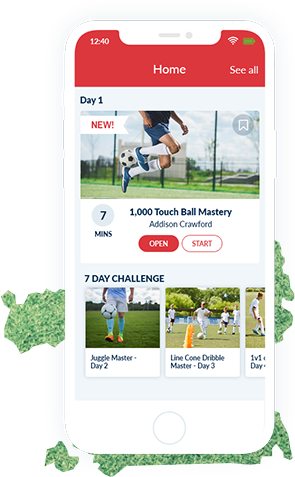
My Experience: This approach helped my sons reach elite academy levels (Charlotte FC Academy, North Carolina FC ECNL) while reducing our dependence on costly club programs. We supplemented 2-3 club practices per week with 4-5 home training sessions using structured video programs ($120/year vs $3,000-8,000/year for more club training).
2. Shop Around and Negotiate
Don't assume the most expensive club is the best fit. Visit multiple clubs, watch training sessions, and ask about:
- Financial aid or scholarships (many clubs have funds but don't advertise)
- Payment plans that spread costs over the year
- Sibling discounts (often 10-20% off second player)
- Volunteer opportunities that reduce fees
Reality: Clubs would rather give you a discount than lose a talented player to a competitor.
3. Consider Lower-Tier Teams Within Elite Clubs
The top-tier ECNL or MLS NEXT team might cost $8,000, but the same club's second or third team could offer quality coaching at $3,000-4,000 with a path to move up.
Example: Many MLS NEXT clubs have Academy Division teams (2nd tier) at half the cost of their top team. Coaching quality is often similar, and standout players get called up to the top team.
4. Limit Tournament Travel
Out-of-state showcase tournaments can add $1,000-2,000+ per event in travel costs (hotels, flights, meals, registration).
Strategic Approach:
- Focus on local competitions for players under 14
- Only attend distant tournaments when college recruiting becomes relevant (age 14+)
- Question whether each showcase actually provides value or just prestige
- Share hotel rooms and carpools with other families
Understanding the college recruiting process helps you know which showcases actually matter.
5. Buy Smart on Equipment and Gear
Skip the $200 cleats and designer training gear. Quality equipment doesn't require premium pricing.
Budget-Friendly Approach:
- Look for last season's models (often 30-50% off)
- Shop end-of-season sales
- Buy gently used gear from older players moving up sizes
- Remember: expensive gear doesn't improve performance
See our budget-friendly equipment recommendations below.
6. Volunteer to Reduce Costs
Many clubs offer fee reductions for parents who volunteer as:
- Team managers (organize schedules, communicate with families)
- Field coordinators (set up training equipment, manage fields)
- Fundraising leads (organize team fundraisers)
- Tournament volunteers (work registration tables)
Savings: A few hours per month can save $500-$2,000 annually depending on the club.
7. Question the "Elite" Path
Not every player needs the most expensive program. Evaluate whether the premium cost actually provides proportional value for:
- Your child's development goals
- Your child's current ability level
- Your child's enjoyment of the game
- Your family's financial situation
Reality Check: Many players develop successfully through more affordable pathways. Small, development-focused clubs often produce elite players at a fraction of the cost. My son's teammate was recruited to an MLS academy from a small, more affordable club (Inter Development Fútbol) with significantly less travel—proof that expensive doesn't always mean better.
Budget-Friendly Soccer Equipment Recommendations
You don't need to spend thousands on equipment to support your player's development. Here are our recommended budget-friendly options:
A proper training ball is essential, but you don't need $80 premium balls. Adidas MLS Training Soccer Ball offers quality at reasonable price. (~$25-35)
Disc Training Cones (Set of 40) enable hundreds of home training drills. Invest once, use for years. (~$15-20)
PUGG Pop-Up Soccer Goals set up in seconds, store flat. Perfect for shooting practice at home. (~$40-60)
Budget option: Portable Rebound Net (~$40-60). For interactive training: A-Champs RebounderGo ($269)
Agility Ladder Set improves coordination and foot speed. One-time purchase for years of use. (~$15-25)
Size One Soccer Ball for juggling and close control work. Smaller ball = better touch development. (~$10-15)
Portable Ball Pump keeps balls properly inflated. Essential maintenance tool. (~$8-12)
Bluetooth Speaker for playing training videos during backyard sessions. Makes training more engaging. (~$20-30)
💰 Total Budget Equipment Package
Everything above costs approximately $150-250—a one-time investment that supports years of home training. Compare this to $3,000-8,000 annual club fees.
The ROI: This equipment enables 4-5 home training sessions per week, dramatically accelerating development at minimal cost. Combined with 2-3 club practices, your player gets 6-8 training sessions weekly—more than most expensive club programs provide.
The Bottom Line: Expensive Doesn't Always Mean Better
Club soccer costs have spiraled in many markets, but expensive doesn't always mean better. Geographic location determines a large portion of what you'll pay, but smart decisions can reduce costs significantly regardless of where you live.
Focus on finding:
- Quality coaching that develops players systematically
- Appropriate competition level for your child's current ability
- Positive environment that fosters love of the game
- Club culture that prioritizes development over prestige
Rather than chasing the most expensive option, invest in structured home training, budget-friendly equipment, and a club that offers real value. With strategic choices and supplemental training, families can develop talented players without breaking the bank.
Remember: The goal is developing your child's love for the game and their skills—not emptying your bank account to prove your commitment. Geographic lottery shouldn't determine whether your child can pursue their soccer dreams.
Reduce Club Costs with Structured Home Training
The most effective cost-reduction strategy? Supplement expensive club training with systematic home development.
Anytime Soccer Training provides:
- 5,000+ follow-along videos for structured home training
- Replaces need for expensive private coaching ($100/hour → $120/year)
- 4-5 additional training sessions per week at home
- Team option: $6/player/year | Individual: $120/year
Families save thousands annually by supplementing affordable club options with home training rather than paying premium club prices.
View Pricing & Start Free Trial Get Free Training ResourcesRelated Resources
📚 More Youth Soccer Cost & Value Guides
- Complete Guide to U.S. Youth Soccer Structure - Understand the entire system
- The College Soccer Recruiting Process - Plan for college pathway
- MLS Academies Ranking + MLS NEXT vs ECNL - Elite pathways (free options)
- 10 Great Small College Soccer Programs - Affordable college options
- 10 Ball Mastery Drills - Free home training drills
- Free Soccer Drills for Kids - More free resources
About the Author: Neil Crawford is the founder of Anytime Soccer Training and host of The Inside Scoop podcast. Having navigated expensive club soccer in multiple markets (North Carolina, Texas youth soccer), he understands the financial pressures families face. His sons reached elite levels (Charlotte FC Academy, NC FC ECNL) through a combination of affordable club options and intensive home training—proving that development doesn't require premium pricing.