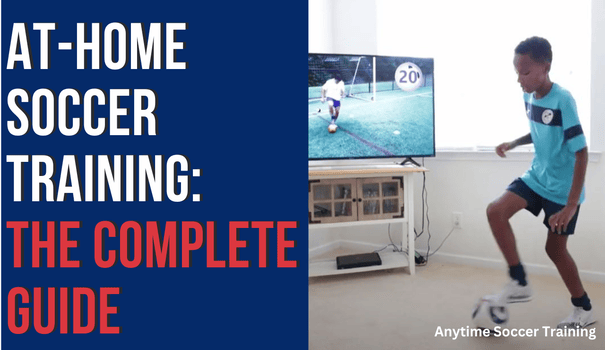
Why I Started Training My Son at Home
I’ll never forget the look on my son’s face after his first club practice.
He had just moved up from rec soccer, and he was excited. But that night, he came home quiet. The other kids were faster, sharper, and more confident on the ball. He felt behind.
And honestly? He was.
As his dad, I wanted to fix it. But I didn’t grow up playing soccer.
I didn’t know the first thing about training. And private coaching was $60-100 a session — way outside our budget with club fees, tournaments, and gear already piling up.
So I did the only thing I could think of: I grabbed a ball, set up some cones in the backyard, and we figured it out together.
It wasn’t pretty at first. I made mistakes. We wasted time on things that didn’t matter. But we kept showing up — ten minutes here, fifteen minutes there.
And slowly, something shifted.
His touches got cleaner. His confidence came back. He started making plays in games that surprised even him.
That’s when I realized something that changed everything for me:
The extra work at home matters more than most people think.
Today, my son plays in an MLS pro academy. And while he’s worked with great coaches along the way, the foundation was built in our backyard. Just the two of us. A ball and some cones.
I share this because if you’re reading this, you’re probably where I was — a parent who wants to help but isn’t sure where to start.
This guide is everything I wish someone had told me back then.
Related:
FREE eBook: In-home Training Guide
Why At-Home Training Makes Such a Difference
Here’s the reality of team practice:
In a typical 90-minute session, your child might get 50-100 touches on the ball. The rest is waiting in lines, listening to instructions, and scrimmaging.
Now compare that to a focused 10-minute session at home — where they can get 500+ touches.
The math is simple. More touches mean faster improvement.
But it’s more than just the numbers. At-home training builds something that’s hard to teach in a group setting:
- Comfort on the ball — that feeling of the ball being glued to their feet
- Quiet confidence — knowing they’ve put in work that others haven’t
- The habit of showing up — learning that small efforts add up over time
The kids who stand out at tryouts, who earn more playing time, who keep climbing? More often than not, they’re putting in extra work at home. This aligns with US Soccer’s player development philosophy — individual skill work is essential.”
The Brain Science Behind Repetition
Here’s something most parents don’t know: there’s actual science behind why at-home training works so well.
When your child repeats a movement, their brain builds something called myelin. Myelin is like insulation around the neural pathways that control that movement.
The more they repeat it, the thicker the myelin gets. This concept is explored in depth in Daniel Coyle’s book The Talent Code.
Myelin is like insulation around the neural pathways that control that movement.
The more they repeat it, the thicker the myelin gets, and the faster and more automatic the movement becomes.
This is why the best players make hard things look easy. They’ve built those pathways through thousands of repetitions.
Team practice doesn’t provide enough repetitions to build thick myelin. But 10-15 minutes of focused practice at home? That’s where the magic happens.
The key is consistency over intensity. Short, frequent sessions build stronger pathways than long, occasional ones. Ten minutes a day, five days a week, will always beat an hour-long session once a week.
Getting Buy-In From Your Child
Before you set up cones and create a training schedule, there’s one thing you need first:
Your child has to want it.
I learned this the hard way. Early on, I pushed too hard. I made training feel like a chore. And guess what? My son started resisting. It became a battle instead of something we did together.
Here’s what changed everything: I stopped telling him what to do and started asking what he wanted.
“What do you want to work on today?” “What’s a goal you want to hit this week?” “Do you want to train today, or take a break?”
Giving him ownership changed his attitude completely. Training became his thing, not something Dad was making him do.
Tips for getting buy-in:
- Have an honest conversation. Ask them what they want to achieve in soccer. Listen more than you talk.
- Let them set goals. A goal they choose is 10x more powerful than one you assign.
- Make it fun first. Challenges, competitions, and games beat boring drills every time.
- Respect their “no.” Some days they won’t want to train. That’s okay. Forcing it builds resentment.
- Celebrate their effort. Focus on the work, not just the results.
When your child feels ownership over their development, everything changes. They’ll ask to be trained instead of being told.
Common Mistakes Parents Make
I’ve made most of these myself. Learn from my errors:
1. Doing Too Much, Too Fast
This is the biggest one. Parents get excited, buy all the gear, create elaborate schedules, and push hard for the first two weeks… then burn out.
Start with 10 minutes, three days a week. Build from there. The goal is a habit that lasts years, not a sprint that fizzles.
2. Focusing on Quantity Over Quality
An hour of sloppy practice is worse than 15 minutes of focused work. It’s not about how long they train — it’s about how present they are while training.
If they’re going through the motions, it’s time to stop or switch to something fun.
3. Over-Coaching
You don’t need to correct every touch. Constant feedback is exhausting and kills confidence.
Give one or two pointers, then let them play. They’ll figure out more than you think on their own.
4. Making It Feel Like a Chore
The moment training feels like homework, you’ve lost them. If every session is serious and structured, they’ll start dreading it.
Mix in challenges, games, and freestyle time. Let them be silly sometimes. Fun is the fuel that keeps them coming back.
5. Comparing to Other Kids
“Did you see how Johnny dribbles? You need to work harder.”
This destroys motivation faster than anything. Compare your child to who they were last month, not to the kid on the other team.
6. Expecting Immediate Results
Development takes time. You might not see visible improvement for weeks or even months. That’s normal.
Trust the process. The results will come — often all at once, when you least expect them.
7. Training Only When It’s Convenient
Sporadic training doesn’t build skills. The brain needs consistent repetition to form those neural pathways.
Three short sessions a week, every week, beats one long session whenever you have time.
8. Ignoring Their Feedback
If your child says they’re tired, bored, or frustrated — listen. Pushing through every time teaches them to ignore their bodies and minds.
Some days, the best thing you can do is kick the ball around for five minutes and call it a win.
9. Skipping the Fundamentals
It’s tempting to work on fancy moves and shooting. But without ball mastery and first touch, those skills won’t translate to games.
Boring basics build brilliant players. Don’t skip them.
10. Forgetting Why They Started
Your child started playing soccer because it’s fun. If at-home training kills that joy, you’ve missed the point entirely.
Keep the love of the game at the center of everything you do.
Rec vs. Club Soccer: Does It Matter for At-Home Training?
One question I get a lot: “My child is in rec soccer. Is at-home training still worth it?”
Absolutely. In fact, it might matter even more.
Here’s the truth: the level your child plays at right now doesn’t determine their ceiling.
What matters is whether they’re developing skills and building a love for the game.
Rec soccer is great for learning the basics, having fun, and playing with friends. But practice time is limited, and coaching quality varies. At-home training fills that gap.
Club soccer offers more practice time, better coaching, and higher competition. But even at the club level, team practice isn’t enough for real individual development. The best club players are almost always doing extra work at home.
Here’s what I’ve seen over the years:
- A motivated rec player who trains at home will often surpass a club player who only shows up to practice.
- The skills built at home — ball mastery, dribbling, first touch — transfer to any level.
- At-home training helps kids earn their way to higher levels when they’re ready.
So whether your child is in rec, club, or somewhere in between, the formula is the same: consistent practice at home accelerates development.
What You Actually Need to Get Started
Here’s the good news: you don’t need much.
A soccer ball (the right size)
- Size 3 for ages 8 and under
- Size 4 for ages 8-12
- Size 5 for ages 13+
You don’t need an expensive match ball. A decent training ball that holds air is perfect.
Some cones or markers (10-20)
Disc cones work great for small spaces. They’re cheap, portable, and you’ll use them for almost every dribbling drill.
A wall or rebounder
A wall is free and perfect for passing. If you don’t have a good wall, a rebounder is worth the investment for first touch and reaction work.
A small space
You don’t need a field. A 10×10-foot area works for ball mastery and dribbling. Your backyard, garage, basement, or even a hallway can work.
That’s it. You can get started today with what you already have.
Shop the Essentials
If you’re looking to fill in the gaps, here are my go-to recommendations:
Soccer Balls
- Adidas MLS Soccer Ball — Budget Friendly. This is what I recommend to most families.
- Select Numero 10 Training Ball — Great touch, durable, holds air well. This is what I recommend to most families.
- Senda Street Soccer Ball — Works on any surface, including concrete.
- Nike Pitch Training Ball — Affordable and reliable. Available in all sizes.
Cones & Markers
- Pro Disc Cones (40 Pack) — Low profile so kids won’t trip. Easy to store.
- SKLZ Agility Cone Set — Taller cones with good visibility. Great for dribbling courses.
Rebounders
- Vevor Portable Soccer Wall — Portable, adjustable angles, folds flat.
- Steel Rebound: Stainless Steel — Budget-friendly and solid for beginners.
Bonus Gear
- Agility Ladder Set — Great for footwork and coordination.
- Agility Poles — Builds leg strength for shooting and explosiveness.
These are affiliate links. I may earn a small commission if you purchase through them, at no extra cost to you. I only recommend gear I’ve used and trust.
The Five Things Worth Focusing On
When my son and I started, I overcomplicated everything. Over time, I learned that the best results come from focusing on five core areas:
1. Ball Mastery
This is the foundation of everything. Ball mastery is about getting comfortable with the ball at your feet — building that feel and touch that makes everything else easier.
Related:
Free Training Video Library
Simple drills like toe taps, inside-inside touches, sole rolls, and pull-backs. Nothing fancy. Just repetition.
Five to ten minutes of ball mastery at the start of every session is the best investment your child can make.
2. Dribbling
Once they’re comfortable with the ball, add movement. Cone weaves, figure 8s, changes of direction. This is where they learn to move with the ball under pressure and keep their head up.
Start slow. Speed comes with confidence.
3. Passing & First Touch
If you have a wall, your child has a training partner. Wall work builds passing accuracy and that crucial first touch — receiving the ball cleanly so they’re ready to make the next move.
Two-touch, one-touch, volleys. Simple and effective.
4. Juggling
Juggling teaches aerial control, coordination, and focus. It’s also a great way for kids to track their own progress and set personal goals.
Start with one kick and catch. Then two. Build from there. There’s no rush.
5. 1v1 Moves
At some point, your child will need to beat a defender. That’s where 1v1 moves come in.
Start with a few basic moves: the scissors, the step-over, the pull-back, the Cruyff turn. Practice them slowly at first, then add speed.
The key is repetition until the move becomes automatic. When they don’t have to think about how to do it, they can focus on when to use it.
Set up a cone as a “defender” and have them attack it with a move, then accelerate away. Simple, effective, and builds confidence for real game situations.
A Simple Session Template
You don’t need a complicated plan. Here’s a 15-20 minute session that covers the basics:
- 0-5 min: Ball mastery warm-up
- 5-10 min: Dribbling through cones
- 10-15 min: Wall passing or juggling
- 15-20 min: 1v1 moves or a fun challenge
That’s it. Short, focused, and repeatable.
The secret is consistency. Fifteen minutes a day will always beat an hour once a week.
Want a done-for-you plan? Try our free 30-Day Training Plan → — every session is laid out for you.
How Often Should They Train?
For most kids, 3-5 short sessions per week works well.
Here’s a sample week:
- Monday: Ball mastery + dribbling
- Wednesday: Passing + first touch
- Friday: Juggling + 1v1 moves
- Weekend: Rest or just kick around for fun
Adjust based on their age, their schedule, and how they’re feeling. The goal is to build a habit that lasts — not to burn them out.
When They Don’t Want to Practice
Let’s be real — some days they won’t feel like it.
Here’s what I’ve found works:
Make it fun. Turn drills into challenges. Can they beat their cone time from yesterday? Can they set a new juggling record? Competition — even with themselves — changes everything.
Train with them. You don’t have to coach. Just be there. Kick the ball around. Your presence means more than you think.
Keep it short. On low-energy days, even five minutes counts. Something is always better than nothing.
Let them choose. Ask what they want to work on. Giving them ownership makes a huge difference.
Celebrate the small wins. A new juggling record. A smoother turn. Notice it. Name it. Confidence builds momentum.
A Note for Parents Who Didn’t Play
If you didn’t grow up playing soccer, you might feel like you’re at a disadvantage.
You’re not.
You don’t need to be an expert to help your child improve. You just need to show up.
Be present while they train. Ask them what they’re working on. Cheer for the effort, not just the results. Learn alongside them.
Some of the best soccer parents I know never played the game. What they have is something more important: they care, they’re consistent, and they make their kid feel supported.
That’s what matters most.
Your At-Home Training Checklist
Before you start, run through this list:
Equipment
- [ ] Soccer ball (correct size for age)
- [ ] 10-20 cones or markers
- [ ] Wall or rebounder for passing
- [ ] Small training space identified
Mindset
- [ ] Had a conversation with your child about their goals
- [ ] Your child is brought in and wants to improve
- [ ] Agreed on a realistic weekly schedule together
- [ ] Focused on fun first, structure second
Planning
- [ ] Choose 2-3 skills to focus on initially
- [ ] Set a simple weekly schedule (3-5 short sessions)
- [ ] Created a way to track progress (juggling record, cone times, etc.)
- [ ] Planned a small reward or celebration for hitting the first goal
Mindset for Parents
- [ ] Committed to being present, not pushy
- [ ] Ready to let them lead when possible
- [ ] Prepared to celebrate effort, not just results
- [ ] Okay with imperfect sessions — showing up is what counts
The Long Game
I want to leave you with this:
The kids who go the furthest in soccer — or any sport — aren’t always the most talented. They’re the ones who show up. Day after day. Small sessions. Quiet work. No shortcuts.
Your child doesn’t need to train for hours. They don’t need expensive academies or elite coaches. They need a ball, a little space, and someone in their corner.
That someone is you.
The work you put in together now — those ten-minute sessions in the backyard, the juggling challenges in the living room — that’s the stuff they’ll remember. And it’s the stuff that builds real, lasting improvement.
Start small. Stay consistent. Trust the process.
Want More Help Getting Started?
I put together a free resource for parents just like you:
Download: The Ultimate Guide to In-Home Soccer Training (Free eBook) →
It covers drills, schedules, equipment, and tips for keeping your child motivated — everything I’ve learned over the years in one place.
Ready to Take the First Step?
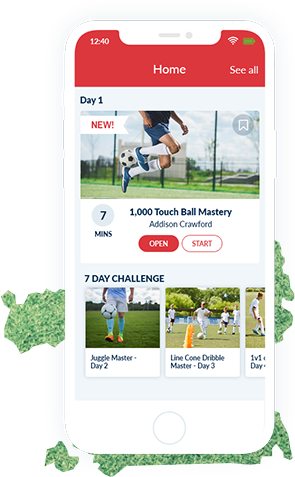
If you want a simple, structured way to begin, try our free 7-Day Soccer Training Plan.
It’s seven days of training that your child can do at home—short sessions. Clear instructions. No guesswork.
Questions? I’d love to hear from you. Drop a comment or email me at neil@anytime-soccer.com — I read every message.