Top 10 Questions New Soccer Parents Are Afraid to Ask (But Really Need Answers To)
🤔 You're Not Alone—Every Soccer Parent Started Here
Every soccer parent has stood on the sideline feeling completely lost. You see other parents who seem to know everything, and you're afraid to ask "stupid questions." Here's the truth: there are no stupid questions, and we've all been exactly where you are. This guide answers the 10 most common questions new soccer parents are too embarrassed to ask.
Introduction: Why New Soccer Parents Feel Lost
You just signed your child up for soccer. Great! Now you're standing on a sideline watching practice, and you realize you have absolutely no idea what's happening. Other parents are throwing around terms like "club tryouts," "travel teams," "showcases," and "Development Academy," and you're nodding along while secretly panicking.
Should you be buying expensive cleats? When do kids start club soccer? How much does this all cost? Are you supposed to be practicing at home? And most importantly: are you the only parent who doesn't understand any of this?
The answer to that last question is a definitive NO. Every single soccer parent has felt this way. The parents who seem like experts now? They were lost newcomers just a few years ago. Understanding the U.S. youth soccer structure helps demystify the entire system, but even that can feel overwhelming at first.
This guide tackles the 10 most common questions new soccer parents are afraid to ask—answered honestly, without judgment, so you can stop worrying and start enjoying watching your child play.
💡 Before We Start: Remember This
Your child just started soccer. They don't need to be Lionel Messi by next season. They don't need $200 cleats. You don't need to understand every tactical nuance. Right now, your job is simple:
- Get them to practice/games on time
- Encourage them to have fun
- Let them fall in love with the game
Everything else? You'll figure it out as you go. That's exactly what this guide is for.
What Soccer Equipment Does My Child ACTUALLY Need?
Why parents are afraid to ask: You don't want to show up with the wrong gear or look like you bought too much (or too little). Other kids have full kits and fancy bags, and you're wondering if you missed the memo.
The honest answer: Your child needs surprisingly little to start, and most of it is inexpensive.
Essential Equipment (What You MUST Have):
| Item | Cost | What to Buy |
|---|---|---|
| Soccer Ball | $15-$30 | Size 3 (U8 and under), Size 4 (U8-U12), Size 5 (U13+). Basic soccer ball from Amazon works fine. |
| Cleats | $25-$50 | Soccer-specific cleats (NOT baseball or football cleats). Buy at Dick's, Academy, or Target. They'll outgrow them in 6-12 months, so don't overspend. |
| Shin Guards | $10-$20 | Any shin guards from a sporting goods store. Kids will lose or break them, so buy cheap ones. |
| Long Socks | $8-$15 | Soccer socks that cover shin guards completely. Buy 2-3 pairs (they'll get gross). |
| Water Bottle | $8-$15 | Any sports water bottle. Seriously, any one. The $10 one works as well as the $40 one. |
Total for essentials: $66-$130 (and that's being generous)
🛒 Want Our Full Recommendations?
We've tested hundreds of soccer products and compiled our favorite training equipment, recovery tools, and gear. Check out our complete gear recommendations with direct links to everything we use and recommend.
What You DON'T Need (Yet):
⚠️ Save Your Money—Skip These for Now
- Expensive cleats ($100+): They'll outgrow them in months. Wait until they're older and committed to the sport.
- Soccer bag: A regular backpack works fine for recreational soccer.
- Training gear (cones, agility ladder, rebounders): Wait until they show consistent interest. If they practice at home regularly for 3-6 months, THEN invest in basic training equipment.
- Multiple uniforms: Team provides jerseys. You might need to buy shorts/socks depending on the league.
- Goalkeeper gloves: Only if your child is specifically playing keeper.
Bottom line: You can get started in youth soccer for under $100. Anyone telling you that you need to spend $300+ on equipment for a 6-year-old is either selling you something or overspending themselves.
What's the Difference Between Rec and Club Soccer?
Why parents are afraid to ask: Everyone talks about "club" like it's obvious, and you don't want to admit you have no idea what the difference is or when you're supposed to make the switch.
The honest answer: This is one of the most confusing aspects of youth soccer, and the lines blur depending on where you live.
| Factor | Recreational Soccer | Club Soccer |
|---|---|---|
| Cost | $100-$300 per season | $1,500-$5,000+ per year |
| Time Commitment | 1 practice per week, 1 game per weekend | 2-4 practices per week, 1-2 games per weekend, tournaments |
| Tryouts | No tryouts—everyone plays | Competitive tryouts, kids get cut |
| Travel | Local games within 30 minutes | Travel 1-3 hours for games, overnight tournaments |
| Playing Time | Everyone plays equal time (usually) | Playing time based on performance |
| Coaching | Often parent volunteers | Licensed coaches (usually paid) |
| Season | Fall season, spring season (separate) | Year-round commitment |
| Skill Level | All abilities welcome | Competitive—requires skill/experience |
When Should You Consider Club Soccer?
✅ Signs Your Child Might Be Ready for Club Soccer:
- They've played recreational soccer for 1-2 years and love it
- They ask to practice soccer at home without being prompted
- They're one of the stronger players on their rec team
- They want more challenge and competition
- Your family can afford the financial commitment ($1,500-$5,000/year)
- Your schedule can handle 3-4 practices per week plus weekend games/tournaments
- They're willing to give up other activities (club is usually year-round)
⚠️ Don't Rush Into Club Soccer
Common mistake: Parents put kids in club soccer at age 6-7 because "all the good players do club early."
Reality: Early club soccer (before age 10) rarely predicts long-term success. Many professional players started in recreational leagues. What matters more is consistent skill development, not which league they play in at age 7.
Better approach: Let them enjoy rec soccer while you work on skills at home. If they're still passionate at age 10-12 AND outgrowing their competition, THEN consider club.
Bottom line: Rec soccer is perfect for beginners and kids exploring the sport. Club soccer is for committed players ready for serious competition. There's no "wrong" choice—pick what fits your child's passion level and your family's bandwidth.
🎧 Listen: Transitioning from Rec to Club Soccer
Want to hear more about making this transition? Listen to our podcast episode where we discuss the rec to club soccer journey with a soccer dad who's been through the process:
How Much Does Youth Soccer REALLY Cost?
Why parents are afraid to ask: You're worried about looking cheap or admitting you can't afford what other families are spending. You hear whispers about families spending $10K+ per year and wonder if that's normal.
The honest answer: Youth soccer costs vary WILDLY based on the level and how much you choose to spend. Here's the reality:
The Real Cost Breakdown:
| Level | Annual Cost |
|---|---|
| Recreational Soccer | $200-$600/year |
| Includes: League fees ($100-$300), equipment ($66-$130), snacks/team parties ($50-$100), gas for local games ($50-$100) | |
| Club Soccer (Local) | $1,500-$3,000/year |
| Includes: Club fees ($1,200-$2,000), uniforms ($150-$300), tournaments ($200-$500), travel/gas ($300-$500), equipment replacements ($100-$200) | |
| Club Soccer (Elite/Travel) | $5,000-$10,000/year |
| Includes: Club fees ($2,500-$4,000), travel tournaments with hotels ($1,500-$3,000), showcases ($600-$1,500), private training ($1,000-$2,000), equipment ($300-$500) | |
| Elite Club + Extras | $10,000-$20,000+/year |
| Includes: Everything above PLUS: Multiple private coaches ($3,000-$6,000), ID camps ($900-$3,000), speed/strength training ($1,000-$2,000), extra showcases, international tournaments | |
💰 The Hidden Costs Nobody Mentions
- Lost wages: Taking off work for weekday tournaments
- Sibling care: Paying someone to watch other kids during travel tournaments
- Food on the road: $40-$60 per day for tournament weekends adds up fast
- Parent travel: If both parents want to watch, that's double the hotel/food costs
- Equipment replacements: Cleats every 6-12 months, lost shin guards, torn jerseys
- Team fundraisers: The "optional" fundraisers you feel obligated to participate in
Bottom line: You can absolutely develop a great player spending $500-$1,500/year through recreational soccer combined with consistent home training. Families spending $15K+ per year aren't necessarily developing better players—they're just spending more money. Don't let anyone shame you for working within your budget.
🎧 Listen: The Real Cost of Youth Soccer
Want to dive deeper into youth soccer costs? Listen to our podcast episode where we break down the hidden expenses and how families are managing the financial reality:
Should My Child Practice Soccer at Home?
Why parents are afraid to ask: You don't know if home practice is expected, and you're not sure how to practice with them when you don't know anything about soccer yourself.
The honest answer: Yes, home practice makes a HUGE difference—but it doesn't have to be complicated or require you to be a soccer expert.
Why Home Practice Matters:
The Math: If your child only touches a ball at practice/games, they get maybe 2-3 hours per week of ball time. Meanwhile, the kid practicing 15 minutes daily at home gets 1.75 hours of focused ball work PLUS the 2-3 hours at practice—nearly doubling their development time.
Over a year, that's the difference between 100 hours of ball touches vs. 175 hours. The kid doing home practice will improve almost twice as fast.
How to Practice at Home (Even If You Know Nothing About Soccer):
| Age | Daily Practice Time | What to Do |
|---|---|---|
| Ages 5-7 | 5-10 minutes | Kick ball against wall/garage, dribble around cones (or shoes), juggling attempts. Make it fun, not serious. |
| Ages 8-10 | 10-15 minutes | Simple ball mastery drills, first touch work, passing against wall, dribbling patterns. |
| Ages 11-14 | 15-30 minutes | Structured skill work, weak foot development, position-specific training, juggling goals. |
| Ages 15-18 | 30-60 minutes | Advanced technical work, fitness training, college-level skill development. |
✅ Home Practice Tips for Non-Soccer Parents:
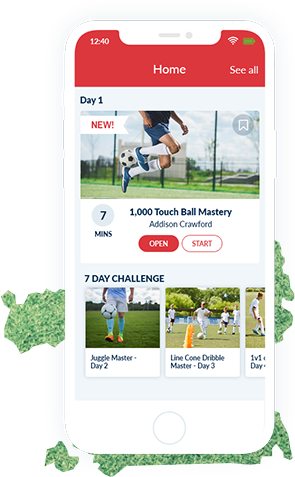
- You don't need to teach them—just make sure they do it. Use follow-along training videos so a coach demonstrates while your child follows along.
- Start small: 5-10 minutes daily beats 2 hours once per week
- Make it part of routine: After school, before dinner, etc.
- Don't force it: If they resist consistently, back off and try again in a month
- Track progress: Video them once per month—they'll see improvement and stay motivated
- Celebrate effort, not results: "Great job practicing for 10 minutes!" not "Why can't you juggle 50 times yet?"
Bottom line: Home practice is optional, but it's the single biggest factor in how fast your child improves. Even 10 minutes daily makes a massive difference. You don't need to be a soccer expert—you just need to help them carve out the time.
How Do I Avoid Becoming "That Parent" on the Sideline?
Why parents are afraid to ask: You've heard horror stories about crazy soccer parents, and you're terrified of accidentally becoming one. But you also want to support your child—so where's the line?
The honest answer: Most parents aren't "crazy"—they just don't know the unwritten rules of youth sports sideline behavior.
The Sideline Rules Nobody Tells You:
| DO This | DON'T Do This |
|---|---|
| ✅ Cheer for YOUR TEAM (not just your kid) | ❌ Coach from the sideline ("Pass it!" "Shoot!") |
| ✅ "Great hustle!" "Nice try!" "Way to go!" | ❌ Criticize your child during the game |
| ✅ Clap for good plays by BOTH teams | ❌ Yell at the referee (EVER) |
| ✅ Ask "Did you have fun?" after the game | ❌ Ask "Why didn't you score?" or "Why didn't you play better?" |
| ✅ Stay in designated parent area | ❌ Stand behind the goal yelling instructions |
| ✅ Let the coach coach | ❌ Question coaching decisions at the game |
| ✅ Bring snacks/water for your child | ❌ Bring elaborate picnics that distract from the game |
| ✅ Support all kids on the team equally | ❌ Only cheer when your child touches the ball |
⚠️ The #1 Rule: Your Kid Hears Everything
Even if you think they're focused on the game, your child hears EVERY word you say from the sideline. That frustrated sigh? They heard it. That comment to another parent about the coach? They heard it. That groan when they missed a shot? They definitely heard it.
If you wouldn't say it directly to your child's face, don't say it on the sideline.
What TO Say After Games:
✅ The Best Post-Game Questions:
- "Did you have fun?"
- "What was your favorite part of the game?"
- "Want to grab ice cream/smoothies?"
That's it. Resist the urge to dissect their performance. If THEY want to talk about the game, let them lead. Otherwise, let it go. There will be hundreds more games.
🗣️ Real Coaches & Parents Weigh In: What Sideline Culture Should Actually Look Like
We asked coaches and experienced soccer parents what they really want from sideline behavior. Here's what they told us:
What Coaches Actually Want You to Know:
- "Ignore your parents" - Many coaches explicitly tell players to tune out sideline instructions because parents often yell tactical directions that contradict the game plan. If the coach set a defensive strategy and you're yelling "pressure!" from the sideline, you're working against what they're trying to teach.
- Practice is for teaching, games are for playing - Coaches want games to be when kids make their own decisions and apply what they've learned. Constant sideline coaching robs them of that development opportunity.
- Ask your coach about sideline culture - Every team and region has different norms. Some coaches want complete silence except clapping. Others are fine with encouragement. Ask upfront: "What sideline culture are you going for?"
What Experienced Parents Learned the Hard Way:
- "At U9, they can be very easily distracted" - Young players especially need minimal sideline noise. That "helpful" comment you thought would redirect them? It probably just pulled their focus away from the game.
- "After 4 kids all playing sports, I learned the less we say the better" - One parent's revelation: Once they stopped coaching from the sideline and became their child's biggest fan, the relationship improved AND the child's game got better.
- "All they need from us is confidence building" - The real job from the sideline: "You got it!" "Good job!" "Way to go!" That's it. The coach handles everything else.
Regional Differences to Know About:
Sideline culture varies dramatically by location:
- Some regions expect near-silence: "In our area of NY, it's best to stay quiet and cheer when your team scores. We always clap when injured players stand up. I feel like we're watching US Open tennis instead of soccer, but that's the culture here."
- Other regions are more vocal: Some clubs allow parents to make helpful comments from the far side of the field, as long as you're not interrupting the coach and you "know when to take it easier."
- When in doubt, ask - If you're new to the team or area, observe for the first game or two, then ask other parents or the coach what's expected.
⚠️ The Universal "Never Do This" List (According to Coaches & Parents)
- Never yell at the referee - "It never helps. We are all human." Even if the call is objectively wrong, yelling won't change it and models poor sportsmanship.
- Never point out player mistakes - Especially from your own team. That's what coaches are for, and public criticism destroys confidence.
- Never engage with opposing team's parents - If the other sideline gets rowdy, ignore it. Engaging just escalates the situation.
- Never "joystick coach" - Constantly telling kids where to run, when to pass, when to shoot takes away their ability to develop decision-making skills.
- Never debrief immediately after games - One parent's sarcastic advice: "Always after every game to debrief your kid immediately, preferably on the car ride home while the mistakes are still fresh" was listed as what NOT to do. Let them decompress first.
The Consequences Nobody Mentions:
Bad sideline behavior doesn't just embarrass you—it has real consequences:
- You can be carded or removed - Yes, parents can get yellow and red cards just like players. Bad behavior can get you ejected from games and potentially banned from future games.
- It reflects on your child's team - Your behavior represents the team. Poor conduct can lead to the coach being carded or the entire team facing consequences.
- Your child hears EVERYTHING - Even when you think they're focused on the game, they're processing every word, sigh, and groan from the sideline. Negative comments destroy confidence.
- Other parents notice - You'll develop a reputation. Soccer communities are small, and "that parent" label follows you across teams and seasons.
The Satirical Advice (DO THE OPPOSITE):
One parent offered this tongue-in-cheek guidance on what NOT to do:
- "Repeatedly yell 'boot it' and point out all mistakes immediately" - Then simply added: "Just cheer."
- "If you see a player out of position or doing something wrong, make sure to let them know. Be sure to be loud enough so they can hear you. Coach will really appreciate the support."
- "When the other team is playing rough, always throw your arms up and yell foul at the ref. It'll help them notice next time and they like that a lot."
Translation: Don't do ANY of these things. Ever.
What Success Looks Like:
One parent who figured it out shared this transformation:
"Back in her rec league days I would [coach and criticize], but they weren't helpful at all. The moment I stopped doing them and just became her biggest fan and enjoyed the show was the best day ever. Her game improved tremendously and our relationship has never been better!"
The lesson: Your job isn't to coach from the sideline. Your job is to be your child's biggest fan, period.
Bottom line: Be enthusiastic, positive, and supportive. Leave coaching to the coach, refereeing to the ref, and playing to the kids. Your job is to be the safe place they come back to after the game, win or lose.
When Is My Child "Good Enough" for the Next Level?
Why parents are afraid to ask: You don't want to sound like you're bragging if you think your child is better than they are, but you also don't want to hold them back if they're ready for more challenge.
The honest answer: This is one of the hardest assessments for parents to make objectively. Here's how to tell:
Signs Your Child Might Be Ready for More Competition:
✅ Ready for Club/Travel Soccer If:
- They're consistently one of the top 2-3 players on their rec team
- They rarely get challenged in games (dominating too easily)
- Coach has specifically mentioned they should consider club
- They practice at home without being asked (genuine passion)
- They can juggle 15+ times consistently (age 10+)
- They demonstrate good first touch and ball control under pressure
- They understand positioning and make smart decisions (not just athletic)
- They ASK to play at a higher level
⚠️ NOT Ready for Higher Level If:
- YOU want it more than they do
- They're good but not consistently dominant at current level
- They struggle with basic skills (first touch, passing accuracy, dribbling)
- They already complain about current practice/game commitments
- You're doing it because "all their friends are doing club"
- They play multiple sports and don't want to give any up (club usually requires year-round commitment)
How to Get an Honest Assessment:
| Ask This Person | Why Their Opinion Matters |
|---|---|
| Current Coach | Sees your child against other players regularly, can give objective comparison |
| Club Coach at Tryout | Evaluates hundreds of players—knows exactly what level your child fits |
| Private Trainer (if you use one) | Has seen many players at various levels, can project realistic path |
| Your Child | Seriously—ask them. Do they WANT more challenge? Or are you pushing? |
Bottom line: If you're genuinely unsure, attend club tryouts. Worst case? They don't make the team or decide it's too much commitment. Best case? They find their right level. Tryouts are free assessments—use them.
Should My Child Play Multiple Sports or Focus on Soccer?
Why parents are afraid to ask: You hear conflicting advice. Some people say "specialize early to compete!" Others say "multi-sport athletes develop better!" You're afraid of making the wrong choice and ruining your child's future.
The honest answer: The research is pretty clear on this one, but it goes against what many club coaches will tell you.
What Research Shows:
📊 The Science on Sports Specialization:
Before Age 12: Multi-sport kids develop better athleticism, lower injury rates, and are more likely to continue playing sports through high school.
Ages 12-15: Can start focusing more on 1-2 primary sports, but playing 2 sports is still ideal.
Ages 16+: If pursuing college opportunities, may need to specialize—but many college athletes played multiple sports through high school.
Key Finding: 88% of Division I college athletes played multiple sports growing up. Early specialization did NOT give them an advantage—it often led to burnout and overuse injuries.
Read more: Debunking the Myths: 10 Misconceptions About Early Sports Specialization
The Age-by-Age Guide:
| Age Range | Recommendation |
|---|---|
| Ages 5-10 | Play EVERYTHING. Try soccer, basketball, swimming, track, whatever interests them. |
| Why: Building general athleticism, discovering what they love, preventing burnout | |
| Ages 11-14 | Narrow to 2-3 sports they genuinely enjoy. Soccer can be primary, but still play 1-2 others. |
| Why: Reducing burnout risk, continuing athletic development, maintaining social connections | |
| Ages 15-16 | Can focus more heavily on soccer if pursuing college opportunities, but consider playing 1 other sport in off-season. |
| Why: College recruiting timeline kicks in, but cross-training still valuable | |
| Ages 17-18 | May need year-round soccer focus for serious college recruiting, but only if THEY want it. |
| Why: Senior year recruiting, commitment to college program incoming | |
⚠️ The Club Pressure You'll Face
Many club coaches will pressure you: "If your child is serious about soccer, they need to play year-round. No other sports."
Why coaches say this: They want full commitment to THEIR team, not because it's best for your child's development.
Reality: Unless your child is legitimately elite (top 1-2% nationally), playing another sport won't hurt their soccer development—it'll help it. Athletes who play basketball develop court vision. Swimmers develop cardiovascular endurance. Track athletes develop speed.
Your move: Thank the coach for their input, then make the decision based on what YOUR CHILD wants and what research says.
Bottom line: Multi-sport participation through age 14 is almost always the better choice. Specialization before age 12 increases injury risk and burnout without improving long-term outcomes. Let your child play multiple sports as long as they want to—their soccer won't suffer.
When Should We Start Thinking About College Soccer?
Why parents are afraid to ask: Your child is 10 years old and you're hearing about "getting seen by recruiters" and "building a recruiting profile" and you're wondering if you're already behind.
The honest answer: You're not behind. The families stressing about college recruiting for 10-year-olds are creating unnecessary pressure that usually backfires.
The Real College Recruiting Timeline:
| Age/Grade | What You Should Actually Be Doing |
|---|---|
| Ages 5-13 (Elementary/Middle School) |
ZERO college recruiting focus |
| Focus on: Falling in love with the game, building technical skills through consistent practice, playing multiple sports, having fun. Grades matter (start building good study habits), but recruiting? Not yet. | |
| Freshman Year (Age 14-15) |
Research and planning phase |
| Actions: Start researching college soccer structure (D1/D2/D3/NAIA), maintain 3.5+ GPA, film games for highlight video later, work on skills 4-5x per week. No outreach to coaches yet. | |
| Sophomore Year (Age 15-16) |
Preparation phase |
| Actions: Create first highlight video, take PSAT, build target school list (20-30 schools), register with NCAA Eligibility Center, attend 1-2 ID camps if genuinely interested in specific schools. | |
| Junior Year (Age 16-17) |
ACTIVE RECRUITING YEAR |
| Actions: Send recruiting emails (Sept-Oct), attend 2-3 showcases, take SAT/ACT, campus visits, update coaches monthly. This is when recruiting actually happens. | |
| Senior Year (Age 17-18) |
Decision phase |
| Actions: Official visits, compare scholarship offers, sign National Letter of Intent (November or April), finalize commitment. Keep grades up (offers can be rescinded). | |
⚠️ Don't Fall for the "Start Early" Recruiting Myth
Myth: "College coaches are watching 12-year-olds! You need to get on their radar early!"
Reality: College coaches aren't recruiting 12-year-olds. They're recruiting juniors and seniors. Kids change SO MUCH between ages 12-16 that early scouting is meaningless.
What actually matters: Skill development and academics from ages 10-15, then strategic recruiting efforts ages 16-18.
Bottom line: If your child is under 14, you should be focused on skill development and academics, NOT college recruiting. If they're 15-16, start learning the recruiting process. If they're 17-18 and haven't started recruiting, you're cutting it close but not too late—get moving immediately.
My Child Isn't Getting Much Playing Time—Should I Talk to the Coach?
Why parents are afraid to ask: You don't want to be "that parent" who complains about playing time, but it's heartbreaking watching your child sit on the bench while other kids play the whole game.
The honest answer: This is the trickiest situation in youth sports. The answer depends on the level, the age, and what's actually happening.
When Playing Time Should Be Equal vs. Earned:
| Level | Playing Time Expectation |
|---|---|
| Recreational Soccer (U6-U12) | Equal playing time for everyone, usually mandated by league rules |
| Recreational Soccer (U13+) | Mostly equal, but coaches may give stronger players slightly more time |
| Club Soccer (All Ages) | Playing time earned based on performance, effort, and practice attendance |
| High School Soccer | Completely earned—starters play most minutes, bench players get limited time |
Before You Talk to the Coach:
✅ Ask Yourself These Questions First:
- Is my child attending every practice? (Coaches notice absences)
- Is my child working hard at practice? (Not just showing up, but actively engaged)
- Is my child's skill level honestly comparable to the kids playing more?
- Is my child practicing at home? (Kids who do develop faster)
- Is my child asking for more playing time, or is this MY issue?
- Have I asked my CHILD what the coach has said about playing time?
If You Decide to Talk to the Coach:
DO Say This:
"Hi Coach, do you have a few minutes to talk? [Child's name] really loves being on the team. I wanted to ask what they can work on to earn more playing time. Are there specific skills you'd like to see them develop?"
DON'T Say This:
"My child isn't getting enough playing time and it's not fair. They're just as good as [other kid] who plays the whole game."
Why the First Approach Works:
- Shows you respect coach's decisions
- Asks for actionable feedback (not complaining)
- Positions your child as wanting to improve
- Opens dialogue instead of creating conflict
What If the Coach Says Your Child Needs to Improve?
Listen carefully and take notes. Then help your child work on those specific skills at home. If the coach says "needs to work on first touch," dedicate 10 minutes per day to first touch drills. Come back in 4-6 weeks and show improvement.
When It Might Be Time to Switch Teams:
⚠️ Consider Finding a New Team If:
- Your child is consistently getting less than 25% playing time in recreational soccer (where equal time is the norm)
- Coach refuses to give specific feedback on what your child needs to improve
- Your child is practicing hard at home, attending every practice, and still never gets off the bench
- Coach is playing favorites (their own kid plays 90% while your child sits)
- Your child is miserable and wants to quit soccer entirely
Better option: Find a team where they're at the middle or slightly below middle skill level—not the weakest player (demoralizing) but not the strongest (no growth). The right level is where they play 50-70% of minutes and are challenged but successful.
Bottom line: In rec soccer, playing time should be relatively equal. In club soccer, it's earned. Before complaining, honestly assess your child's skill level and effort. Approach the coach respectfully asking HOW your child can earn more time, not demanding they deserve it. If the situation doesn't improve after honest effort, consider finding a better fit.
How Do I Know If My Child Should Keep Playing Soccer?
Why parents are afraid to ask: You've invested time, money, and emotional energy into soccer. Your child sometimes says they want to quit. You don't know if it's normal frustration or genuine disinterest, and you're afraid of making them quit something they might regret later.
The honest answer: This is the most important question of all, and most parents get it backwards.
Signs Your Child SHOULD Keep Playing:
✅ They Should Continue If:
- They complain about practice but still go willingly
- They talk about soccer at random times (at dinner, in the car)
- They kick a ball around at home without being asked
- They watch soccer on TV or YouTube
- Bad games make them want to practice MORE, not quit
- They have soccer friends they enjoy seeing at practice/games
- They sometimes say "I hate soccer" but never actually want to miss a game
Reality check: Kids complain about EVERYTHING they do regularly. Complaining about practice doesn't mean they hate soccer—it often means they're tired or having a bad day. Look at overall patterns, not daily moods.
Signs Your Child Should STOP Playing (or Take a Break):
⚠️ Consider Stopping If:
- They cry before every practice/game (not just occasionally)
- They NEVER practice on their own or show interest outside of mandated activities
- They consistently beg to skip practice/games
- They've explicitly said multiple times "I hate soccer and want to quit"
- It's causing family stress (fighting to get them there, missing family events)
- You realize YOU want them to play more than THEY want to play
- They've found another activity they're genuinely passionate about
The Question to Ask Instead:
Instead of "Should they keep playing?" ask: "WHY are they playing?"
| If They're Playing Because... | Then... |
|---|---|
| They genuinely love it | ✅ Keep going! Ride out the occasional frustrations. |
| Their friends play | ⚠️ Okay for now, but reassess if friends quit or move teams |
| You think they "should" | ❌ This is your dream, not theirs. Let them explore other interests. |
| It keeps them active/out of trouble | ⚠️ Valid reason, but would they be happier in a different sport/activity? |
| You've invested so much money already | ❌ Sunk cost fallacy. Don't force them to continue because you spent money. |
| College scholarship possibilities | ❌ Unless they're genuinely elite AND love it, this is a terrible reason |
💡 The Talk You Should Have With Your Child:
"Hey, I want to check in. You've been playing soccer for [X] years. Do you still enjoy it? If you could do any activity instead, would you pick soccer or something else?"
Then LISTEN to their answer without defending soccer, explaining how much you've spent, or mentioning the college scholarship you're hoping for.
If they say "I really do love soccer, I just had a bad game/week," that's genuine. Support them.
If they say "I kind of wish I could try [other activity] instead," seriously consider letting them explore that other interest.
The Middle Ground: Taking a Season Off
If you're truly unsure, consider: "Let's take this fall season off and see how you feel. If you miss it, we'll sign up for spring."
Many kids who take a break either (A) realize they miss soccer and come back more motivated, or (B) discover they're much happier doing something else. Either outcome is good—you've learned what they actually want.
Bottom line: Youth sports should enhance your child's life, not dominate it. If soccer is causing more stress than joy, something needs to change—either the level they're playing at, the team they're on, or whether they continue playing at all. Your child's happiness and mental health matter more than any sport.
Final Thoughts: You're Doing Great
If you read this entire guide, you already care more than most parents. You're not too late, you're not doing it wrong, and your child's soccer journey doesn't need to look like anyone else's.
Some kids will play recreational soccer for fun through high school and never touch a club team—and that's perfectly fine. Some will develop a passion in middle school and want to pursue college soccer—that's fine too. Some will play for a few years and switch to another sport—also fine.
Your job isn't to create the next professional player (statistically, you won't). Your job is to support your child in finding activities they enjoy, help them develop discipline and work ethic, and be their safe place when sports get frustrating.
The fact that you're here, reading this, asking questions, and trying to figure out how to do this right? That means you're already succeeding as a soccer parent.
Quick-Reference Checklists
Essential Equipment Checklist
- Soccer ball (size 4 for U8-U12, size 5 for U13+)
- Soccer cleats ($25-$50 range for young players)
- Shin guards ($10-$20)
- Soccer socks (2-3 pairs)
- Water bottle
Questions to Ask Before Joining a Club Team
- What's the total annual cost (include tournaments, travel, uniforms)?
- How many practices per week?
- What's the tournament schedule? How many overnight trips?
- What's your coaching philosophy on playing time?
- Can my child play other sports, or is this year-round?
- What happens if we need to miss practice/games for family events?
Home Practice: 10-Minute Daily Routine
- 2 minutes: Dribbling around cones or objects
- 2 minutes: Inside/outside of foot touches
- 2 minutes: Passing against wall or garage
- 2 minutes: Juggling attempts (even if they can only do 2-3)
- 2 minutes: Weak foot work
For more structured training, check out free training drills you can do at home.
Structured Training Makes Everything Easier
The #1 thing that helped me as a non-soccer parent? Having professional training my kids could follow along with at home. I didn't need to know soccer—I just needed to make sure they practiced 10-15 minutes daily.
Anytime Soccer Training provides:
- 5,000+ follow-along videos so kids can train independently
- Age-appropriate progressions (you don't need to know what to teach)
- 10-minute daily routines that fit into any schedule
- Affordable team ($6/player/year) and individual ($120/year) options
Take the guesswork out of home training. Let professionals guide your child while you focus on being the supportive parent.
View Pricing & Start Free Trial Get Free Training ResourcesRelated Resources
📚 More Help for Soccer Parents
- Complete Guide to U.S. Youth Soccer Structure - Understand rec, club, travel, academy levels
- The College Soccer Recruiting Process: Complete Guide - When to start, what to do
- College Soccer Showcases Guide - Top 10 showcases by region
- College Soccer ID Camps Guide - Which camps are worth attending
- HBCU Soccer Programs Guide - All 38 HBCU programs by region
- 10 Ball Mastery Drills Your Child Can Do in 10 Minutes - Simple home training
- Free Soccer Drills for Kids - Start training today
- All College Recruiting Tips - Complete resource library
About the Author: Neil Crawford is the founder of Anytime Soccer Training and host of The Inside Scoop podcast. As a non-soccer parent who guided his son to Charlotte FC Academy using home training methods, he understands the confusion and overwhelm new soccer parents face. He created this guide to answer the questions he wished someone had answered for him when he started this journey.