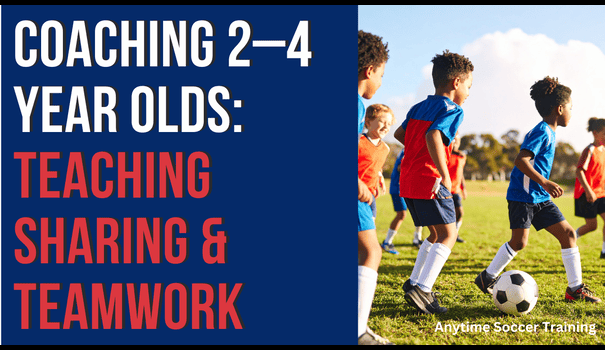
When I first started coaching, I was a recreational coach for 3–4 year olds. At the time, I thought coaching meant teaching kids how to dribble, kick, and maybe even score goals. But it didn’t take long to realize that at this age, coaching is just as much about teaching life skills—like sharing, listening, and taking turns—as it is about soccer skills.
Related:
Become a Rec Coach Superhero
I still remember my very first practice. The kids could barely line up; some cried when their parents walked too far away, and one little boy picked up the ball and ran with it like it was a football. That’s when I realized: coaching at this age isn’t about building the next Messi or Alex Morgan—it’s about laying the foundation for teamwork, confidence, and joy in the game.
One of the toughest challenges I faced (and many of you will face, too) is the child who just won’t share the ball. Maybe they dribble coast-to-coast every time. Maybe they refuse to let others shoot in games. And sometimes, even after you talk to them, they nod politely…then keep doing the same thing.
If you’ve been there, you’re not alone. And the good news is, there are ways to handle this with kindness, patience, and structure.
What You’ll Learn:
- Why early engagement matters more than you think
- Common myths about coaching toddlers (debunked)
- 6 steps to help kids learn to share the ball
- Games that naturally build sharing and teamwork
- Essential equipment for coaching 2-4 year olds
- Top mistakes new coaches make (and how to fix them)
Why Early Engagement Matters
Here’s something many coaches and parents don’t realize:
The ages of 2-6 are some of the most important years for motor skill development.
During this window, children’s brains are rapidly forming neural pathways. Every time they kick a ball, balance on one foot, or coordinate their body to change direction, they’re building foundations that will serve them for years to come.
This doesn’t mean you need to run intense training sessions with toddlers. It means that age-appropriate exposure to movement, coordination, and ball play creates lasting advantages—not just in soccer, but in all physical activities.
The Benefits of Early Soccer Engagement:
- Motor skill development – Balance, coordination, and spatial awareness develop rapidly at this age
- Social skills – Learning to share, take turns, and work with others
- Confidence building – Positive early experiences create kids who aren’t afraid to try new things
- Love for the game – Kids who have fun early are more likely to stick with soccer long-term
- Parent-child bonding – These early experiences create memories that last a lifetime
The key is keeping it developmentally appropriate. That’s where many well-meaning coaches go wrong.
Debunking the Myths: “They’re Too Young to Improve”
I hear this all the time from parents and even other coaches:
“They’re only 3—what’s the point? They’re too young to actually learn anything.”
This couldn’t be more wrong.
The problem isn’t that young kids can’t improve. The problem is that most people try to coach them like they’re 8 or 10 year olds. When you use age-appropriate methods, toddlers absolutely can develop skills, coordination, and a love for the game.
Common Myths vs. Reality:
| ❌ Myth | ✅ Reality |
|---|---|
| “Kids this age can’t learn real skills” | They can—if activities are short, fun, and developmentally appropriate |
| “It’s just babysitting with soccer balls” | Done right, it builds motor skills, social skills, and confidence |
| “They won’t remember any of this” | Their bodies remember—neural pathways formed now last forever |
| “Structured practice is pointless” | Short, playful structure works better than chaos or drill-heavy sessions |
| “Just let them run around” | Guided play with purpose accelerates development while keeping it fun |
The secret is understanding that developmentally appropriate doesn’t mean doing nothing. It means meeting kids where they are—with games, imagination, and lots of positive reinforcement.
This is the same principle behind balancing fun and skill development at any age. Fun first, skills built in.
Step 1: Understand What’s Normal at This Age
At ages 2–4, kids are still developing the ability to share. For many, their world revolves around me, my turn, my ball. It’s not selfishness—it’s simply where they are developmentally.
👉 Coaches often expect too much too soon. Your job isn’t to stop the behavior overnight but to create environments where sharing and turn-taking naturally happen.
Step 2: Set the Tone With Positive Language
Instead of pointing out what they’re doing wrong (“don’t hog the ball”), redirect the message:
- “Let’s help our friends score too.”
- “Your job this turn is to pass before you shoot.”
- “We’re all superheroes—every superhero needs a partner.”
Notice the difference: one feels like criticism, the other feels like a fun challenge. If you don’t have soccer experience yourself, don’t worry—positive communication is more important than technical knowledge at this age.
Step 3: Design Games That Build Sharing
Kids learn better when the game itself requires the behavior you want. Here are a few tried-and-true setups:
- Buddy Goals – Two players must score together. One dribbles halfway, passes, and the other finishes.
- Pass to the Coach – Every player must pass to you (or an assistant coach) before they’re allowed to score. This ensures touches are distributed.
- Turn-Taking Relay – Set up cone “lanes.” Each child dribbles down and back, then hands the ball to the next teammate in line. Kids quickly learn the rhythm of waiting for their turn.
- Color Pass Game – Assign pinnie colors. “Red passes to blue before scoring.” This helps with both sharing and color recognition.
👉 The trick is not to punish kids for not sharing but to make games fun enough that sharing feels like part of the game.
Step 4: Work With Parents as Partners
Coaching 2–4 year olds doesn’t happen in isolation. Talk to parents about the importance of reinforcing sharing at home. Encourage them to:
- Play simple back-and-forth games (rolling a ball, tossing a beanbag).
- Praise their child for waiting their turn in non-soccer situations.
- Avoid putting pressure on “winning” at this age.
- Continue skill-building at home with age-appropriate activities.
When parents and coaches are on the same page, progress comes much faster. Share resources like the free 30-day training plan so families can reinforce what you’re teaching.
Step 5: Praise Progress, Not Perfection
One of the most powerful tools you have is praise. When a child finally passes or allows another to take a shot, make a big deal about it:
- “That was awesome teamwork!”
- “I love how you helped your teammate.”
- “Great leaders make sure their friends get a chance too.”
At this age, recognition means everything. Highlight the behavior you want and watch it grow.
Step 6: Stay Patient, Stay Consistent
This is the hardest part. The child may continue to dominate the ball for weeks. But over time, with consistent messaging and structured games, they will begin to understand the joy of playing with others, not just by themselves.
And here’s the truth: the skills you’re teaching now—sharing, listening, patience—are the same skills they’ll need when they’re 7, 10, or 15. You’re planting seeds that will grow in ways you may not even see right away.
What Developmentally Appropriate Training Looks Like
At this age, training should look more like play with purpose than traditional soccer practice. Here’s what that means in practice:
| Element | What It Looks Like for 2-4 Year Olds |
|---|---|
| Activity Length | 2-3 minutes max per activity (attention spans are short!) |
| Instructions | Show, don’t tell. Demonstrate once, then let them copy. |
| Ball Time | Every child has their own ball as much as possible |
| Themes | Use imagination (animals, superheroes, adventures) |
| Parent Involvement | Encouraged—kids feel safer and more engaged |
| Success Metric | Smiles, laughter, and “can we do that again?” |
The same principles that make great warm-ups for older players apply here—just with more imagination and shorter durations.
Essential Equipment for Coaching 2–4 Year Olds
Coaching this age group doesn’t require fancy gear. What you really need are tools that keep kids safe, organized, and engaged. Here’s my go-to list:
- Mini Cones (Flexible & Safe): Set of 50 Agility Cones on Amazon
- Size 3 Soccer Balls: adidas Starlancer Club Soccer Ball
- Pop-Up Goals: PUGG 4-Foot Pop-Up Soccer Goals (Set of 2)
- Disc Markers for Turn-Taking: GoSports Training Agility Markers
- Youth Pinnies / Training Vests: Youth Soccer Pinnies (Pack of 12)
Top 5 Mistakes New Coaches Make with 2–4 Year Olds
When I first started coaching little ones, I’ll be honest—I made a lot of these mistakes myself. Coaching toddlers is completely different from coaching older kids, and if you’re new, here are the top five pitfalls to watch out for:
- Expecting too much too soon – At this age, kids are still learning to share, listen, and even follow simple instructions. I learned quickly that patience is key.
- Running drills that are too long – I used to plan 10-minute activities, but attention spans at this age last about 2–3 minutes. Keep it short, fun, and always moving.
- Using too much “coach talk” – I made the mistake of explaining drills like I was coaching teenagers. The younger the kids, the simpler the instructions need to be. Show more, talk less.
- Not involving parents enough – Early on, I tried to do everything myself. Having parents help with things like managing lines or encouraging their child makes a huge difference.
- Focusing on winning instead of fun – I’ll admit, sometimes I got caught up in goals and games. But at 2–4 years old, success looks like smiles, laughter, and every child getting a chance to play.
5 Quick Fixes for New Coaches
- Lower your expectations. Remember, the goal is building confidence and love for the game—not perfect technique. Celebrate small wins.
- Keep activities short and simple. Break drills into 2–3 minute chunks with lots of variety. Think “fun stations” more than “extended drills.”
- Show instead of explain. Demonstrate the game or skill once, then let them copy you. Kids learn more by watching and trying than by listening.
- Recruit parent helpers. Give parents small roles—like passing balls back or cheering for effort—so kids stay engaged and you stay focused.
- Prioritize joy over results. Design activities where every child touches the ball, laughs, and feels included. If they leave practice smiling, you’ve done your job.
Give Your Players (and Their Parents) Homework
One of the best things you can do as a coach is help families continue development at home. Even 5-10 minutes of simple ball mastery activities between practices accelerates progress dramatically.
Share these free resources with your team’s parents:
- 📥 Free 30-Day Training Plan – Daily activities families can do together
- 📥 Free Training Plan – Follow-along videos kids can do independently
- 📘 Free E-Book for Parents – Help parents understand the value of home training
Final Thoughts
I started out as a rec coach for kids this exact age, and honestly, I had no idea what I was doing. But looking back, I’m grateful I started there. Coaching toddlers taught me patience, taught me how to communicate simply, and taught me that the “wins” at this stage are measured in smiles, not scorelines.
Don’t believe the myth that kids this age are “too young to improve.” With developmentally appropriate activities, positive reinforcement, and a focus on fun, you can absolutely help them build real skills—physical, social, and emotional.
If you’re coaching a child who won’t let anyone else have a turn, remember: this is your chance to teach something much bigger than soccer. You’re teaching teamwork, empathy, and respect. With kindness, consistency, and a little creativity, you’ll see progress—and so will the parents.
The foundation you build now will serve these kids for the rest of their lives.
Neil Crawford is a soccer dad and founder of Anytime Soccer Training, a platform with 5,000+ follow-along training videos used by coaches, parents, and players across the country. He started his coaching journey with 3-4 year olds—and learned more from them than he ever expected.